Blog

  • AAC offers 50% discount on forms for female aspirants

    AAC offers 50% discount on forms for female aspirants

    The African Action Congress (AAC) has launched a strategic offensive to increase female representation in Nigerian politics ahead of the next electoral cycle. Chioma Ifemeludike, the AAC Anambra State Chairperson and 2025 governorship candidate, officially announced a 50 percent discount on “Expression of Interest” and nomination forms for women seeking elective offices.

    In a statement released via her official digital channels, Ifemeludike challenged women in Anambra and across the federation to move beyond being “dormant spectators” in the democratic process. Using her own 2025 governorship run as a blueprint for defiance, she argued that the innate multi-tasking nature of women is a critical, yet missing, component in modern governance. The move is a direct attempt to lower the high financial barrier that frequently disqualifies competent female aspirants before they reach the primary stage.

    The Investigative Context: This financial incentive comes at a time when the “Cost of Politics” in Nigeria has reached an all-time high, often sidelining those without deep-pocketed sponsors. Ifemeludike’s 2025 run was marked by a campaign that focused heavily on grassroots mobilization rather than traditional “moneybag” politics, a strategy the AAC appears to be institutionalizing with this 50 percent subsidy.

    The investigative “under-read” suggests that the AAC is positioning itself as the primary alternative for marginalized demographics in the Southeast, particularly as the traditional dominant parties (APGA, PDP, and APC) continue to face scrutiny over internal gender quotas. By making the “daring” choice more affordable, Ifemeludike is attempting to build a specialized bloc of female candidates who can challenge the status quo in both state and national legislative seats.

  • Defence Headquarters commences secret trial of 36 military officers accused of plotting to overthrow President Tinubu

    Defence Headquarters commences secret trial of 36 military officers accused of plotting to overthrow President Tinubu

    The Nigerian military high command has moved into a high-security lockdown as the Defence Headquarters (DHQ) officially began the trial of 36 officers suspected of involvement in a coup plot. The proceedings, which are being held under strict secrecy in Abuja follow months of internal intelligence gathering and surveillance within various military formations.

    While the identities of the accused officers have been withheld to maintain “operational security,” sources indicate that the group includes both mid-level and senior personnel across multiple divisions. The charges include mutiny, conspiracy to overthrow the government, and breach of national security protocols. This trial represents the most significant internal challenge to President Bola Tinubu’s authority since he assumed the role of Commander-in-Chief.

    The Investigative Context: This secret trial is the climax of a series of “security alerts” that have quietly circulated through the Villa since late 2025. In November 2025, a sudden reshuffle of the Presidential Guard Brigade hinted at internal friction, though the DHQ at the time dismissed it as a “routine administrative exercise.” However, the current trial follows a pattern of heightened military anxiety in West Africa, especially after the foiled coup attempt in Guinea-Bissau that required emergency diplomatic intervention.

    Intelligence reports suggest that the 36 officers were allegedly linked to a “dissident cell” that had been criticizing the administration’s handling of the 2026 fiscal crisis and the removal of petrol subsidies. By moving to a secret court-martial, the government is attempting to decapitate any potential insurrection without triggering panic in the civil space or the international markets.

  • President Tinubu and former President Goodluck Jonathan hold strategic consultations at the State House

    President Tinubu and former President Goodluck Jonathan hold strategic consultations at the State House

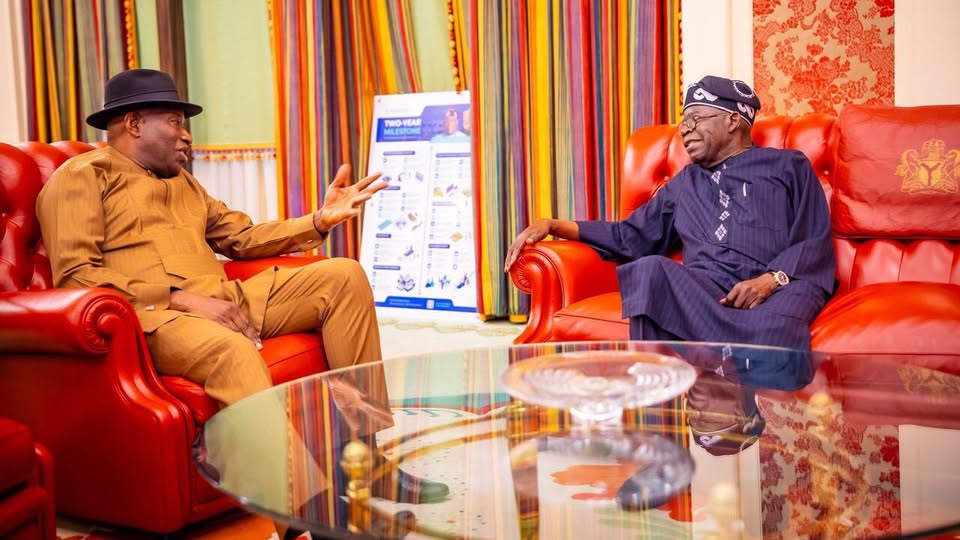
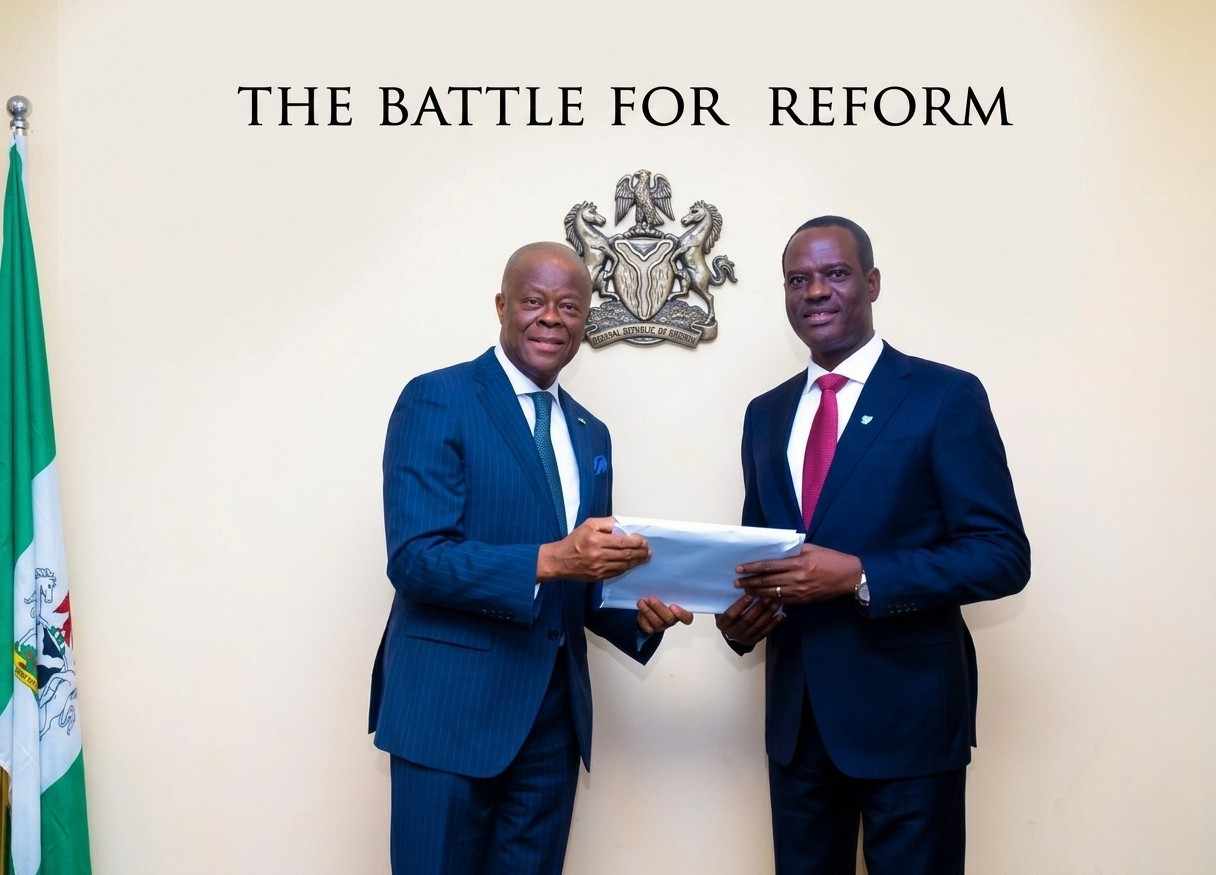
    President Bola Tinubu hosted former President Goodluck Jonathan at the Aso Rock Presidential Villa on Wednesday, April 22, 2026, for a closed-door session that has reignited discussions on national consensus-building. The meeting, which began around 4:00 PM, was confirmed by Special Adviser Bayo Onanuga through a series of photographs showing both leaders in a relaxed but focused dialogue.

    While no official communique was issued following the engagement, observers noted a “Two-Year Milestone” document prominently displayed in the President’s office. This visual cue suggests that the discussions may have moved beyond regional security to include a review of the administration’s mid-term performance and domestic stability efforts. This visit marks a significant return to the Villa for Jonathan, whose presence has become a staple of the current administration’s consultative strategy.

    The Investigative Context The frequency of these meetings suggests a deepening reliance on Jonathan’s role as a non-partisan mediator. Historically, Jonathan has functioned as the administration’s unofficial bridge to West African diplomacy, evidenced by his emergency evacuation from Bissau in November 2025 following a coup attempt while leading the West African Elders Forum. Beyond regional peace, the “investigative undercurrent” points to 2027. Despite the former President’s silence, a growing coalition of political actors is reportedly lobbying for his return to active politics, making these Aso Rock visits a subject of intense scrutiny for both the ruling APC and the opposition merger.

  • Senator Natasha Akpoti-Uduaghan rejects ₦1 billion defamation judgment

    Senator Natasha Akpoti-Uduaghan rejects ₦1 billion defamation judgment

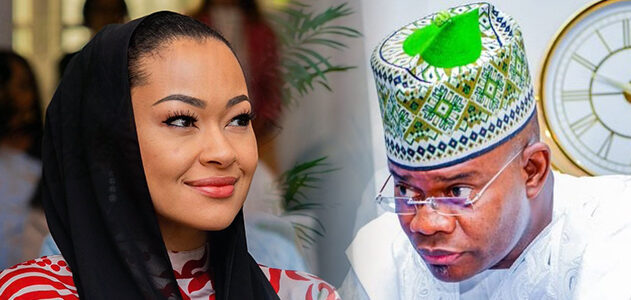
    The long-standing political feud between Senator Natasha Akpoti-Uduaghan and former Governor Yahaya Bello has reached a boiling point following a landmark judicial ruling. On Thursday, April 23, 2026, a Kogi State High Court sitting in Lokoja ordered the Senator to pay ₦1 billion in damages for defamatory statements made against Bello during a 2022 television interview.

    Justice A. S. Ibrahim, presiding over suit HCL/16/2023, ruled that the Senator’s description of the former governor as a “murderer” and “terror to the people” was unjustified. However, the victory for Bello was short-lived in the court of public opinion. Senator Natasha immediately took to social media to declare her defiance, specifically targeting an official post by the Economic and Financial Crimes Commission (EFCC).

    The “Shishi” Provocation: In a viral comment under an EFCC post regarding Bello’s ongoing ₦80.2 billion money laundering trial, the Senator stated that the former governor would not get “shishi” (a dime) from her. She challenged the commission to “hurry up” with its prosecution, suggesting that Bello intended to use her damages payment to refund stolen public funds. This defiant stance has ignited a firestorm, with supporters praising her boldness while legal critics argue it borders on contempt of court.

    The Investigative Context: This judgment is the culmination of a three-year legal battle rooted in a November 2022 appearance on Arise TV’s The Morning Show. While the Senator’s legal team previously challenged the court’s jurisdiction, the Court of Appeal recently cleared the path for this ruling. The timing is particularly sensitive; the ₦1 billion award comes while Bello remains a “wanted” figure by the EFCC, creating a surreal scenario where a court-ordered creditor is simultaneously a federal criminal suspect.

  • Taiwo Oyedele assumes leadership of Finance Ministry as Wale Edun exits cabinet

    Taiwo Oyedele assumes leadership of Finance Ministry as Wale Edun exits cabinet

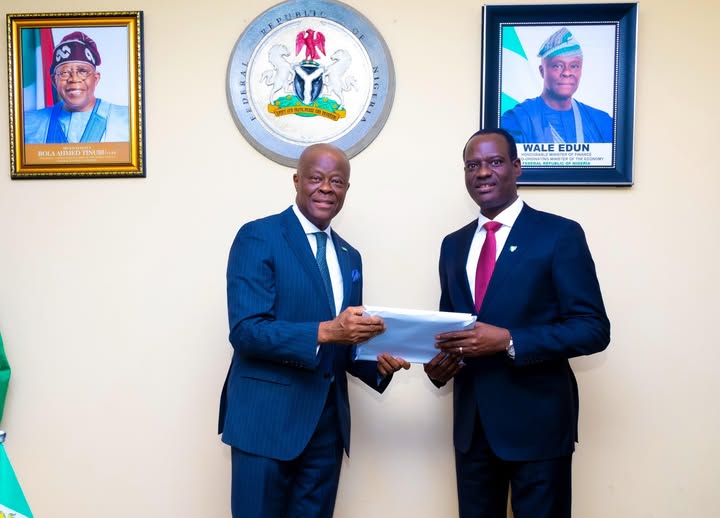
    The heart of Nigeria’s economic management has undergone a sudden and dramatic transplant. On Tuesday, April 21, 2026, Wale Edun officially stepped down from his role as the Minister of Finance and Coordinating Minister of the Economy. The Presidency has swiftly confirmed Taiwo Oyedele (previously the Minister of State for Finance and a renowned tax expert) as his substantive successor.

    The official statement from the State House maintains that Edun, who turned 70 on the day of his resignation, opted to leave due to persistent health challenges. However, the corridors of power in Abuja are buzzing with a different story. For many, this isn’t just a retirement; it is the climax of a long-running friction between the “Technocrat” and the “Political Class” regarding the 2026 fiscal framework.

     ( The Insider View )

    My people, the “Health Reason” is a very convenient wrapper for a very messy gift. Let’s look at the “Waza” (insider truth).

    The word in the Villa is that the relationship between the President and Edun hit an iceberg back in October 2025. While Edun was seen as the “Architect of Reform,” he allegedly fell out of favor when he began pushing back against the “unrealistic” revenue targets being forced into the ₦58.4 trillion 2026 Budget.

    Edun reportedly lobbied to keep his seat for months, but the pressure became unsustainable two weeks ago when he was allegedly given an ultimatum: “Leave honorably on your birthday or be relieved of your duties.” The “Resignation” was a face-saving exit for both parties—it preserves Edun’s legacy while allowing the President to bring in Oyedele, who is seen as more “digitally aggressive” with revenue generation.

    The “Budget Gap” Calculus

    In February 2026, Edun was grilled by the Senate Committee on Appropriations over what they called “shaky revenue assumptions” in the 2026 Bill.

    • The Variance: Lawmakers pointed to an 18% performance on oil revenue in previous years, yet the 2026 budget was built on a “stretch target” of 36.5%.

    • The Debt: With Nigeria’s debt stock hitting ₦152 trillion, Edun was caught between the Senate’s demand to “trim the budget” and the Presidency’s demand to “spend for growth.”

    Oyedele now inherits a budget that many experts consider “mathematically optimistic.” As the former Chairman of the Presidential Fiscal Policy and Tax Reforms Committee, his first job will be to prove that he can actually find the ₦10 of revenue for every ₦100 of promised expenditure.

  • 7 Civic Tech Platforms Helping Nigerians Understand Governance Better

    7 Civic Tech Platforms Helping Nigerians Understand Governance Better

    Access to reliable information remains one of the biggest challenges in Nigeria’s governance space.

    From public spending to legislative activity, much of the data exists, but it is often difficult for citizens to find, understand, or use.

    In response, a number of civic technology platforms have emerged across the country. These platforms are focused on improving transparency, strengthening accountability, and helping citizens engage more meaningfully with governance.

    Below are some of the notable platforms contributing to this shift.

    1. BudgIT

    BudgIT is one of Nigeria’s most established civic tech organizations, known for simplifying public finance data.

    The platform focuses on breaking down government budgets into clear and accessible formats, using infographics and data visualizations to explain how public funds are allocated and spent.

    Over the years, BudgIT has played a key role in helping citizens and civil society groups better understand Nigeria’s budgeting process.

    2. Tracka

    Tracka, an initiative of BudgIT, is designed to monitor constituency projects across Nigeria.

    It enables citizens to track projects approved for their communities and report on their status. This includes identifying projects that have been abandoned, delayed, or poorly executed.

    By connecting citizens directly to project monitoring, Tracka strengthens accountability at the grassroots level.

    3. Connected Development (CODE)

    Connected Development is known for its “Follow The Money” campaign, which focuses on tracking public funds meant for community development.

    The organization combines data tracking with community engagement, working directly with local populations to ensure that allocated funds reach their intended beneficiaries.

    Its work has contributed to increased visibility around public spending in underserved areas.

    4. Open States Nigeria

    Open States Nigeria provides access to legislative data, including information on lawmakers, bills, and legislative proceedings.

    The platform aims to improve transparency within Nigeria’s legislative system by making data that is often difficult to access available to the public.

    This allows citizens, researchers, and journalists to better understand the activities of elected officials.

    5. GovSpend

    GovSpend, also developed by BudgIT, offers detailed insights into government expenditure.

    The platform allows users to search and analyze financial transactions across ministries, departments, and agencies.

    By focusing on actual disbursements rather than just budget allocations, GovSpend provides a clearer picture of how public funds are used.

    6. Civic Hive

    Civic Hive serves as an innovation hub for civic technology in Nigeria.

    It supports startups and organizations working on solutions that address governance and accountability challenges.

    Through funding, mentorship, and community building, Civic Hive contributes to the growth of Nigeria’s civic tech ecosystem.

    7. GoPolitical.ng

    GoPolitical.ng is a newer entrant in the civic tech space, focused on organizing political information in a structured and accessible format.

    The platform provides:

    In addition to its data structure, GoPolitical integrates automated content aggregation and AI-assisted summaries to make political information easier to consume.

    Its approach is centered on reducing complexity and improving access for everyday users.

    A Growing Role for Civic Technology

    The emergence of these platforms reflects a broader shift in how governance information is accessed in Nigeria.

    Rather than relying solely on official channels, citizens now have access to independent tools that provide clarity and context.

    While challenges remain, particularly around data availability and adoption, civic technology continues to play an important role in strengthening transparency and public engagement.

    Conclusion

    Civic tech platforms are gradually reshaping how Nigerians interact with governance.

    By making information more accessible and easier to understand, they are helping bridge the gap between citizens and public institutions.

    As these platforms continue to evolve, their impact on accountability and democratic participation is likely to grow.


  • Obafemi George triggers constitutional row over presidential security mandates

    Obafemi George triggers constitutional row over presidential security mandates

    A statement by APC chieftain and political analyst Obafemi George has triggered a nationwide conversation about who is actually responsible for keeping Nigerians safe. During a high-profile interview on Inspiration 92.3FM, George ignited a constitutional firestorm by asserting that the security of citizens is not the primary job of the President.

    This remark has been widely circulated as a direct challenge to the “Buck Stops Here” mindset that usually defines the Nigerian presidency. However, George’s argument stems from a controversial interpretation of federalism.

    The Argument of Tiers:
    George claims that while the President oversees the Armed Forces, day-to-day community safety is a shared duty. He contends that State Governors, despite being the Chief Security Officers of their states, have abdicated their duties. In his view, local leaders often blame the Federal Government for breaches that should be managed at the state or local level.

    The Constitutional Counter-Argument:
    Critics view this as a deflection intended to shield the current administration from accountability. Legal experts have countered by citing Section 14(2)(b) of the 1999 Constitution. This section states that the “security and welfare of the people shall be the primary purpose of government.” Because the President leads the federal government and controls the Police and Military, the public consensus remains that the ultimate responsibility rests with him.

    Whether this was a push for State Police or a political move to lower expectations, the debate reveals a fractured system. If the President is not responsible and Governors lack control over the police, the average citizen is left in a dangerous “Security No-Man’s-Land”—a reality that no amount of political interpretation can hide.

  • Edun exits on 70th birthday amid Villa standoff (part 3)

    Edun exits on 70th birthday amid Villa standoff (part 3)

    The official narrative released to the press on the afternoon of April 21, 2026, was one of “honor, gratitude, and health-induced retirement.” It painted a picture of a weary technocrat who had given his all and, upon reaching the milestone of 70 years, chose the tranquility of private life over the turbulence of the Ministry of Finance. However, in the high-stakes corridors of the Aso Rock Presidential Villa, the atmosphere was anything but tranquil. The 48 hours leading up to that press release were characterized by a fiscal “Mexican Standoff” that threatened to derail the stability of the entire administration.

    Sunday, April 19: The “Red Line” Meeting

    The crisis reached its boiling point on Sunday night. While most of Abuja was settling in for the work week, a small convoy of black SUVs pulled up to the President’s private residence within the Villa. Inside were Wale Edun, the Chief of Staff, and the Minister of State for Petroleum Resources. The agenda was singular: the 2026 Supplementary Budget Proposal.

    According to sources close to the Presidency, Edun was presented with a document that sought to reallocate ₦4.2 trillion from the “Debt Sinking Fund” to a series of “National Intervention Projects.” To the political wing of the cabinet, this was a necessary stimulus to curb the rising social unrest caused by inflation. To Edun, it was a “Red Line.” He viewed the move as a backdoor return to the very “Ways and Means” mentality he had spent years trying to dismantle.

    For three hours, the room was a theatre of conflicting priorities. Edun argued that raiding the sinking fund would trigger an immediate downgrade by Moody’s and Fitch, effectively locking Nigeria out of the international bond markets for the remainder of the decade. The President, caught between the fiscal warnings of his oldest ally and the political warnings of his strategists, reportedly asked for a middle ground. Edun’s response was characteristically blunt: “There is no middle ground in bankruptcy.”

    Monday, April 20: The Silent Corridor

    By Monday morning, the news of the Sunday night standoff had leaked to the “Villa Cabal.” The Minister of Finance arrived at his office at the Federal Secretariat to find a schedule that had been mysteriously cleared of its most important briefings. The usual Monday morning call from the Vice President did not come. In the world of Nigerian power politics, silence is the loudest signal of an impending exit.

    While Edun sat in his office, another meeting was taking place in a different wing of the Villa. Taiwo Oyedele, the then-Chairman of the Presidential Fiscal Policy and Tax Reforms Committee, was seen entering the office of the Vice President. The “Succession Plan,” which had been discussed in whispers for months, was being accelerated into a “Transition Plan.” The investigators at GoPolitical have confirmed that a draft of the appointment letter for a “Substantive Minister of Finance” was already being reviewed by legal aides as early as 11:00 AM on Monday.

    The pressure on Edun was not just professional; it was psychological. For years, he had been the face of “Renewed Hope” to the global markets. To sack him would be to admit that the reform agenda was fracturing. The goal of the Villa strategists was to secure a “voluntary” exit that preserved the administration’s optics. The “70th Birthday” became the perfect tactical anchor for this exit ramp.

    Tuesday, April 21: The Birthday Ultimatum

    The day of Edun’s 70th birthday began with a standard celebratory tweet from the Presidency’s official handle. But behind the scenes, the final negotiation was underway. At 10:00 AM, Edun was invited to a private audience with the President. This was the moment the “Waza” (the real truth) was finalized.

    Edun was allegedly presented with a choice: sign off on the ₦4.2 trillion supplementary allocation and remain in office, or submit a letter of resignation based on “medical advice” and receive a full “State Honor” for his service. Edun, a man who built his career on the sanctity of numbers, chose his legacy over his seat. He refused to sign the document, effectively ending his tenure.

    By 2:00 PM, the “Health” narrative was in full swing. The press release mentioned “persistent exhaustion” and a “need for a long-deferred medical sabbatical.” While Edun’s personal physicians had indeed expressed concerns about his blood pressure during the February Senate hearings, the sudden “criticality” of his health on his 70th birthday was a masterpiece of political choreography.

    The Negotiation of the Narrative

    The final hour of Edun’s 48-hour countdown was spent on the wording of the transition. Edun insisted that the press release include a commitment to “maintaining the fiscal guardrails” he had put in place. The Presidency agreed, but with a silent caveat: those guardrails would now be managed by Taiwo Oyedele, a man who, while a technocrat, was viewed as more “politically agile” in finding revenue solutions that didn’t involve shutting down the government.

    The transition ceremony was brief. There were no cameras, no long speeches, and no public handover of the seals. It was a quiet exit for a man who had made a lot of noise in the global financial markets. As Edun’s convoy left the Villa for the last time as a Minister, the “Supplementary Budget” he had fought against was reportedly already being reformatted for Oyedele’s signature.

    The Aftermath: A Market in Suspense

    As the news broke on the 4:00 PM radio bulletins, the reaction in Abuja’s financial circles was one of “calculated silence.” The bond yields for Nigeria’s 2032 Eurobonds flickered but did not crash. The “Health” wrapper had worked—for now. But the investigative reality remains: Nigeria didn’t just lose a Minister on April 21; it lost the chief architect of its fiscal restraint.

    The 48-hour standoff revealed the fundamental tension of the 2026 government: the irreconcilable gap between the “Math of the Economy” and the “Politics of the People.” Edun chose the math; the Presidency chose the politics. In Part 4, we will dive into the immediate impact of this choice on the ₦159 trillion debt and what it means for the average Nigerian’s wallet as the “Oyedele Era” officially begins.

  • Edun halts CBN overdrafts sparking cabinet mutiny

    Edun halts CBN overdrafts sparking cabinet mutiny

    While Part 1 of this series was about a public disagreement over future projections, this Part 2 is about the private war over immediate survival. By late 2025, the Nigerian economy was functioning like a vehicle running on fumes, and the man holding the jerrycan of fuel was Wale Edun. But instead of pouring it in, he decided to dismantle the pump. This “pump” was the Ways and Means advances—a mechanism where the Central Bank of Nigeria (CBN) essentially printed money to cover government budget deficits.

    For nearly a decade, the Nigerian government had bypassed traditional revenue generation by leaning on the CBN. By the time Edun took full control of the steering wheel, the “overdraft” had ballooned to a staggering ₦30 trillion. It was a financial addiction that had fueled inflation, devalued the Naira, and made Nigeria a cautionary tale in international boardrooms. Edun’s decision to go “cold turkey” on this addiction wasn’t just a policy shift; it was a declaration of war against the established political order in Abuja.

    The Death of the “Magic Money” Machine

    In a series of closed-door meetings between October 2025 and January 2026, Edun reportedly issued a directive that sent shockwaves through the federal cabinet: the government would no longer spend money it had not earned. He insisted on strict adherence to the Section 38 of the CBN Act, which limits federal borrowing from the apex bank to 5 percent of the previous year’s actual revenue.

    This meant that the ₦2 trillion to ₦3 trillion monthly “top-ups” that previous administrations used to pay salaries and fund “emergency” projects vanished overnight. The impact was immediate and brutal. For the first time in years, several Ministries, Departments, and Agencies (MDAs) found their accounts “dry” as early as the second week of the month. The “liquidity desert” had arrived in the heart of the federal capital.

    The Silent Mutiny in the Cabinet

    While the international community—specifically the IMF and the World Bank—applauded Edun’s “fiscal purity,” a silent mutiny was brewing within the Presidency. Our “Waza” (insider truth) suggests that at least six powerful ministers and a handful of influential presidential aides began a coordinated campaign to “soften” Edun’s stance. They argued that his rigid adherence to fiscal rules was “politically suicidal.”

    The logic of the politicians was simple: “People don’t eat fiscal discipline.” They pointed to stalled road projects in the Southeast, unpaid contractors in the North, and the slowing pace of the “Renewed Hope” infrastructure agenda. In their view, Edun was acting like a surgeon who was so focused on the technical success of the operation that he was oblivious to the fact that the patient was dying of starvation on the table. One senior official reportedly told the President in a late-night session, “Wale is building a perfect economy for a country that will no longer have a government if we don’t start spending.”

    The Zero-Implementation Crisis

    By the end of the first quarter of 2026, the data from the Budget Office told a harrowing story. Capital implementation—the actual release of funds for building things—was at a near-standstill. Edun had successfully stopped the “money printing,” but the “revenue tracking” hadn’t caught up fast enough to fill the void. This created a vacuum where government contractors, many of whom were the primary drivers of middle-class employment, began laying off workers by the thousands.

    The “investigative under-read” here is that this wasn’t just an accidental slowdown. Edun was using the liquidity squeeze as a tool to force MDAs to undergo a “fiscal audit.” He refused to release funds to any ministry that could not account for its previous year’s expenditure. In his mind, he was cleaning the Augean stables of Nigerian corruption; in the minds of the political class, he was “The Man Who Locked the Safe” and threw away the key.

    The IMF’s Darling vs. Abuja’s Outcast

    Throughout this period, Edun’s stature abroad reached an all-time high. In London and New York, he was the “Technocrat King” who had finally brought sanity to Nigeria’s wild-west finances. This external support was his primary shield. As long as he had the backing of global creditors, the Presidency was hesitant to move against him for fear of a market sell-off or a credit rating downgrade.

    However, domestic pressure is a different beast entirely. As the 2026 fiscal year progressed, the disconnect between the “Macro” (international approval) and the “Micro” (local liquidity) became a chasm. The Senate, sensing the cabinet’s frustration, used the “Ways and Means” issue as a cudgel during every public hearing. They demanded to know why the government was “starving” the people to please “faceless bankers in Washington.”

    The Birthday Deadline

    By March 2026, the standoff reached its breaking point. The Presidency was caught between two irreconcilable forces: Edun’s refusal to restart the CBN overdrafts and the cabinet’s demand for a “Stimulus Package” to save their political futures ahead of 2027. It was during this month that the timeline for Edun’s “honorable retirement” was allegedly mapped out.

    The “Ways and Means” war was won by Edun in the sense that the ₦30 trillion debt was eventually “securitized” (turned into long-term bonds), but he lost the political war. He had proven that he could stop the printing press, but he hadn’t yet proven that he could start the economy without it. His exit wasn’t just about his age; it was about the Presidency’s need for a “Revenue General” who could find a middle ground between printing money and starving the government.

    As we will see in Part 3, the “Health Resignation” on his 70th birthday was the only way to end a cabinet war that had brought the Nigerian government to a fiscal standstill. The man who saved the Naira from total collapse was, in the end, sacrificed to save the political peace.

  • The Senate Standoff & The ₦58tn Budget

    The Senate Standoff & The ₦58tn Budget

    The atmosphere inside Senate Hearing Room 1 on the afternoon of February 12, 2026, was thick with more than just the hum of the air conditioners. It was the sound of a fiscal philosophy colliding with political reality. Wale Edun, then the Coordinating Minister of the Economy, sat at the head of the mahogany table, flanked by the Director General of the Budget Office and the Accountant General of the Federation. Opposite him sat the Senate Committee on Appropriations, led by a unusually combative Chairman. The subject was the ₦58.47 trillion 2026 Appropriation Bill, a document that Edun had touted as the “Budget of Consolidation,” but which the Senate was beginning to view as a “Budget of Miracles.”

    For the next five hours, the room became a classroom where the teacher was being graded by students who didn’t like the curriculum. The core of the conflict was not just the total sum of the budget, but the shaky pillars upon which it was built. Edun’s team had projected a revenue performance of 36.5 percent from oil and non-oil sources. To the lawmakers, this felt less like a projection and more like a prayer. They pointed to the harsh reality of the 2024 and 2025 fiscal years, where actual revenue performance hovered around 18 to 22 percent. The Senate’s argument was simple: if you plan to spend ₦58 trillion based on ₦20 trillion of actual income, the ₦38 trillion gap would have to be filled by the very thing Edun promised to stop—reckless borrowing.

    The Oil Benchmark Standoff:
    At the heart of the 1,000-page document was the oil price benchmark of $75 per barrel and a production target of 1.84 million barrels per day (mbpd). Professor Adekunle, our resident historian, notes that Nigeria has not consistently hit the 1.8mbpd mark in nearly half a decade due to a combination of crude oil theft, aging infrastructure, and a lack of fresh investment in deep-offshore assets. When Senator Sani Musa challenged these figures, Edun maintained a calm, almost professorial demeanor. He argued that the “security architecture” in the Niger Delta was finally stabilizing and that several modular refineries and new oil wells were scheduled to come online in Q1 2026.

    However, the “Amina” data desk at GoPolitical flagged a major discrepancy during this session. While the executive was projecting 1.84mbpd, OPEC+ quotas for Nigeria remained tight, and internal leakages continued to drain an estimated 200,000 to 400,000 barrels daily. The Senate committee argued that building a budget on “anticipated security success” was a gamble that the Nigerian people could no longer afford. They proposed a more conservative benchmark of 1.6mbpd, which would have slashed the budget’s expenditure side by nearly ₦4 trillion. Edun’s refusal to budge on this figure was the first visible crack in his relationship with the National Assembly.

    The “Optimism-Bias” and the Public Purse:
    The Senate’s interrogation then pivoted to the non-oil revenue targets. Edun had projected a massive surge in Corporate Income Tax (CIT) and Value Added Tax (VAT) collections, citing the ongoing automation of the Federal Inland Revenue Service (FIRS). The lawmakers, however, voiced the concerns of their constituents. With the removal of petrol subsidies in 2023 and the subsequent inflation of 2024–2025, the Nigerian manufacturing sector was in a state of “controlled contraction.” Many small and medium-sized enterprises (SMEs) had shuttered, and the ones remaining were struggling with high energy costs and a volatile exchange rate.

    “How do you tax a ghost?” one Senator famously asked during the hearing. The committee argued that the aggressive revenue targets would force the FIRS to become “predatory,” further stifling the very economic growth the budget was supposed to promote. Edun’s defense was that the “broadening of the tax net” would target the informal sector and high-net-worth individuals who had previously evaded their obligations. But to the Senate, this sounded like a repeat of the 2025 promises that had failed to materialize into actual treasury inflows.

    The Social Contract in Jeopardy:
    By the fourth hour of the hearing, the conversation shifted from numbers to people. The 2026 budget allocated significant portions to “Debt Servicing” and “Recurrent Expenditure,” leaving the “Capital Expenditure” (the money meant for roads, hospitals, and schools) at a mere 25 percent of the total spend. This was the emotional trigger for the lawmakers. They argued that their constituents were not seeing the “gains of the reform” that Edun frequently mentioned in his international investor briefings.

    The tension reached a peak when the discussion turned to the National Minimum Wage implementation. The Senate pointed out that while the budget increased the wage bill, it did not provide a clear funding mechanism for the states, many of which were already on the verge of bankruptcy. Edun’s insistence on “fiscal discipline” was interpreted by the committee as “social apathy.” This hearing was the moment the “Architect of Reform” became, in the eyes of the Senate, the “Author of Austerity.”

    The Unspoken Divide:
    What wasn’t said in the hearing room was perhaps more important than what was. Behind the technical debates over “Exchange Rate Pegs” and “GDP Deflators” was a deep-seated political anxiety. 2027 was appearing on the horizon, and the National Assembly knew that an unfunded budget would lead to abandoned projects in their districts. Edun, committed to his vision of a “lean, efficient state,” was blocking the very “constituency projects” that lawmakers needed to secure their political futures.

    As Edun packed his leather briefcase at the end of the session, the headlines were already being written. The Senate had not rejected the budget, but they had officially “queried” its soul. This February hearing set the stage for a three-month cold war between the Ministry of Finance and the National Assembly. It was the beginning of the end for the Edun era, as the Presidency began to realize that their “Star Technocrat” was becoming a political liability. The “Budget of Consolidation” had become a battleground, and for the Nigerian citizen watching from the sidelines, the only certainty was that the price of governance was about to go up.