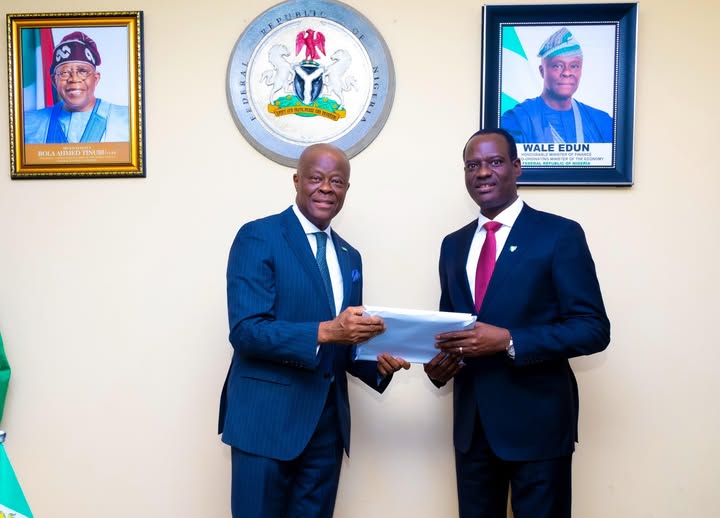
The heart of Nigeria’s economic management has undergone a sudden and dramatic transplant. On Tuesday, April 21, 2026, Wale Edun officially stepped down from his role as the Minister of Finance and Coordinating Minister of the Economy. The Presidency has swiftly confirmed Taiwo Oyedele (previously the Minister of State for Finance and a renowned tax expert) as his substantive successor.
The official statement from the State House maintains that Edun, who turned 70 on the day of his resignation, opted to leave due to persistent health challenges. However, the corridors of power in Abuja are buzzing with a different story. For many, this isn’t just a retirement; it is the climax of a long-running friction between the “Technocrat” and the “Political Class” regarding the 2026 fiscal framework.
( The Insider View )
My people, the “Health Reason” is a very convenient wrapper for a very messy gift. Let’s look at the “Waza” (insider truth).
The word in the Villa is that the relationship between the President and Edun hit an iceberg back in October 2025. While Edun was seen as the “Architect of Reform,” he allegedly fell out of favor when he began pushing back against the “unrealistic” revenue targets being forced into the ₦58.4 trillion 2026 Budget.
Edun reportedly lobbied to keep his seat for months, but the pressure became unsustainable two weeks ago when he was allegedly given an ultimatum: “Leave honorably on your birthday or be relieved of your duties.” The “Resignation” was a face-saving exit for both parties—it preserves Edun’s legacy while allowing the President to bring in Oyedele, who is seen as more “digitally aggressive” with revenue generation.
The “Budget Gap” Calculus
In February 2026, Edun was grilled by the Senate Committee on Appropriations over what they called “shaky revenue assumptions” in the 2026 Bill.
-
The Variance: Lawmakers pointed to an 18% performance on oil revenue in previous years, yet the 2026 budget was built on a “stretch target” of 36.5%.
-
The Debt: With Nigeria’s debt stock hitting ₦152 trillion, Edun was caught between the Senate’s demand to “trim the budget” and the Presidency’s demand to “spend for growth.”
Oyedele now inherits a budget that many experts consider “mathematically optimistic.” As the former Chairman of the Presidential Fiscal Policy and Tax Reforms Committee, his first job will be to prove that he can actually find the ₦10 of revenue for every ₦100 of promised expenditure.
Leave a Reply