Author: Samuel

  • No Light, I Fly Out” — Peter Obi Slams Presidential “Disconnect”

    No Light, I Fly Out” — Peter Obi Slams Presidential “Disconnect”

    Jos Visit: Tinubu said ‘No light; I fly out in 10 minutes’

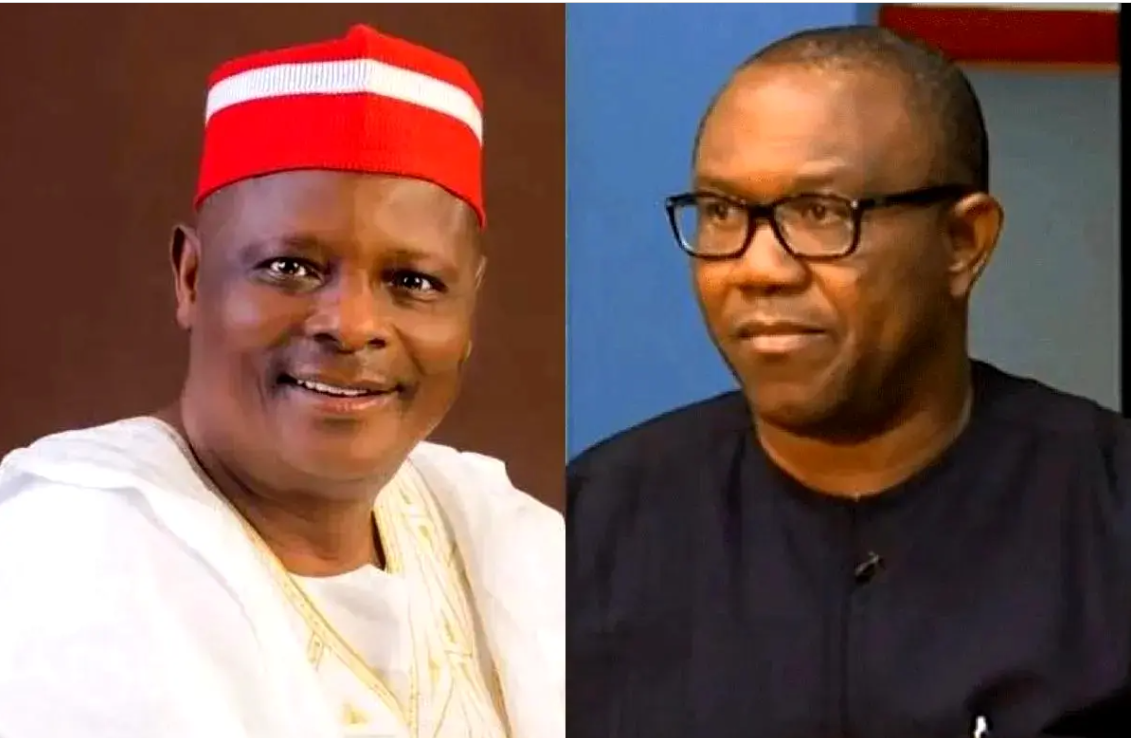
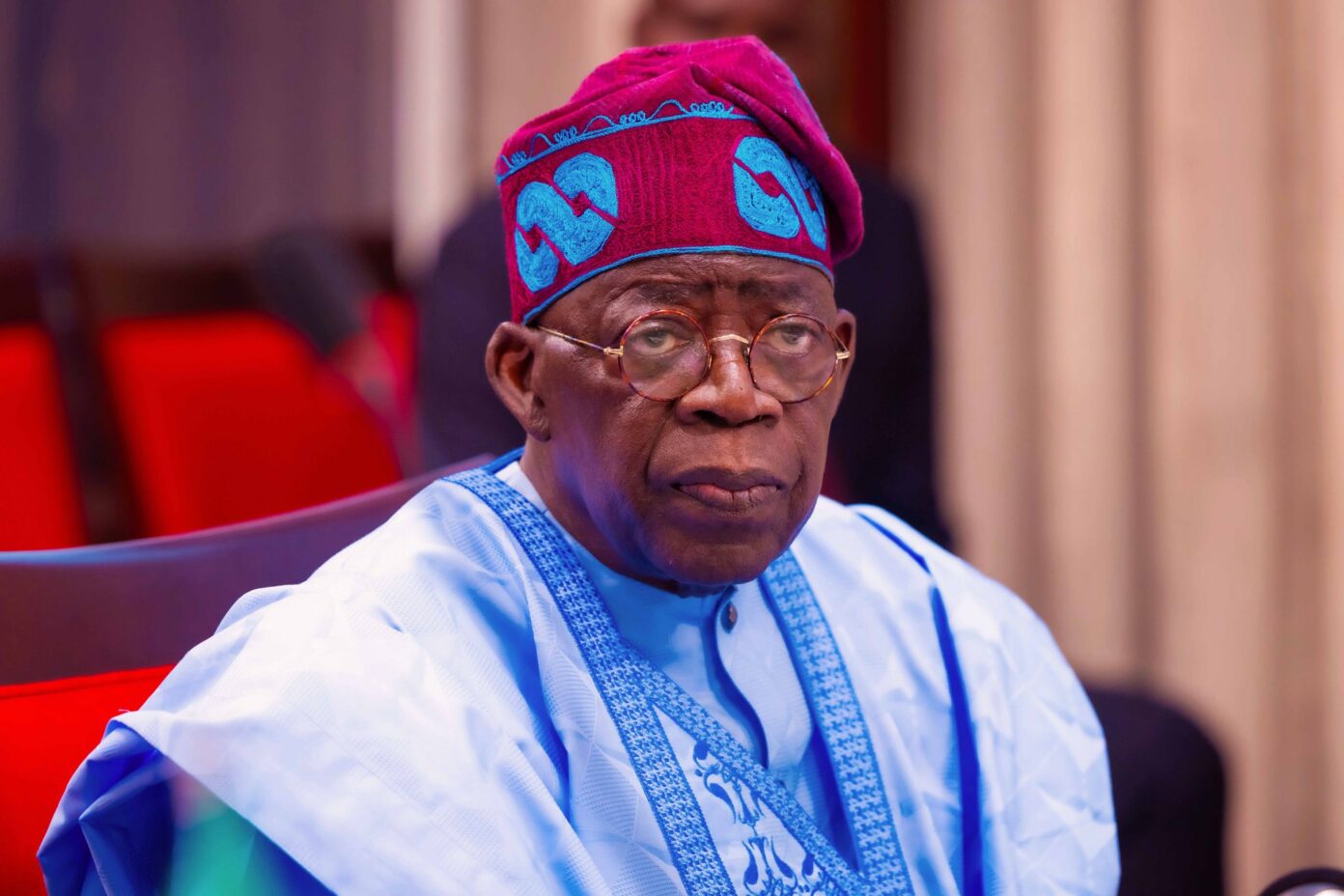
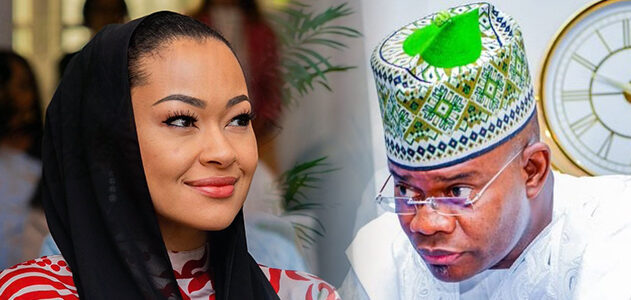
    Former Labour Party presidential candidate, Peter Obi, has issued a sharp critique of President Bola Tinubu’s Thursday visit to Plateau State, following a violent attack in Jos North that claimed over 28 lives on Palm Sunday.

    According to reports initially published by Vanguard, Obi alleged that the President’s condolence visit was restricted to a 10-minute stopover at the Yakubu Gowon Airport. Obi quoted the President as saying, “You have no light here – I fly out in ten minutes,” citing the lack of electricity at the airport as a primary reason for the abbreviated stay.

    While the Presidency, through Special Adviser Bayo Onanuga, defended the move—stating that logistical constraints and the airport’s inability to support night flights necessitated the brief, airport-based meeting—Obi characterized the event as a “glaring display of disregard” for the grieving families.

    The Conscience vs. The Clock

    Let’s be clear about what happened on that tarmac. While the families of Angwan Rukuba were still counting their dead, the leadership of this country was counting minutes.

    As Grace reported, the President spent roughly ten minutes at the airport because there was “no light.” But where is the light for the mother clutching the bloodied clothes of her son? Where was the “logistics” for the 28 people who didn’t get to “fly out” when the gunmen arrived?

    We have two Nigerias: one where the President cannot stay 15 minutes without air conditioning and constant power, and another where the citizens are expected to endure years of darkness and “cycles of violence” without a single visit to their actual homes. This isn’t just a logistical failure; it is an Empathy Deficit.

    The Ghost of 2023 Promises

    My people, I remember the campaign trail in 2023. I remember the promise: “If I don’t give you constant electricity in four years, don’t vote for me for a second term.” As we established in the History of the Office of the Nigerian First Lady, our leaders often prefer the “shadow” of governance to the “substance.” Peter Obi’s critique reminds us that in 2023, we had over 4,000MW. Today, despite the ₦68.3 Trillion Budget, we are hearing about “night flight restrictions” because of a lack of navigational aids at a major state airport.

    In the old days, a leader entered the town to sit with the elders. Today, the leader stays at the foot of the aircraft. As the political analyst often says, when a leader says “I fly out in ten minutes,” he is telling you exactly where you stand on his list of priorities.

  • The ₦68.3 Trillion Ledger: A Forensic Audit of Nigeria’s Expansionist 2026 Budget

    The ₦68.3 Trillion Ledger: A Forensic Audit of Nigeria’s Expansionist 2026 Budget

    National Assembly Approves ₦68.3trn 2026 Budget, Up From ₦58.4trn

    The passage of the 2026 Appropriation Bill by the National Assembly is more than a legislative milestone; it is a high-stakes fiscal experiment. At ₦68.3 trillion, this budget represents a nominal increase of approximately 16.8% over the 2025 revised estimates. On paper, it is the largest spending plan in the history of the Federation. However, as we’ve established in our previous audits of Nigerian structural policy, a budget is not a statement of wealth—it is a statement of intent.

    As a data analyst, my role is to strip away the political rhetoric of “Renewed Hope” and look at the Kinetic Reality of the numbers. When we adjust for a projected 2026 inflation rate of 15-18% and a volatile exchange rate, we must ask the critical question:

    Is this ₦68.3 trillion a roadmap to growth, or is it a spreadsheet designed to manage a mounting debt crisis?

    I. The Macro-Fiscal Framework: The Pillars of ₦68.3 Trillion

    To understand the 2026 budget, we must first look at the “Assumption Base.” A budget is only as strong as the reality of its benchmarks.

    Benchmark Parameter 2025 Actual (Est.) 2026 Budget Target The “Quant” Risk Rating
    Oil Price Floor $77.96 / barrel $75.00 / barrel Low (Conservative)
    Oil Production 1.58m bpd 1.78m bpd High (Security Dependent)
    Exchange Rate ₦1,450 / $1 ₦1,400 / $1 Moderate (Volatility)
    GDP Growth Rate 3.2% 4.4% Moderate (Ambitious)

    The decision to peg the exchange rate at ₦1,400 is a strategic signal to the markets. It suggests a “Stabilization Phase” in the foreign exchange market. However, with the Debt-to-Revenue ratio still hovering near the 70% danger zone, any slip in oil production—currently hampered by artisanal refining and pipeline vandalism in the Niger Delta—could trigger a ₦10 trillion revenue shortfall before the second quarter.

    II. Expenditure Split: The Recurrent vs. Capital Tug-of-War

    In any developing economy, the “Health” of a budget is measured by the Capital-to-Recurrent ratio. You cannot build a 21st-century economy if you spend 80% of your money on salaries and tea for Abuja officials.

    1. The Recurrent Heavyweight (₦32.1 Trillion)

    Nearly 47% of the 2026 budget is dedicated to non-debt recurrent expenditure. This includes the full implementation of the ₦70,000 Minimum Wage across all Federal MDAs.

    • The Personnel Glut: While the “Architect” has previously proposed a move from “Audit to Architecture” to fix the ghost worker problem, the 2026 budget shows that personnel costs continue to rise faster than productivity.

    • The Overhead Leak: ₦4.5 trillion is earmarked for general overheads. In an era of “Pain Phase” adjustments, the public’s view—as we’ve noted in our Human Cost analysis—is that the “top floor” isn’t cutting costs while the “ground floor” starves.

    2. The Capital Hope (₦22.3 Trillion)

    The ₦22.3 trillion earmarked for capital projects is the “Engine Room” of the budget.

    • Infrastructure Priority: Key allocations focus on the Lagos-Calabar Coastal Highway, the Ajaokuta-Kaduna-Kano (AKK) Gas Pipeline, and rail modernization.

    • The $540 Million Multiplier: As we analyzed in the Women’s Scale-Up report, significant portions of capital spending are co-financed by multilateral lenders.

    The Structural Reality: Historically, Nigeria’s “Capital Release” performance sits at approximately 65-70%. If only ₦15 trillion of the ₦22.3 trillion is actually released, the “4.4% GDP Growth” target becomes a statistical impossibility.

    III. The Debt Trap: Servicing the Future

    This is the most sobering section of the 2026 ledger. Debt Servicing is projected at ₦15.52 trillion.

    • The Ratio: We are spending ₦1.00 on debt for every ₦1.40 we spend on actual development.

    • The Interest Spiral: With the Central Bank of Nigeria (CBN) maintaining high interest rates (26.5%+) to curb inflation, the cost of domestic borrowing has skyrocketed. We are no longer just borrowing to build; we are borrowing to pay the interest on what we borrowed to build five years ago.

    From a data perspective, this is a Liquidity Squeeze. When ₦15.5 trillion is taken off the top for debt, the “Moms in Abuja”—as the Activist view puts it—have very little “mercy” left to distribute to the street.

    IV. Revenue Innovation: Beyond the Oil Barrel

    The 2026 budget relies heavily on Non-Oil Revenue (₦19.6 trillion). This is a significant shift from the 2015 era where oil was 70% of the pot.

    • VAT & CIT: Corporate Income Tax and Value Added Tax are expected to drive 60% of non-oil gains.

    • The Efficiency Drive: The Federal Inland Revenue Service (FIRS) is deploying new AI-driven tax compliance tools.

    • The Risk: As the “Street” perspective would argue, you cannot tax an informal economy that is already struggling with 300% increases in electricity tariffs. Over-taxation in a low-growth environment leads to Tax Evasion, not Revenue Growth.

    V. Strategic Solutions: A Roadmap for the 2026 Cycle

    To ensure this ₦68.3 trillion doesn’t become another “Paper-Tiger” (as explored in our Series on Policy Failure), we must implement three data-backed interventions:

    1. The “Open Ledger” Mandate

    The National Assembly has passed the budget, but the Budget Office of the Federation must publish monthly “Performance Audits.” We need to see the “Velocity of Funds”—how long it takes for a Naira approved in Abuja to reach a road project in Onitsha.

    2. Forensic Revenue Tracking

    We must move from “Targeting” to “Tracing.” Every MDA that generates revenue (NPA, NIMASA, NCC) must be linked to a Real-Time Treasury Dashboard. The ₦20.12 trillion deficit can be narrowed if the “remittance leakages” are plugged via the identity-linked architecture we proposed for the payroll.

    3. Strategic Debt Refinancing

    The government must utilize the stabilized ₦1,400 exchange rate to swap high-interest domestic debt for cheaper, long-term international “Green Bonds” or “Infrastructure Bonds.” Reducing the ₦15.5 trillion debt service bill by just 10% would free up ₦1.5 trillion—enough to fund the entire National Healthcare budget twice over.

    Gopolitical’s Final Words

    The 2026 budget is a High-Leverage Gamble.

    It is the Expansion Phase.

    Policies are not judged by the trillions approved by the National Assembly.

    They are judged by the Purchasing Power of the citizen at the end of the fiscal year.

    Until the “Macro” 4.4% growth appears on the “Micro” grocery bill,

    this ₦68.3 trillion is just a very expensive piece of paper.

    The National Assembly has done its job.

    the CBN has set the rates.

    But for the 250 million stakeholders in this “Company called Nigeria,”

    the only data point that matters is the ROI—Return on Inclusion.

  • Empty Chairs and the Cost of Memory

    Empty Chairs and the Cost of Memory

    Akpabio declares three Senate seats vacant

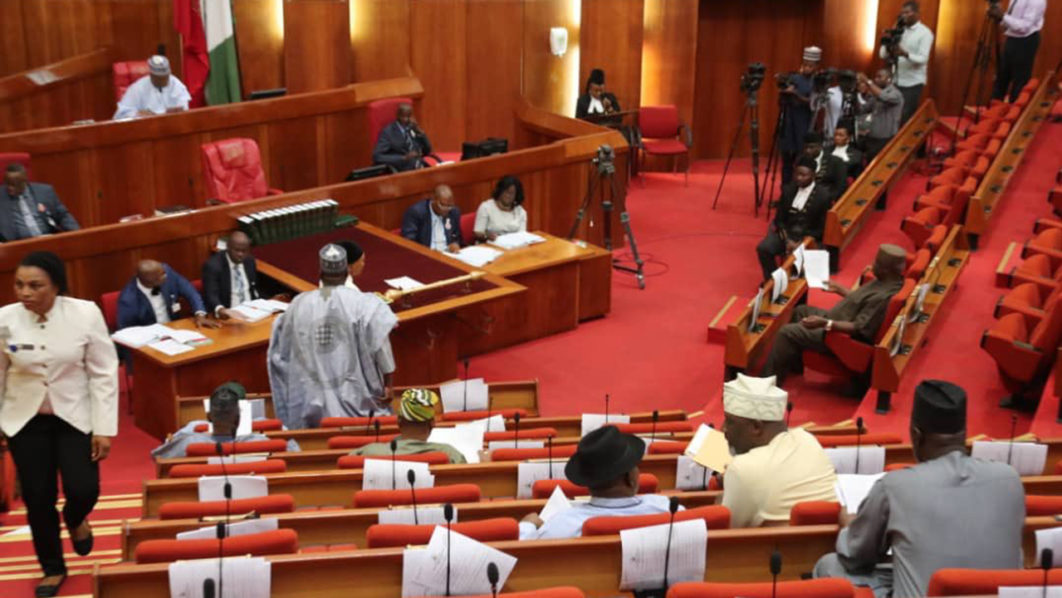
    When Senate President Godswill Akpabio struck the gavel on Tuesday, it wasn’t to pass a new tax or debate a loan. It was a somber ritual. A constitutional necessity. A reminder that the “10th Senate” is already losing its shape. Three seats—Enugu North, Nasarawa North, and Rivers South-East—have been declared vacant. Now the question is simple: Will these upcoming by-elections bring fresh solutions, or are we just replacing names in a stagnant system?

    The Ghosts of the Red Chamber

    In my years covering the National Assembly, I’ve seen this script played out many times. Section 68 of the 1999 Constitution (as amended) is clear: when a lawmaker passes, the seat must be declared vacant. But as I look at these three districts, I remember the faces of those who sat there. At the centre of this development are:

    • Enugu North: A district searching for its voice in a changing South-East.

    • Nasarawa North: A key gateway where representation often determines local security.

    • Rivers South-East: A high-stakes political battleground where “vacant” usually means “the drums of war are starting.”

    The 30-Day Race

    On paper, the Independent National Electoral Commission (INEC) is now on a clock. According to the Senate President’s mandate, fresh polls must happen within 30 days. But the data suggests that “30 days” in Nigerian election time is a heavy lift:

    • The Cost of Democracy: Previous off-cycle senatorial by-elections have cost the taxpayer billions in logistics and security. In 2026, with the current inflation, these three seats won’t be “cheap” to fill.

    • Voter Apathy: Historically, by-elections in Nigeria struggle to hit 20% voter turnout. People often ask, “Why queue under the sun for one man when the Senate itself feels so far away?”

    • The Legislative Gap: Since the demise of these senators, these three districts have had zero representation during critical debates on the $6bn loan request and the new minimum wage implementation.

    From a veteran’s perspective, this suggests: A seat can be filled in 30 days, but the vacuum left in the hearts of the constituents takes much longer to heal.

    The Reality in the Districts

    Now step outside the Senate chambers in Abuja. Talk to:

    • A market woman in Nsukka (Enugu North) who doesn’t know her senator is gone, but knows her road is still broken.

    • A youth leader in Rivers who is already being approached by “godfathers” to mobilize for a candidate he doesn’t believe in.

    • A farmer in Akwanga (Nasarawa North) who just wants someone—anyone—to speak up about the security of his crops.

    Then state what’s happening in real life: The politicians are calculating “zoning” and “party loyalty,” while the people are calculating “survival.” That’s not just a statistic. That is the disconnect of the 10th Senate.

    The Core Tension

    Here is the real tension:

    • The Law: Requires the seat be filled to ensure “equality of representation.”

    • The People: Feel that even when the seat is full, their voices are rarely heard. Policies fail when we care more about filling the chair than fulfilling the mandate.

    The Final Word

    This is not just a routine announcement. But it is a test for INEC and the political parties. It is the Replacement Phase.

    Politics is not judged by the gavel of the Senate President. It is judged by the service of the person who wins the seat. Until we see candidates who represent the pain of the street and not the pocket of the party, the “Red Chamber” will remain a hall of echoes.

    The chairs are empty for now. The campaigns are starting. But for the people of Enugu, Nasarawa, and Rivers, The search for a true champion continues.

  • The 2-Million Vote Promise: Arithmetic or Aspiration?

    The 2-Million Vote Promise: Arithmetic or Aspiration?

    Katsina youths pledge to deliver over 2 million votes to Atiku

    When Ahmed Adamu, Special Assistant on Youth and Strategy to Atiku Abubakar, stood in Katsina to announce a “2-million vote pledge,” it wasn’t just a political statement. It was a mathematical dare. A projection. A high-stakes gamble on the North-West’s most volatile demographic. Now, as the campaign machinery for the next cycle grinds into gear, the question for GoPolitical is simple: Do the numbers in the “Home of Hospitality” actually add up to a 2-million vote landslide?

    The Spreadsheet vs. The Street

    Political pledges in Nigeria often suffer from “Numerical Inflation.” To understand the 2-million figure, we must look at the hard data provided by the Independent National Electoral Commission (INEC).

    • The Registration Ceiling: In the 2023 cycle, Katsina State had approximately 3.5 million registered voters. A 2-million vote pledge assumes a 57% absolute turnout for a single candidate—a feat rarely achieved in modern multi-party contests.

    • The Historical Baseline: Looking back at the 2019 General Elections, President Muhammadu Buhari polled 1.2 million votes in Katsina, while Atiku Abubakar polled 308,000. To reach 2 million, the PDP would need a 549% increase in its local performance.

    • The Turnout Factor: Average national turnout has been on a structural decline, hitting a historic low of 26.7% in 2023. For a single state to deliver 2 million votes today, it would require a mobilization effort that reverses a decade-long trend of voter apathy.

    The North-West Calculation

    The organizers of the “March for Atiku” aren’t just looking at Katsina in isolation. They are banking on a regional “Big Data” play:

    • The 8-Million Bloc: Campaign coordinators like Ahmed Tijjani-Uwais suggest that the North-West and North-East combined can deliver 7 to 8 million votes.

    • The Demographic Tilt: With over 60% of registered voters nationally being under the age of 35, the “Youth and Women” focus is statistically sound. However, “support” on a march does not always convert to “PVCs at the booth.”

    • The “Second Home” Variable: The claim that Katsina is Atiku’s “second home” is a qualitative variable being used to offset the quantitative dominance the APC has historically held in the state.

    From a macro-statistical perspective, this suggests: The PDP is attempting to create a “Statistical Surge” to break the APC’s traditional 1-million+ vote stronghold in the North-West.

    The Reality of the Margin

    Now step outside the percentages. Talk to:

    • A Data Analyst who sees that Katsina’s total valid votes in 2023 were only around 1.1 million across all parties.

    • A Youth Leader who knows that “mobilizing 80% of votes” requires more than a procession; it requires a logistics miracle in 34 Local Government Areas.

    • An INEC Official who deals with the reality of “invalid votes” and technical glitches that shave off thousands from the final tally.

    Then state what’s happening in real life: A 2-million vote pledge is a psychological tool to build momentum, but the 2023 Election Results showed that the North-West is no longer a monolithic voting bloc. It is fragmented, and every percentage point is a street-by-street battle. That’s not just a statistic. That is a margin of error that could decide the Presidency.

    The Core Tension: Projection vs. Participation

    Here is the real tension:

    • The Aspiration: Pledging 2 million votes to signal “strength” and attract donors and undecided voters.

    • The Probability: Current voter behavior and the 2023 turnout data suggest that even reaching a total of 2 million votes for all candidates combined in Katsina is an uphill climb.

    The GoPolitical Verdict

    This is not a verified forecast. But it is a high-octane political objective. It is the Mobilization Phase.

    Policies and candidates are not judged by the volume of the crowd at the rally. They are judged by the tally on the IReV portal. Until the PDP can show a path to doubling its historical North-West turnout, the “2-million vote pledge” remains an equation with too many unknown variables.

  • The High Bar to Entry: Why Young Candidates Rarely Get Party Tickets

    The High Bar to Entry: Why Young Candidates Rarely Get Party Tickets

    The “Not Too Young to Run” Act (2018) is frequently framed in Nigerian political discourse as a definitive victory. In reality, it was merely a localized administrative adjustment—the removal of a legal technicality that barred entry based on chronological age. While it lowered the age of eligibility for the Presidency from 40 to 35 and for the House of Representatives from 30 to 25, it left the commercial architecture of the Nigerian political system entirely untouched.

    As we analyze the trajectory toward the 2027 electoral cycle, the data reveals a “Pay-to-Play” system that effectively acts as a second, unwritten constitution. Without a transition from Legal Inclusion to Economic Viability, the youth remain the “digital infantry” for a gerontocracy they cannot displace. This report provides a comprehensive audit of the financial barriers to entry and a data-driven roadmap for structural disruption.

    I. The Mathematics of Marginalization: An Audit of the Entry Barrier

    The failure of young candidates to secure party tickets is not a result of a “lack of vision” or “social media noise.” It is a mathematical certainty dictated by the current political economy. In Nigeria, a party ticket is not a certificate of service; it is a Luxury Asset with a high acquisition cost and a low initial return on investment.


    1. The Nomination Fee Monopoly

    In the 2023 electoral cycle, the two dominant parties—the All Progressives Congress (APC) and the Peoples Democratic Party (PDP)—set entry prices that functionally disenfranchised 90% of the youth population. The APC pegged its Presidential nomination forms at ₦100 million ($240,000 at the time), while the PDP set theirs at ₦40 million.

    Even with a 50% “youth discount,” a 30-year-old aspirant for the House of Representatives still faced a ₦5 million to ₦10 million entry barrier before printing a single poster or hiring a single staffer. To put this in perspective: the PDP Presidential form alone could have paid the (then) ₦30,000 minimum wage for 1,333 workers. For a generation facing 40%+ underemployment, these figures are not just hurdles; they are “No Trespassing” signs.

    2. The Delegate Market and Indirect Primaries

    The most significant “hidden cost” in the Nigerian primary system is the Delegate Market. Under the indirect primary system, power is concentrated in the hands of a few thousand “ad-hoc delegates.” Data from the 2022-2023 primaries suggests that the cost of “securing” a single delegate’s vote in high-stakes zones ranged from $2,000 to $10,000.

    When a young candidate with a ₦20 million crowdfunding pool goes up against a “Godfather-backed” incumbent with an unlimited “security vote” or deep patronage pockets, the outcome is statistically predetermined. The youth are effectively priced out of the “Primary Exchange” before the general public ever sees a ballot.

    II. The Representation Gap: Quantifying the Failure of the “Not Too Young to Run” Act

    The “Not Too Young to Run” movement succeeded in increasing the number of youth candidates, but it has struggled to increase their success rate.

    • The Candidacy Plunge: According to Yiaga Africa, youth candidacy (under 35) actually declined from 34% in 2019 to 28.6% in 2023.

    • The Success Rate: In the 10th National Assembly (2023), young people between 25–35 years won only 14 out of 360 seats in the House of Representatives—a mere 3.92%.

    • The Gender Deficit: Of the 102 legislators under 45 years old in the 10th Assembly, only 2 are women. There are zero women under 35 years currently serving in the House of Representatives.

    From a macro perspective, the youth are the largest demography on the voter register but a statutory minority on the list of candidates. This is a “Market Monopoly” where the established political class has raised the “Minimum Capital Requirement” so high that merit is effectively de-listed.

    #not too young to run

    III. The Roadmap to Disruption: What the Youth MUST Do

    To break this monopoly, the youth must stop treating political participation as a “charity case” or a “social media protest” and start treating it as a Structural Market Reform.

    1. Transitioning to Independent Candidacy (Electoral Act 2026)

    One of the most critical developments in the Electoral Act 2026 is the potential for Independent Candidacy. This allows a candidate to bypass the “Party Ticket” and the “Delegate Market” entirely.

    • The Strategy: Aspirants must stop begging party chairmen for tickets and start building “Citizen Assemblies.”

    • The Action: Gather the required 10% of signatures from registered voters in your district. If you have 50,000 young people in your constituency, you only need 5,000 verified signatures to be on the ballot. The signature is the new currency.

    2. The Power of “Micro-Equity”: Crowdfunding 2.0

    The “Big Donor” model owns the candidate; the “Micro-Donor” model owns the future.

    • The Strategy: Use Nigeria’s world-class Fintech ecosystem (Paystack, Moniepoint, etc.) to build a “Youth Shield Fund.”

    • * The Action: If 100,000 young Nigerians contribute ₦2,000 each, it creates a ₦200 million war chest. This is enough to fund the “Logistics and Security” for three high-potential youth candidates in strategic districts.

    3. Flooding the Register: The Direct Primary Maneuver

    Godfathers thrive on indirect primaries (delegates). They fear Direct Primaries (One Member, One Vote).

    • The Strategy: Youth must join political parties en masse—not as “praise singers,” but as card-carrying members.

    • The Action: If a local government has 20,000 youth members, they can dictate who wins a direct primary. Don’t just protest the party; occupy the register.

    4. The 35% Quota: Moving from “Not Too Young” to “Must Be Included”

    As noted in Athena Centre comparative studies of Rwanda and Kenya, voluntary inclusion rarely works.

    • The Strategy: Lobbying for a mandatory 35% Youth and Gender Quota for all elective party positions.

    • The Action: This is a “Lobbying War.” Youth caucuses must make this a non-negotiable condition for supporting any Presidential or Gubernatorial candidate in 2027. “No Quota, No Youth Vote.”

    IV. The “Architect’s” Comparative Lens: Learning from the Continent

    Nigeria is not alone in this struggle, but we are lagging in implementation.

    • Rwanda: Integrated identity systems and mandatory quotas have made youth representation an outcome of system design, not just an audit.

    • Kenya: The #RutoMustGo/Gen-Z protests of 2024-2025 showed that youth can force economic and governmental reform through sustained, tech-savvy digital advocacy that translates into street-level power.

    • Uganda: Simple data matching against national registries produced immediate fiscal and political gains, proving that authoritative verification can bypass corrupt local “Godfathers.”

    Verdict

    This is not a failure of youth intellect or capacity. It is an Investment and Structural Gap. We are currently in the Disruption Phase.

    Policies are not judged by the rhetoric of “The Leaders of Tomorrow.” They are judged by the entry price of today. Until the youth move from online activism to on-the-ground equity, they will remain the “social media managers” of a country run by people who don’t know how to turn on a laptop.

    The numbers are clear: 70% of the population cannot be “guests” in their own government. It is time to crash the price of the ticket.

  • Doguwa Takes Helm of Kano APC in Strategic Leadership Shift

    Doguwa Takes Helm of Kano APC in Strategic Leadership Shift

    The political landscape in Kano State has undergone a significant structural adjustment with the ascension of Haruna Doguwa to the chairmanship of the All Progressives Congress (APC). A former Commissioner for Water Resources and a known associate of Governor Abba Yusuf, Doguwa’s emergence via a consensus arrangement marks the end of the decade-long leadership of Abdullahi Abbas. This development highlights a strategic pivoting within the state’s party apparatus as it positions itself for future electoral cycles.

    The congress, characterized by a voice vote from over 2,400 accredited delegates representing the 44 local government areas, was conducted under the observation of the Independent National Electoral Commission. The process, described by Congress Committee Chairman Rabiu Bichi as a testament to internal cohesion, saw the ratification of the chairmanship seat which had been specifically zoned to the Kano South Senatorial District. This zoning arrangement facilitated Doguwa’s path to the top seat following his resignation from the state cabinet to pursue party leadership.

    In his inaugural address, the new chairman emphasized a mandate centered on reconciliation and structural strengthening. The transition is viewed by stakeholders as a critical moment for the party, moving from the entrenched influence of the previous administration to a new phase of inclusiveness. Departing chairman Abdullahi Abbas endorsed the shift, calling for stability and unwavering support for the incoming executive committee.

    Governor Abba Yusuf’s presence and address at the congress underscore the high stakes involved in this party reorganization. By urging the new leadership to uphold discipline and unity, the Governor signaled the importance of a consolidated front. Alongside Doguwa, a full slate of executives was sworn in, including Salisu Gwangwazo as Deputy Chairman and Fatima Dala as Women Leader, formally operationalizing the new party structure in one of Nigeria’s most politically volatile states.

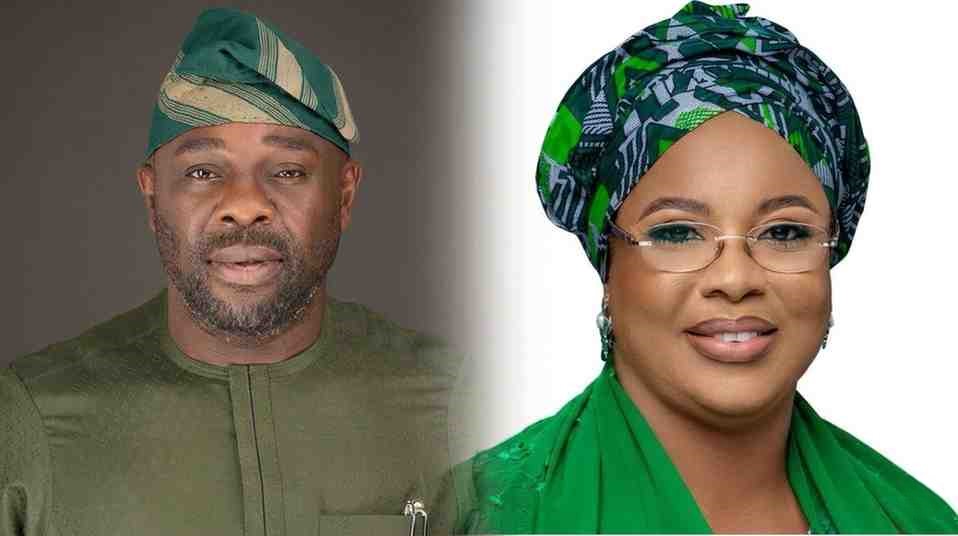
  • 2027: Iyabo Obasanjo-Bello Targets Ogun Governorship via APC Platform, Predicting Parental Support

    2027: Iyabo Obasanjo-Bello Targets Ogun Governorship via APC Platform, Predicting Parental Support

    The intersection of family legacy and partisan realignment has introduced a compelling variable into the political equation of Ogun State. The formal integration of Iyabo Obasanjo-Bello into the All Progressives Congress signals a noteworthy shift in the maneuvering ahead of the 2027 gubernatorial election, placing the daughter of a former head of state directly within the fold of the ruling party.

    During her registration at the national secretariat in Abuja, the aspirant sought to clearly delineate her political identity from that of her father, former President Olusegun Obasanjo. While characterizing her decision to join the APC as a personal move influenced by the migration of her former associates to the platform, she expressed certainty regarding her father’s electoral behavior. The assertion is that despite the former President’s separation from the APC, his status as a registered voter in Ogun State would naturally translate into support for his daughter should she clinch the party ticket. This narrative attempts to balance independence with the tacit benefit of the Obasanjo political machine.

    Strategically, this candidacy is being positioned to leverage the growing discourse on gender inclusivity in Nigerian governance. By citing legislative efforts to reserve seats for women and referencing Ogun State’s historical matriarchs like Funmilayo Ransome-Kuti and Efunroye Tinubu, the campaign is framing the 2027 election as a potential turning point for female executive leadership. The argument posits that the institutional environment within the APC, coupled with the state’s progressive heritage, creates a unique window of opportunity for the emergence of the country’s first elected female governor.

    Her entry into the race is poised to alter the internal power dynamics of the APC in Ogun State, where early alignments are already forming. As stakeholders and aspirants intensify their consultations, the focus will now shift to whether the party establishment is prepared to back a candidate who combines a controversial dynastic name with a platform centered on breaking the gender ceiling in executive power.

  • Plateau State Realignment: Riyom Council Endorses Governor Mutfwang’s Strategic Shift to APC

    Plateau State Realignment: Riyom Council Endorses Governor Mutfwang’s Strategic Shift to APC

    The political architecture of Plateau State has been formally redrawn following the high-profile reception of Governor Caleb Manasseh Mutfwang into the All Progressives Congress (APC). Held at the Jos Polo Field, the event consummated the Governor’s earlier defection from the Peoples Democratic Party in January 2026, signaling a significant shift in the North Central region’s power dynamics. The ceremony drew the highest echelon of the nation’s political leadership, including President Bola Ahmed Tinubu and the APC National Chairman, Prof. Nentawe Yiltwada, underscoring the strategic value placed on Plateau by the federal administration.

    At the local government level, this realignment is being interpreted as a vital opportunity for administrative synergy. The leadership of the Riyom Local Government Council, headed by Executive Chairman Bature Sati Shuwa, has fully endorsed the Governor’s transition. This endorsement reflects a broader expectation within local councils that harmonizing state and federal political affiliations will streamline governance. Shuwa, representing the council’s legislative and administrative arms, positioned the move as a gateway to enhanced collaboration, citing the need for pragmatic leadership that connects grassroots aspirations with federal resources.

    The focus for Riyom, often viewed as a critical entry point to the state, remains centered on security and economic stability. By aligning with the ruling party at the center, local stakeholders anticipate a more robust approach to conflict resolution and development-focused policies. The narrative advanced by the council emphasizes that this political unification is not merely ceremonial but is intended to foster a climate conducive to sustainable growth and peace.

    As the dust settles on the defection formalities, the burden of performance now shifts to the strengthened APC structure in Plateau. The consolidation of power brings with it heightened expectations for service delivery and integrity in governance. For communities in Riyom and across the state, the success of this new political era will be measured by the tangible improvements in security and the actualization of the promised progressive governance.

  • Benue State and the Fabricated Narrative of Political Discord

    Benue State and the Fabricated Narrative of Political Discord

    In the high-stakes theater of Nigerian governance, political discourse is frequently obscured by speculation rather than grounded in verifiable reality. Nowhere is this more evident than in Benue State, where a persistent but largely unsubstantiated narrative suggests a fierce rivalry between the Secretary to the Government of the Federation, Senator George Akume, and the incumbent State Governor, Hyacinth Alia. While tales of infighting between political godfathers and their successors are a staple of Nigeria’s Fourth Republic, a disciplined analysis of Benue’s power dynamics reveals that this specific alleged conflict is more a product of external projection than internal friction.

    To understand the current relationship, one must first appreciate the architectural continuity of politics in the region. Senator Akume has served as a two-term Governor, a three-term Senator rising to Minority Leader, a Minister, and now occupies a central role in the presidency as the SGF. This trajectory represents nearly three decades of entrenched influence. The emergence of successive governors in the state—from Gabriel Suswam to Samuel Ortom and now Hyacinth Alia—has invariably relied on the political structures Akume helped cultivate. The 2023 gubernatorial election serves as a prime case study; despite a field crowded with heavyweights, victory was secured through the alignment of strategic mobilization and established party machinery, rather than individual popularity alone.

    Recent events within the All Progressives Congress (APC) further illustrate this interdependence. During membership registration exercises, initial grassroots engagement appeared tepid until the broader party network, historically anchored by Akume, was fully activated. The subsequent surge in numbers underscored a fundamental truth of Nigerian politics: capacity and organization often trump sentiment. Consequently, framing the dynamic between Akume and Alia as a battle of equals misinterprets the hierarchical nature of party politics. The SGF operates at a federal level, tasked with national coordination and the stability of the Tinubu administration, while the Governor focuses on subnational administration.

    Ultimately, the friction often reported by observers is likely a misreading of the natural adjustments that occur when a new administration settles into a landscape shaped by long-standing veterans. Viewing every administrative nuance or silence as a declaration of war is analytically flawed. For the ruling party to maintain cohesion in the North Central region, the symbiosis between federal influence and state power is essential. The reality in Benue is likely not one of adversarial combat, but of a complex political continuum where a new leader consolidates authority within a system built by his predecessors.

  • Violence and Recrimination: The Deepening Rift Within Ondo APC

    Violence and Recrimination: The Deepening Rift Within Ondo APC

    The political climate in Ondo State has deteriorated into open confrontation as the ruling All Progressives Congress (APC) faces a severe internal crisis. What began as factional friction has escalated into physical violence, raising serious questions about party cohesion and executive influence over party structures. The conflict reached a boiling point at the party’s Akure secretariat on February 17, 2026, during a scheduled stakeholders’ meeting. Violent actors, reportedly armed with dangerous weapons, invaded the premises, resulting in the assault of the APC caretaker chairman, Ade Adetimehin. Eyewitness accounts suggest a targeted operation where Adetimehin was beaten and dispossessed of his phone, prompting other party members to flee for safety. Allegations have since surfaced directly linking members of the National Union of Road Transport Workers (NURTW), specifically under the state leadership of Ademola Odudu, to the disruption.

    Central to this chaotic episode is a direct accusation against Governor Lucky Aiyedatiwa, with party leadership alleging the attack was state-sponsored to assert dominance—an allegation supported by claims that the aggressors declared the governor’s ownership of the party during the raid. Governor Aiyedatiwa has vehemently rejected these claims, citing his attendance at a cabinet member’s 50th birthday celebration during the time of the incident. He further argued that standard protocol involves his presence at such stakeholder meetings alongside the Speaker and Deputy Governor, describing the accusation as illogical. However, this defense has done little to quell the suspicion rooted in the political trauma of late 2023, when Aiyedatiwa, then deputy governor, survived an impeachment attempt during the tenure of the late Rotimi Akeredolu.

    This latest outbreak of violence is symptomatic of a larger, unresolved battle for the soul of the APC in Ondo. Beyond the physical altercation at the secretariat lies a strategic struggle to consolidate the party structure ahead of upcoming electoral cycles. As factions retrench and accusations fly, the governance of the state risks becoming collateral damage in a war of attrition between party executives and the state house.