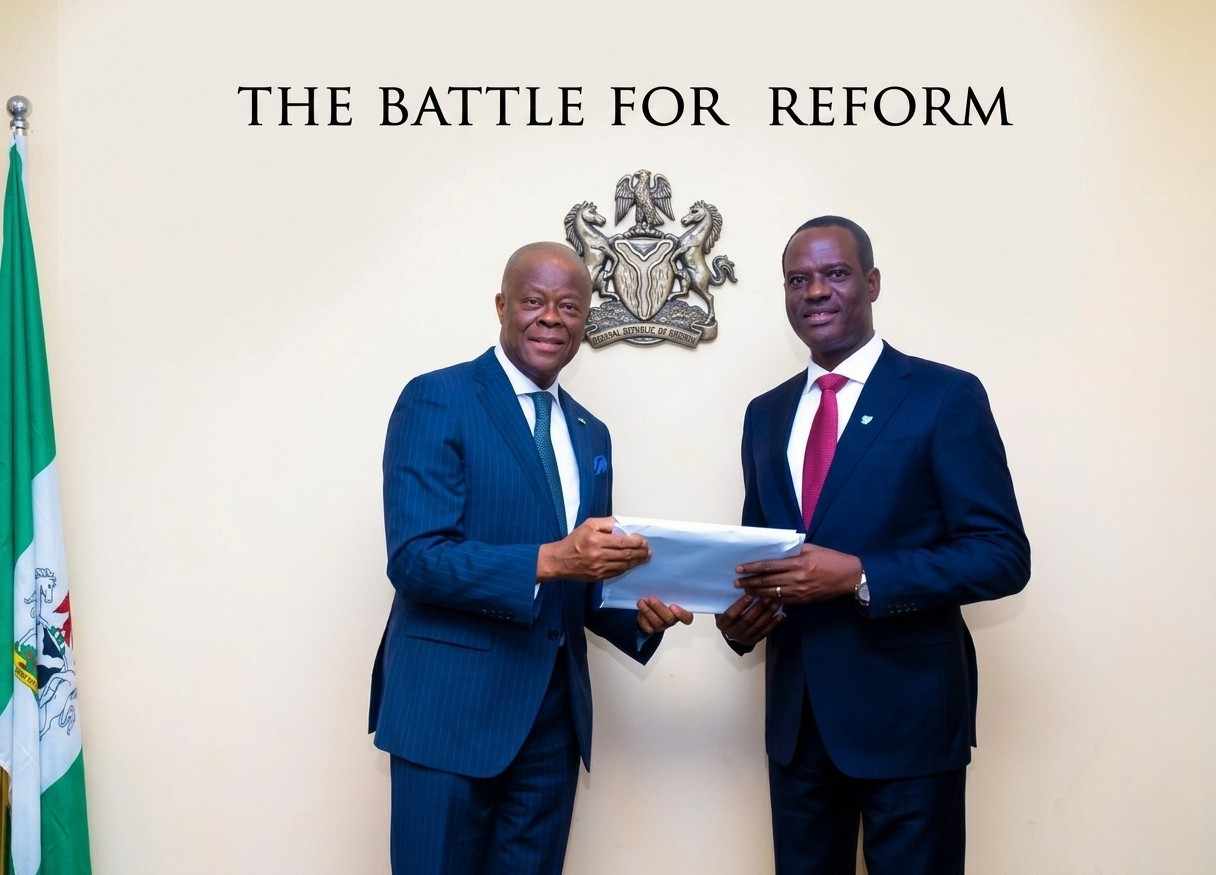
The official narrative released to the press on the afternoon of April 21, 2026, was one of “honor, gratitude, and health-induced retirement.” It painted a picture of a weary technocrat who had given his all and, upon reaching the milestone of 70 years, chose the tranquility of private life over the turbulence of the Ministry of Finance. However, in the high-stakes corridors of the Aso Rock Presidential Villa, the atmosphere was anything but tranquil. The 48 hours leading up to that press release were characterized by a fiscal “Mexican Standoff” that threatened to derail the stability of the entire administration.
Sunday, April 19: The “Red Line” Meeting
The crisis reached its boiling point on Sunday night. While most of Abuja was settling in for the work week, a small convoy of black SUVs pulled up to the President’s private residence within the Villa. Inside were Wale Edun, the Chief of Staff, and the Minister of State for Petroleum Resources. The agenda was singular: the 2026 Supplementary Budget Proposal.
According to sources close to the Presidency, Edun was presented with a document that sought to reallocate ₦4.2 trillion from the “Debt Sinking Fund” to a series of “National Intervention Projects.” To the political wing of the cabinet, this was a necessary stimulus to curb the rising social unrest caused by inflation. To Edun, it was a “Red Line.” He viewed the move as a backdoor return to the very “Ways and Means” mentality he had spent years trying to dismantle.
For three hours, the room was a theatre of conflicting priorities. Edun argued that raiding the sinking fund would trigger an immediate downgrade by Moody’s and Fitch, effectively locking Nigeria out of the international bond markets for the remainder of the decade. The President, caught between the fiscal warnings of his oldest ally and the political warnings of his strategists, reportedly asked for a middle ground. Edun’s response was characteristically blunt: “There is no middle ground in bankruptcy.”
Monday, April 20: The Silent Corridor
By Monday morning, the news of the Sunday night standoff had leaked to the “Villa Cabal.” The Minister of Finance arrived at his office at the Federal Secretariat to find a schedule that had been mysteriously cleared of its most important briefings. The usual Monday morning call from the Vice President did not come. In the world of Nigerian power politics, silence is the loudest signal of an impending exit.
While Edun sat in his office, another meeting was taking place in a different wing of the Villa. Taiwo Oyedele, the then-Chairman of the Presidential Fiscal Policy and Tax Reforms Committee, was seen entering the office of the Vice President. The “Succession Plan,” which had been discussed in whispers for months, was being accelerated into a “Transition Plan.” The investigators at GoPolitical have confirmed that a draft of the appointment letter for a “Substantive Minister of Finance” was already being reviewed by legal aides as early as 11:00 AM on Monday.
The pressure on Edun was not just professional; it was psychological. For years, he had been the face of “Renewed Hope” to the global markets. To sack him would be to admit that the reform agenda was fracturing. The goal of the Villa strategists was to secure a “voluntary” exit that preserved the administration’s optics. The “70th Birthday” became the perfect tactical anchor for this exit ramp.
Tuesday, April 21: The Birthday Ultimatum
The day of Edun’s 70th birthday began with a standard celebratory tweet from the Presidency’s official handle. But behind the scenes, the final negotiation was underway. At 10:00 AM, Edun was invited to a private audience with the President. This was the moment the “Waza” (the real truth) was finalized.
Edun was allegedly presented with a choice: sign off on the ₦4.2 trillion supplementary allocation and remain in office, or submit a letter of resignation based on “medical advice” and receive a full “State Honor” for his service. Edun, a man who built his career on the sanctity of numbers, chose his legacy over his seat. He refused to sign the document, effectively ending his tenure.
By 2:00 PM, the “Health” narrative was in full swing. The press release mentioned “persistent exhaustion” and a “need for a long-deferred medical sabbatical.” While Edun’s personal physicians had indeed expressed concerns about his blood pressure during the February Senate hearings, the sudden “criticality” of his health on his 70th birthday was a masterpiece of political choreography.
The Negotiation of the Narrative
The final hour of Edun’s 48-hour countdown was spent on the wording of the transition. Edun insisted that the press release include a commitment to “maintaining the fiscal guardrails” he had put in place. The Presidency agreed, but with a silent caveat: those guardrails would now be managed by Taiwo Oyedele, a man who, while a technocrat, was viewed as more “politically agile” in finding revenue solutions that didn’t involve shutting down the government.
The transition ceremony was brief. There were no cameras, no long speeches, and no public handover of the seals. It was a quiet exit for a man who had made a lot of noise in the global financial markets. As Edun’s convoy left the Villa for the last time as a Minister, the “Supplementary Budget” he had fought against was reportedly already being reformatted for Oyedele’s signature.
The Aftermath: A Market in Suspense
As the news broke on the 4:00 PM radio bulletins, the reaction in Abuja’s financial circles was one of “calculated silence.” The bond yields for Nigeria’s 2032 Eurobonds flickered but did not crash. The “Health” wrapper had worked—for now. But the investigative reality remains: Nigeria didn’t just lose a Minister on April 21; it lost the chief architect of its fiscal restraint.
The 48-hour standoff revealed the fundamental tension of the 2026 government: the irreconcilable gap between the “Math of the Economy” and the “Politics of the People.” Edun chose the math; the Presidency chose the politics. In Part 4, we will dive into the immediate impact of this choice on the ₦159 trillion debt and what it means for the average Nigerian’s wallet as the “Oyedele Era” officially begins.
Leave a Reply