Blog

  • Internal Strife Hits Oyo APC as Okeogun Bloc Rejects Party Chairmanship in Bid for 2027 Governorship

    Internal Strife Hits Oyo APC as Okeogun Bloc Rejects Party Chairmanship in Bid for 2027 Governorship

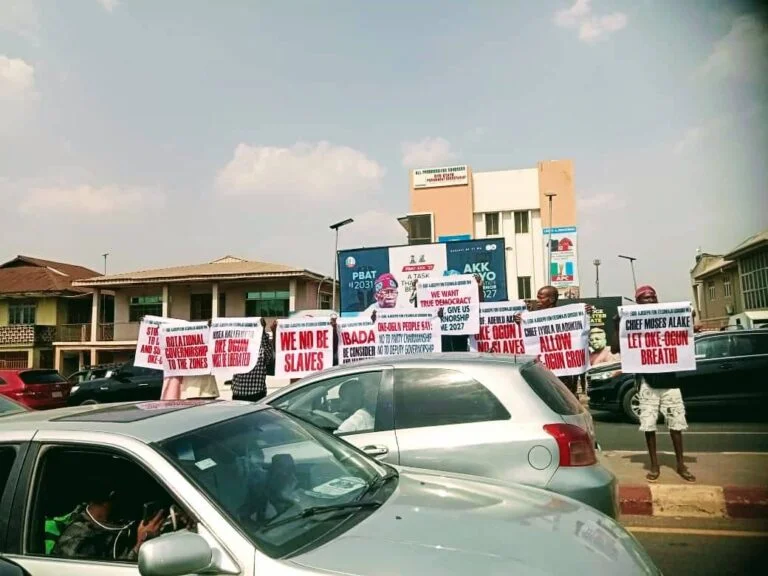
    The maneuvering for the 2027 gubernatorial race in Oyo State has ignited early friction within the All Progressives Congress (APC), with a significant voting bloc rejecting offers of party leadership in favor of executive power. On Monday, stakeholders from the Okeogun region mobilized at the party headquarters in Ibadan to protest against the reported zoning of the State Chairmanship position to their district. The demonstration, organized by the socio-cultural group “Egbe Ajosepo fun Itesiwaju Gbogbo Wa,” signals a sophisticated understanding of political zoning arithmetic, where holding the party gavel often disqualifies a region from producing the state governor.

    At the heart of the unrest is the suspicion that the APC leadership is attempting to placate the zone with a less influential administrative title to clear the path for another zone to secure the gubernatorial ticket. Dauda Olaifa, the leader of the agitation, argued that accepting the chairmanship would be a strategic error, as political convention dictates that the party chairman and the governor cannot emerge from the same zone simultaneously. This pushback comes shortly after the party announced an ad-hoc committee led by Fatai Ibikunle to manage the distribution of executive offices across the state’s 33 local government areas.

    The protesters characterized the recurring offer of the chairmanship to Okeogun as “political tokenism” rather than genuine inclusion. Historical data cited by the group suggests that since 1999, the chairmanship role has been disproportionately domiciled in Oyo North across both the APC and the PDP. They argue this pattern is a containment strategy designed to leverage the zone’s ten local governments—the second largest bloc after Ibadan—to install governors from other regions. Having served as kingmakers for decades, the zone is now demanding the executive seat, asserting that they have qualified aspirants ready for the job.

    The implications for the APC are severe if the demands are ignored. The group explicitly threatened to swing their voting weight behind any political party that fields a candidate from Okeogun, regardless of prior affiliations. Referencing power rotation models in neighboring southwestern states like Osun, Ogun, and Ekiti, stakeholders emphasized that equitable power-sharing is a necessity for stability. As the APC attempts to reorganize its internal structure, it faces a dilemma: continue with traditional zoning arrangements and risk alienating a critical voting bloc, or overhaul the power equation to accommodate the gubernatorial ambition of the Okeogun people.
  • Atiku Explores Strategic Alliance with ADC South East Leaders Amid Tightening Electoral Timeline

    Atiku Explores Strategic Alliance with ADC South East Leaders Amid Tightening Electoral Timeline

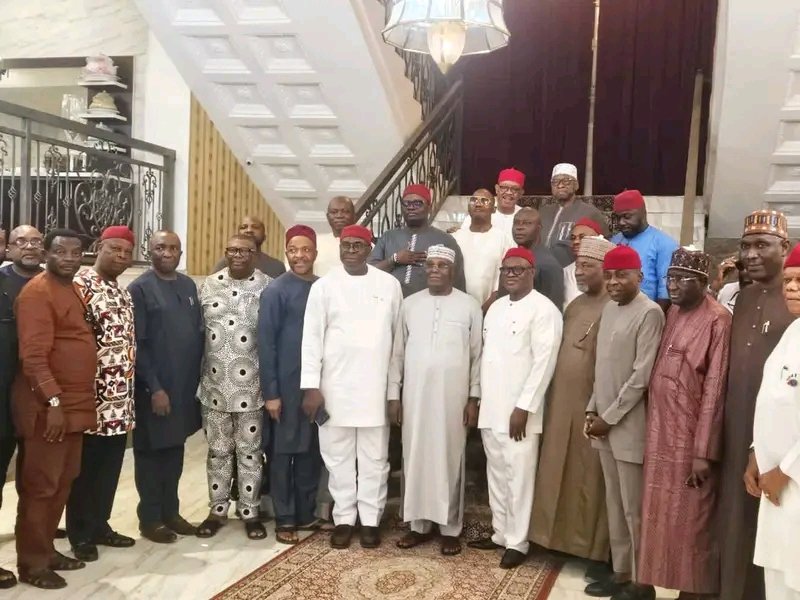
    The political landscape for the 2027 general elections is witnessing rapid realignment as key figures move to consolidate support bases ahead of critical deadlines. In a significant development signaling potential inter-party collaboration, former Vice President Atiku Abubakar engaged in high-level closed-door consultations with leadership figures from the African Democratic Congress (ADC), specifically concentrating on the South East bloc. The late-night strategy session was hosted at the Abuja residence of prominent political stakeholder Chikwe Udensi.

    The gathering brought together a heavy-weight delegation of Igbo leaders and seasoned political operators, suggesting a serious calculation regarding the ADC presidential primary. Among the notable attendees were Senator Augustine Akobundu, Chief Chekwas Okorie, and former Minister of State for Education, Emeka Nwajiuba. The room also included former ADC National Chairman Chief Ralph Nwosu, Senator Frank Ibezim, legal luminary Etigwe Uwah (SAN), and other key influencers such as Hon. Uzoma Abonta, Dr. Osita Oruche, and Hon. Uko Nkole. The composition of the meeting indicates a broad consultation aimed at unifying diverse political interests within the region.

    This heightened activity is driven by the rigid schedule released by the Independent National Electoral Commission (INEC). Political parties are currently racing against a 91-day window to conduct and finalize all primaries, with the deadline set for May 30, 2026. Under the revised timetable, the official conduct of primaries and the resolution of associated disputes are slated to run from April 23 to the end of May. This creates a high-pressure environment for negotiation, as the Presidential and National Assembly elections are fixed for January 16, 2027, followed by state-level elections on February 6, 2027.

    Beyond the politicking, the technical requirements of the Electoral Act 2026 are enforcing strict discipline on party organizations. The commission has made it clear that digital membership registers must be submitted at least 21 days before any convention or congress. Failure to comply with these administrative benchmarks carries the severe risk of disqualification. Consequently, meetings such as the one between Atiku and the ADC leadership serve a dual purpose: forging political pacts and ensuring the structural readiness required to field candidates legally in the upcoming cycle.

  • Maikalangu Retains AMAC Seat, Citing Grassroots Strategy and Party Cohesion

    Maikalangu Retains AMAC Seat, Citing Grassroots Strategy and Party Cohesion

    The political dynamics of the Federal Capital Territory have settled following the conclusion of the area council elections, with the Abuja Municipal Area Council (AMAC) confirming a continuity of leadership. Christopher Maikalangu has secured a second term in office, having polled 40,295 votes in the February 21 contest to hold off challengers. The victory consolidates the influence of the All Progressives Congress (APC) within the municipal council, a strategic stronghold in the nation’s capital.

    In the aftermath of the declaration, the focus has turned to the strategies that enabled this retention of power. Addressing the leadership of the Nigeria Union of Journalists (NUJ) FCT Council, Maikalangu identified party cohesion and direct engagement with the electorate as the decisive factors. Unlike the perceived detachment often associated with urban administration, the campaign prioritized rural and semi-urban wards. The Chairman-elect argued that the authentic political pulse resides at the grassroots level rather than the city center, and success required bridging that gap through tangible infrastructure delivery during the first term.

    The administration views this mandate as a validation of trust in the ruling party’s local agenda. By maintaining a united front, the party organization was able to drive higher voter turnout, a metric that often suffers in local government elections due to voter apathy. To underscore the focus on developmental partnerships, the council leadership facilitated the provision of water infrastructure to the journalist union’s secretariat, framing the gesture as part of a broader commitment to stakeholder engagement.

    As the second term agenda begins to take shape, the pressure will be on the administration to replicate its grassroots success across all wards. The media fraternity, represented during the interaction, has signaled its intent to monitor these developments closely, ensuring that the renewed confidence expressed by the electorate translates into sustained governance and service delivery across the diverse communities of the area council.

  • Edo Sets Strict March 2026 Resignation Deadline for Officials Seeking Elective Office

    Edo Sets Strict March 2026 Resignation Deadline for Officials Seeking Elective Office

    As preparations for the 2027 general elections gather momentum, the Edo State Government has instituted a firm regulatory timeline for public officials seeking elective office. The administration has mandated that all political appointees and public servants intending to contest must resign their appointments by March 1, 2026.

    The directive, issued through the office of the Secretary to the State Government, Umar Musa Ikhilor, applies to all cadres of the state public service. This ultimatum requires potential aspirants to vacate their seats prior to participating in party primaries or any related electoral processes. The government has cited strict compliance with the Electoral Act (Amendment) 2026 as the legal basis for this decision, ensuring that the state’s political transition aligns with statutory requirements.

    Beyond mere legal compliance, this measure is positioned as a safeguard against the technical disqualification of candidates by electoral bodies. It also addresses the ethical necessity of maintaining a level playing field. By enforcing a clear separation between public administration and partisan ambition, the state aims to protect the neutrality of its institutions. The government has further stressed that public office holders must not allow political activities to interfere with their official responsibilities while they remain in service.

    Affected officers are expected to initiate the necessary exit protocols immediately to meet the stipulated deadline. This enforcement signals an early start to political maneuvering within the state, likely leading to a wave of resignations early next year as ambitions for the 2027 polls solidify.

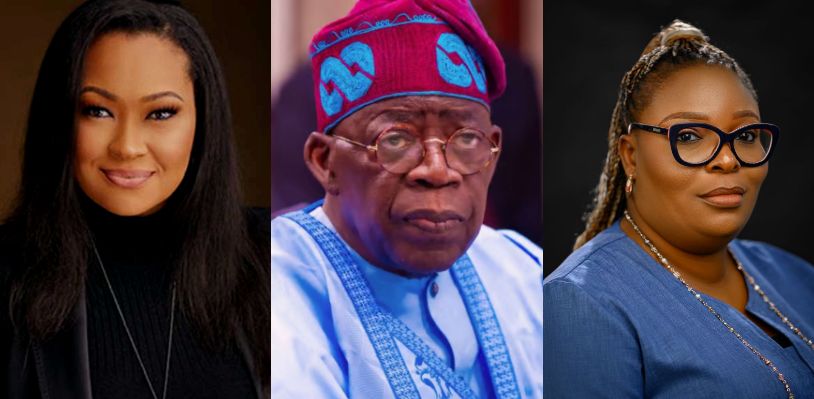
  • 2027: Iyabo Obasanjo-Bello Targets Ogun Governorship via APC Platform, Predicting Parental Support

    2027: Iyabo Obasanjo-Bello Targets Ogun Governorship via APC Platform, Predicting Parental Support

    The intersection of family legacy and partisan realignment has introduced a compelling variable into the political equation of Ogun State. The formal integration of Iyabo Obasanjo-Bello into the All Progressives Congress signals a noteworthy shift in the maneuvering ahead of the 2027 gubernatorial election, placing the daughter of a former head of state directly within the fold of the ruling party.

    During her registration at the national secretariat in Abuja, the aspirant sought to clearly delineate her political identity from that of her father, former President Olusegun Obasanjo. While characterizing her decision to join the APC as a personal move influenced by the migration of her former associates to the platform, she expressed certainty regarding her father’s electoral behavior. The assertion is that despite the former President’s separation from the APC, his status as a registered voter in Ogun State would naturally translate into support for his daughter should she clinch the party ticket. This narrative attempts to balance independence with the tacit benefit of the Obasanjo political machine.

    Strategically, this candidacy is being positioned to leverage the growing discourse on gender inclusivity in Nigerian governance. By citing legislative efforts to reserve seats for women and referencing Ogun State’s historical matriarchs like Funmilayo Ransome-Kuti and Efunroye Tinubu, the campaign is framing the 2027 election as a potential turning point for female executive leadership. The argument posits that the institutional environment within the APC, coupled with the state’s progressive heritage, creates a unique window of opportunity for the emergence of the country’s first elected female governor.

    Her entry into the race is poised to alter the internal power dynamics of the APC in Ogun State, where early alignments are already forming. As stakeholders and aspirants intensify their consultations, the focus will now shift to whether the party establishment is prepared to back a candidate who combines a controversial dynastic name with a platform centered on breaking the gender ceiling in executive power.

  • Plateau State Realignment: Riyom Council Endorses Governor Mutfwang’s Strategic Shift to APC

    Plateau State Realignment: Riyom Council Endorses Governor Mutfwang’s Strategic Shift to APC

    The political architecture of Plateau State has been formally redrawn following the high-profile reception of Governor Caleb Manasseh Mutfwang into the All Progressives Congress (APC). Held at the Jos Polo Field, the event consummated the Governor’s earlier defection from the Peoples Democratic Party in January 2026, signaling a significant shift in the North Central region’s power dynamics. The ceremony drew the highest echelon of the nation’s political leadership, including President Bola Ahmed Tinubu and the APC National Chairman, Prof. Nentawe Yiltwada, underscoring the strategic value placed on Plateau by the federal administration.

    At the local government level, this realignment is being interpreted as a vital opportunity for administrative synergy. The leadership of the Riyom Local Government Council, headed by Executive Chairman Bature Sati Shuwa, has fully endorsed the Governor’s transition. This endorsement reflects a broader expectation within local councils that harmonizing state and federal political affiliations will streamline governance. Shuwa, representing the council’s legislative and administrative arms, positioned the move as a gateway to enhanced collaboration, citing the need for pragmatic leadership that connects grassroots aspirations with federal resources.

    The focus for Riyom, often viewed as a critical entry point to the state, remains centered on security and economic stability. By aligning with the ruling party at the center, local stakeholders anticipate a more robust approach to conflict resolution and development-focused policies. The narrative advanced by the council emphasizes that this political unification is not merely ceremonial but is intended to foster a climate conducive to sustainable growth and peace.

    As the dust settles on the defection formalities, the burden of performance now shifts to the strengthened APC structure in Plateau. The consolidation of power brings with it heightened expectations for service delivery and integrity in governance. For communities in Riyom and across the state, the success of this new political era will be measured by the tangible improvements in security and the actualization of the promised progressive governance.

  • Benue State and the Fabricated Narrative of Political Discord

    Benue State and the Fabricated Narrative of Political Discord

    In the high-stakes theater of Nigerian governance, political discourse is frequently obscured by speculation rather than grounded in verifiable reality. Nowhere is this more evident than in Benue State, where a persistent but largely unsubstantiated narrative suggests a fierce rivalry between the Secretary to the Government of the Federation, Senator George Akume, and the incumbent State Governor, Hyacinth Alia. While tales of infighting between political godfathers and their successors are a staple of Nigeria’s Fourth Republic, a disciplined analysis of Benue’s power dynamics reveals that this specific alleged conflict is more a product of external projection than internal friction.

    To understand the current relationship, one must first appreciate the architectural continuity of politics in the region. Senator Akume has served as a two-term Governor, a three-term Senator rising to Minority Leader, a Minister, and now occupies a central role in the presidency as the SGF. This trajectory represents nearly three decades of entrenched influence. The emergence of successive governors in the state—from Gabriel Suswam to Samuel Ortom and now Hyacinth Alia—has invariably relied on the political structures Akume helped cultivate. The 2023 gubernatorial election serves as a prime case study; despite a field crowded with heavyweights, victory was secured through the alignment of strategic mobilization and established party machinery, rather than individual popularity alone.

    Recent events within the All Progressives Congress (APC) further illustrate this interdependence. During membership registration exercises, initial grassroots engagement appeared tepid until the broader party network, historically anchored by Akume, was fully activated. The subsequent surge in numbers underscored a fundamental truth of Nigerian politics: capacity and organization often trump sentiment. Consequently, framing the dynamic between Akume and Alia as a battle of equals misinterprets the hierarchical nature of party politics. The SGF operates at a federal level, tasked with national coordination and the stability of the Tinubu administration, while the Governor focuses on subnational administration.

    Ultimately, the friction often reported by observers is likely a misreading of the natural adjustments that occur when a new administration settles into a landscape shaped by long-standing veterans. Viewing every administrative nuance or silence as a declaration of war is analytically flawed. For the ruling party to maintain cohesion in the North Central region, the symbiosis between federal influence and state power is essential. The reality in Benue is likely not one of adversarial combat, but of a complex political continuum where a new leader consolidates authority within a system built by his predecessors.

  • Violence and Recrimination: The Deepening Rift Within Ondo APC

    Violence and Recrimination: The Deepening Rift Within Ondo APC

    The political climate in Ondo State has deteriorated into open confrontation as the ruling All Progressives Congress (APC) faces a severe internal crisis. What began as factional friction has escalated into physical violence, raising serious questions about party cohesion and executive influence over party structures. The conflict reached a boiling point at the party’s Akure secretariat on February 17, 2026, during a scheduled stakeholders’ meeting. Violent actors, reportedly armed with dangerous weapons, invaded the premises, resulting in the assault of the APC caretaker chairman, Ade Adetimehin. Eyewitness accounts suggest a targeted operation where Adetimehin was beaten and dispossessed of his phone, prompting other party members to flee for safety. Allegations have since surfaced directly linking members of the National Union of Road Transport Workers (NURTW), specifically under the state leadership of Ademola Odudu, to the disruption.

    Central to this chaotic episode is a direct accusation against Governor Lucky Aiyedatiwa, with party leadership alleging the attack was state-sponsored to assert dominance—an allegation supported by claims that the aggressors declared the governor’s ownership of the party during the raid. Governor Aiyedatiwa has vehemently rejected these claims, citing his attendance at a cabinet member’s 50th birthday celebration during the time of the incident. He further argued that standard protocol involves his presence at such stakeholder meetings alongside the Speaker and Deputy Governor, describing the accusation as illogical. However, this defense has done little to quell the suspicion rooted in the political trauma of late 2023, when Aiyedatiwa, then deputy governor, survived an impeachment attempt during the tenure of the late Rotimi Akeredolu.

    This latest outbreak of violence is symptomatic of a larger, unresolved battle for the soul of the APC in Ondo. Beyond the physical altercation at the secretariat lies a strategic struggle to consolidate the party structure ahead of upcoming electoral cycles. As factions retrench and accusations fly, the governance of the state risks becoming collateral damage in a war of attrition between party executives and the state house.

  • 2025 Review: Legislative Ambitions Clash with Political Realities for Nigerian Women

    2025 Review: Legislative Ambitions Clash with Political Realities for Nigerian Women

    The political trajectory of Nigeria in 2025 was defined by a sharp dichotomy regarding gender equity: while ambitious legislative frameworks were proposed to institutionalize inclusion, political realities on the ground often contradicted these aspirations. The year served as a litmus test for the country’s readiness to move beyond rhetoric, with the discourse dominated by the struggle for parliamentary representation and the volatile nature of women’s tenure in high office.

    Central to the legislative agenda was the aggressive push for the ‘Special Seats Bill,’ a constitutional alteration proposal championed by the Deputy Speaker of the House of Representatives, Benjamin Kalu. This ambitious piece of legislation aims to create 74 additional seats in the National Assembly and 108 across State Assemblies, exclusively reserved for women. If ratified, this would expand the legislative ecosystem significantly, offering a structural remedy to the chronic underrepresentation of women. However, this potential institutional victory stood in stark contrast to the executive branch’s performance. Two years into the administration of President Bola Tinubu, the promised 35 percent affirmative action remains unfulfilled, with female ministerial appointments hovering at a mere 17 percent and silence persisting on the five gender bills rejected during the previous administration.

    At the state level, the fragility of female political power was dramatically illustrated in Lagos. The historic appointment of Mojisola Meranda as the first female Speaker of the Lagos State House of Assembly was unceremoniously cut short after just 49 days. Her resignation, prompted by the forcible return of former Speaker Mudashiru Obasa backed by security operatives, underscored the precarious nature of leadership positions held by women in male-dominated enclaves. This event suggested that without statutory protection, political milestones can be reversed as quickly as they are achieved.

    The year was also marked by high-stakes interpersonal conflict within the Senate, most notably the prolonged standoff between Senator Natasha Akpoti-Uduaghan and Senate President Godswill Akpabio. What began as a dispute over seating arrangements escalated into serious allegations of sexual harassment and a subsequent six-month suspension of the Kogi senator. The incident, which sparked the ‘We are all Natasha’ movement, exposed deep institutional gaps in handling internal grievances and protecting members from retaliation, highlighting the urgent need for independent investigative mechanisms within the legislative body.

    Judicially, the landscape was equally turbulent. The presidency’s controversial attempt to pardon Maryam Sanda, convicted of killing her husband, triggered a national debate on the boundaries of executive clemency versus judicial accountability. Although the pardon was walked back to a commutation, the Supreme Court ultimately affirmed her death sentence, reinforcing the judiciary’s stance on consequences for capital crimes. Conversely, the courts delivered decisive victories against gender-based violence, securing death sentences for Andrew Ominikoron regarding the BRT femicide case and Peter Nwachukwu for the death of gospel singer Osinachi Nwachukwu. These rulings set a firm precedent against domestic violence and femicide.

    As the nation moves forward, the validation of the National Policy on Menstrual Health and Hygiene Management signals progress in social policy. However, the persistent security crisis, evidenced by the abduction of schoolgirls in Kebbi and Niger states, remains a critical failure of governance that disproportionately affects young women. The ultimate test for the coming year will be whether the political class can translate the momentum of the Special Seats Bill into constitutional law, or if it will suffer the same legislative death as its predecessors.

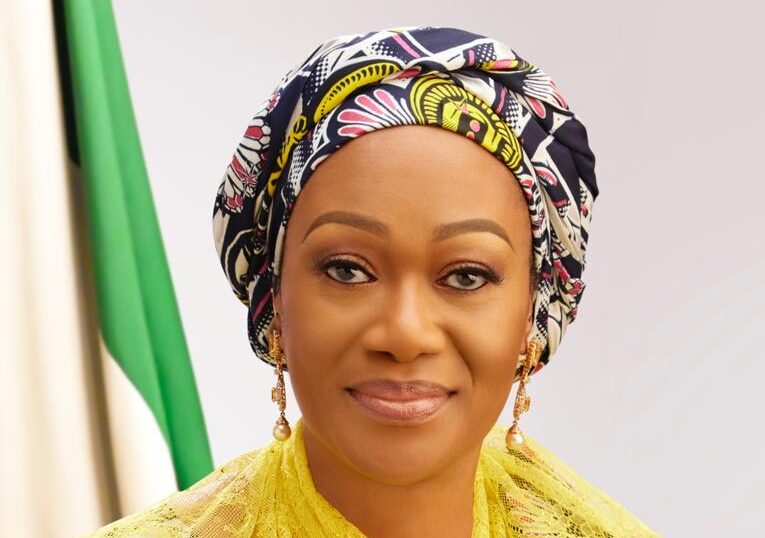
  • First Lady Oluremi Tinubu Secure N25.5bn for National Library as Nation Enters 2026

    First Lady Oluremi Tinubu Secure N25.5bn for National Library as Nation Enters 2026

    As Nigeria transitions into 2026, the Office of the First Lady has coupled its traditional New Year message with a significant fiscal update regarding national educational infrastructure. Oluremi Tinubu has confirmed the successful mobilization of N25.5 billion through the ‘Oluremi @65 Education Fund,’ a capital campaign launched in September 2025 to support the National Library project.

    In her address to the nation, Tinubu emphasized themes of resilience and collective strength. She noted that the fortitude displayed by citizens over the past year serves as a foundation for a stable future, urging a continued commitment to peace and empathy. Her message prioritized the welfare of vulnerable demographics, specifically women and children, calling for created opportunities that allow citizens to thrive with dignity. However, the address moved beyond ceremonial well-wishes to address the conclusion of her high-profile fundraising initiative.

    With the financial target for the library project largely met, the specific donation account is scheduled to close on December 31. The First Lady announced that the administration of the project and any future support will now transition to the Ministry of Education. This handover marks a critical shift from a personal initiative tied to her 65th birthday commemoration to a state-managed infrastructure development project. The consolidation of funds under the Ministry implies a move toward institutionalizing the revitalization of the country’s apex library.

    The swift accumulation of N25.5 billion underscores the significant convening power inherent in the First Lady’s office when leveraged for developmental goals. By formally routing the execution phase through the Ministry of Education, the administration aims to ensure that the substantial private contributions align with broader national standards for knowledge preservation. As the new year begins, public attention will likely pivot to the efficiency with which these funds are deployed to modernize the National Library.