Blog

  • The Paper-Tiger Graveyard

    The Paper-Tiger Graveyard

    In early 2026, the Electricity Act 2023 was supposed to have finally “unbundled” the darkness. New licenses. State-led grids. A funeral for the “National Grid Collapse” headlines. But as the heat of March settles over Lagos and Kano, the hum of the “I-pass-my-neighbor” generator remains the national anthem. Now the question is simple: In a country with a law for everything, why does nothing seem to follow the law?

    The High Cost of the “Shelf-Life”

    Nigeria is a goldmine of brilliant legislation. We have the Petroleum Industry Act (PIA), the Climate Change Act, and the Startup Act. On any international stage, our legal framework looks like a first-world superpower. But go to the Secretariat. Look at the desks. The problem isn’t the ink; it’s the Enforcement Gap.

    • The “Vested Interest” Firewall: Laws that threaten the status quo of “middlemen” often find their way into a bottom drawer.

    • The Funding Mirage: We pass bills that require billions in “Implementation Committees” without a single kobo allocated in the budget.

    • The Lack of Teeth: A law without a penalty is just a suggestion.

    The Ledger of Broken Promises

    The 2026 fiscal data tells a story of “Motion without Movement.”

    • The Gas Flare Penalty: Despite the 2021 PIA, reports from TheCable and Premium Times indicate that gas flaring penalties collected in 2025 dropped by 14%, not because flaring stopped, but because of “administrative waivers” given to major oil firms.

    • The Startup Act Stagnation: Two years after the Nigeria Startup Act was signed, only 7 out of 36 states have fully domesticated it. This leaves 80% of Nigerian tech founders paying “Legacy Taxes” that the new law was meant to abolish.

    • The Gridlock: The Ministry of Power’s Q1 2026 report shows that while ₦3.4 trillion has been injected into the “Distribution” sector since 2023, the average daily supply still fluctuates between 3,500MW and 4,800MW—the same range we’ve occupied for a decade.

    From a macro perspective, this is a Trust Deficit. We are building a library of solutions while living in a room full of problems.

    When the Law Meets the Street

    Now step outside the gazette. Talk to:

    • A Tech Founder in Enugu who still pays “State Development Levies” that the Startup Act says he shouldn’t.

    • A Resident in Ogba whose “Estimated Billing” is three times his actual usage, despite a law mandating universal metering.

    • A Farmer in Benue hearing about “Agricultural Intervention Funds” that are currently trapped in a “Verification Exercise” for the third year running.

    Then look at the reality: A “Paper-Tiger” law gives the government a PR win in Abuja, but it gives the citizen nothing on the ground. That’s not just a statistic. That’s a betrayal of the social contract.

    The Final Friction

    Here is the real tension of the 2026 reform era:

    • The Legislative Success: We have more modern, pro-business laws than ever before.

    • The Operational Failure: The civil service that is supposed to execute these laws is still running on a 1980s manual. Policies fail because Nigeria tries to drive a Ferrari (The Law) with a bicycle engine (The Civil Service).

    The GoPolitical Final Word

    This is not a failure of the National Assembly. But it is a failure of the Executive Will. It is the Enforcement Chasm.

    Policies are not judged by the signature on the bill. They are judged by the change in the bill—the electricity bill, the food bill, the tax bill. Until the “Act” becomes an “Action,” Nigeria will remain a nation of great potential, but even greater frustrations.

    The ink is dry. The paper is filed. But for the millions waiting for the “New Nigeria,” The book remains closed.

  • Strategy Over Structure: APC Chieftain Warns 2027 Election Will Be Defined by Mass Sentiment

    Strategy Over Structure: APC Chieftain Warns 2027 Election Will Be Defined by Mass Sentiment

    Political dynamics within Nigeria are showing signs of a significant paradigm shift, with warnings surfacing from within the ruling party against an over-reliance on traditional party structures and high-profile defections. Sani Shinkafi, a chieftain of the All Progressives Congress (APC), has advised President Bola Ahmed Tinubu to recalibrate his political strategy, positing that the 2027 general election will ultimately be a contest between established political parties and the collective will of the Nigerian masses.

    The argument against relying solely on political machinery is rooted in recent electoral history. The 2015 and 2023 general elections demonstrated that formidable party structures do not guarantee victory when the electorate is dissatisfied. The trajectory of Peter Obi serves as a potent case study; his 2003 governorship victory in Anambra State under the All Progressives Grand Alliance (APGA) occurred despite the party lacking a deep-rooted structure at the time. Similarly, during the 2023 presidential election, the Labour Party managed to defeat the APC in Lagos State and the Federal Capital Territory, despite having no sitting governors or federal lawmakers to mobilize voters.

    These historical precedents suggest that the influence of the ‘godfather’ era and monolithic party control is waning. Even the 2015 victory of former President Muhammadu Buhari over an incumbent Goodluck Jonathan—who controlled the majority of states and federal resources—reinforces the power of public opinion over institutional advantages. While the North-West geopolitical zone played a decisive role in the current administration’s emergence, contributing over 2.8 million votes through the efforts of regional heavyweights, retaining such support requires fulfilling campaign promises rather than engineering defections.

    To navigate the road to 2027, the focus must shift toward governance and grassroots engagement. A strategic think tank designed to reconnect the presidency with the electorate is viewed as essential. Furthermore, the integrity of the process remains paramount. Calls are intensifying for the adoption of real-time electronic transmission of election results. Proponents argue that with Nigeria’s extensive internet coverage, digitizing the transmission process is a viable and necessary step to eliminate the manipulation associated with manual collation, ensuring that leaders who emerge truly reflect the choice of the people.

  • Telecom Sector Disputes Infrastructure Deficit Narrative Following Electoral Act Amendment

    Telecom Sector Disputes Infrastructure Deficit Narrative Following Electoral Act Amendment

    The recent enactment of the Electoral Act 2026 has deepened the schism between political leadership and technical experts regarding the digitalization of the voting process. While the executive branch has justified the exclusion of mandatory real-time electronic transmission of results by citing infrastructural deficits, telecommunications operators have firmly countered this narrative, asserting that Nigeria’s current network backbone is robust enough to support digital democracy.

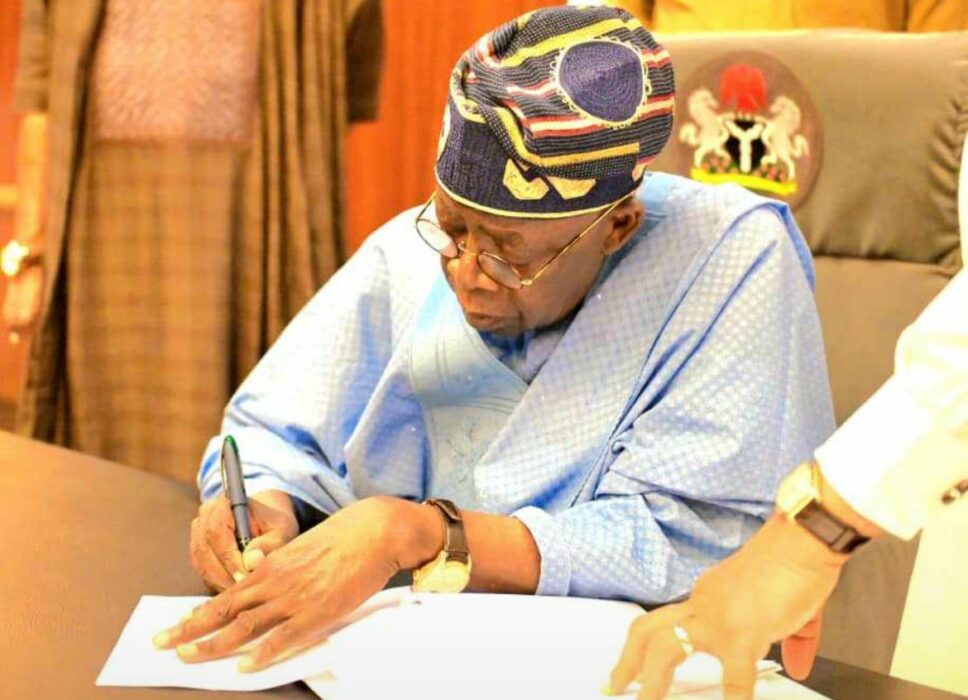
    President Bola Tinubu’s assent to the amendment came with a specific critique of the nation’s broadband capabilities, questioning the technical readiness of the country to handle real-time demands. The President emphasized that the credibility of an election relies more heavily on human management and administrative oversight than on technological systems. However, this position faces sharp contradiction from the Association of Licensed Telecom Operators of Nigeria (ALTON).

    Industry leaders, including major carriers like MTN, Airtel, Globacom, and T2 Mobile, maintain that the arguments against electronic transmission rely on obsolete data. According to ALTON Chairman Gbenga Adebayo, the current network architecture is more than adequate. With over 70 percent of the nation covered by 3G and 4G networks and 5G penetration sitting at 11 percent, the infrastructure is substantial. Furthermore, operators point out that even the older 2G network, which covers the remaining areas, possesses the bandwidth necessary to transmit text-based election results.

    The technical rebuttal suggests that the hesitation to fully digitize the collation process may be more political than structural. While operators acknowledge that security instability in insurgency-prone zones hinders facility maintenance in specific pockets, they argue that these localized challenges should not dictate a nationwide prohibition on electronic transparency. This stance mirrors the position of the Independent National Electoral Commission (INEC), which has previously clarified that result viewing devices are designed to upload data automatically once they reconnect to a network, negating the need for constant real-time connectivity in remote areas.

    As the nation looks toward the 2027 general elections, the discourse centers on the balance between operational integrity and transparency. With civil society groups identifying electronic transmission as a cornerstone of public trust, the divergence between the government’s caution and the private sector’s confidence highlights a critical policy gap that remains unbridged.

  • Akpabio Defends New Electoral Framework as Reflection of National Will Over Political Noise

    Akpabio Defends New Electoral Framework as Reflection of National Will Over Political Noise

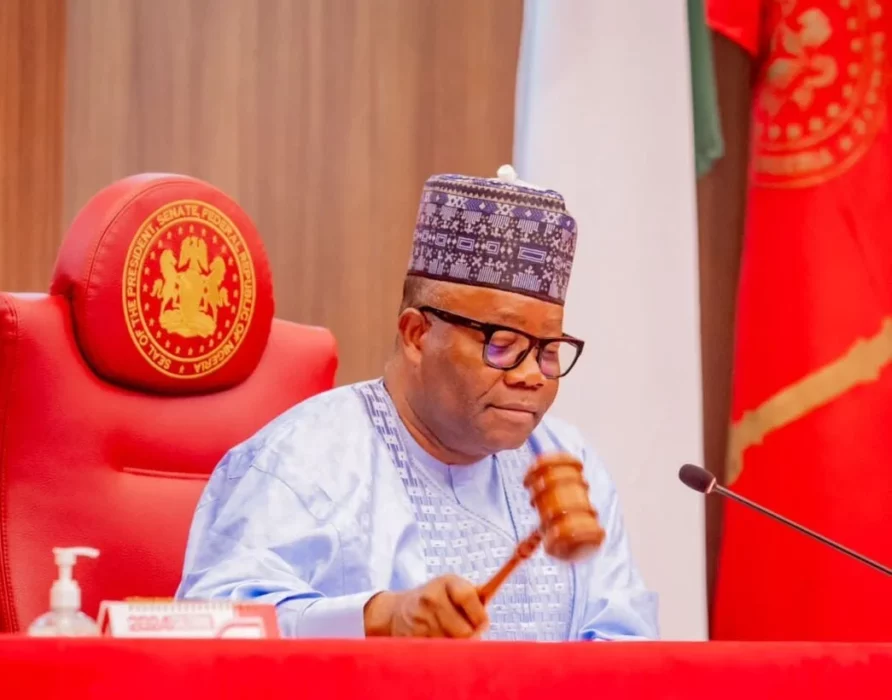
    The recent presidential assent to the amended electoral framework marks a significant pivot in Nigeria’s legislative landscape. Following the signing ceremony at the Presidential Villa, the leadership of the National Assembly has moved to define the narrative surrounding the new law, positioning it as a direct response to public demand rather than a concession to external pressure. Senate President Godswill Akpabio characterized the legislation as a product of meticulous deliberation and patriotism, asserting that the legislative branch prioritized the authentic yearnings of the citizenry over what he described as distractions from politically motivated actors.

    In his assessment, the Senate President drew a sharp distinction between the genuine aspirations of the majority and the loud objections of a vocal minority. He insisted that the lawmakers successfully filtered out this “noise” to craft a statute that addresses the specific peculiarities of the Nigerian political environment. Akpabio maintained that the National Assembly remained focused on thoroughness, resisting undue interference to deliver a historic piece of legislation aimed at ushering in an era of greater prosperity and fairness in democratic engagements.

    A central pillar of this legal overhaul is the statutory validation of technological integration in the voting process. The new act provides solid legal backing for the result viewing portal, commonly known as IReV, establishing it as a legitimate and verifiable record of polling unit outcomes. Crucially, the legislation addresses infrastructure deficits by ensuring that electronic results from areas with poor network coverage will automatically synchronize with the central portal once connectivity is restored. This mechanism is designed to close the data gap between polling units and collation centers, effectively curbing the potential for result manipulation during transit. As the nation looks toward future election cycles, this framework aims to cement transparency as a standard, independent of logistical challenges.

  • Opposition Heavyweights Rally in FCT as ADC Challenges APC Grip on Capital Councils

    Opposition Heavyweights Rally in FCT as ADC Challenges APC Grip on Capital Councils

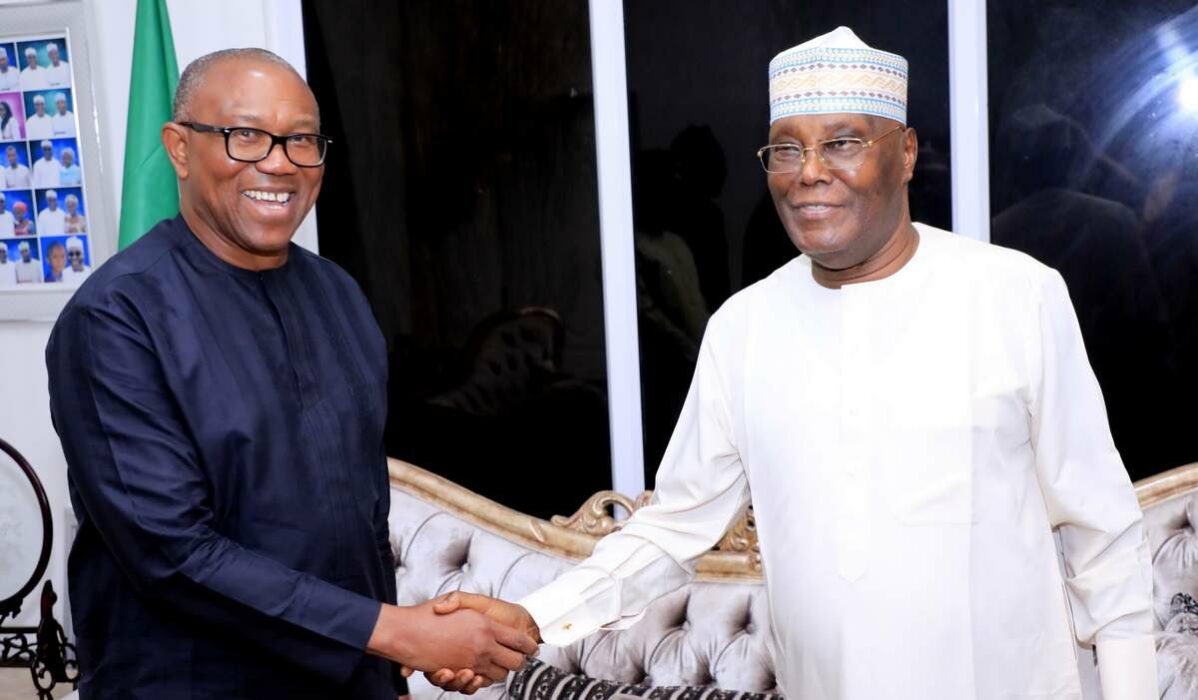
    With the Federal Capital Territory Area Council elections looming, the political temperature in Abuja has risen sharply. The African Democratic Congress has launched a vigorous campaign to unseat the ruling All Progressives Congress, positioning the upcoming February 21 vote as a critical referendum on the current administration’s performance. High-profile political figures, including former Vice President Atiku Abubakar and former Anambra State Governor Peter Obi, spearheaded a mobilization drive in Gwarinpa to bolster support for ADC candidates across the six area councils.

    The opposition leadership framed the Saturday polls as a decisive test for the credibility of Nigeria’s electoral management body. They argued that the transparency and fairness of this local exercise would serve as a major indicator of the nation’s readiness for future democratic engagements. Beyond the mechanics of voting, the campaign rhetoric centered on a fierce critique of the federal government under President Bola Tinubu. Leaders pointed to deepening economic hardships, deteriorating security, and falling educational standards as urgent reasons for the electorate to seek alternatives at the grassroots level.

    Voters in Abaji, Abuja Municipal, Bwari, Gwagwalada, Kuje, and Kwali are being urged to prioritize competence and character over party dominance. The ADC leadership emphasized that the electorate must remain resolute against intimidation and use the ballot to demand accountability. As the capital prepares for the polls, the election is shaping up to be a symbolic battleground, measuring public sentiment regarding the ruling party’s handling of national poverty and safety concerns.

  • Strategic Realignment in FCT: AA Candidate Endorses APC Rival Ahead of AMAC Polls

    Strategic Realignment in FCT: AA Candidate Endorses APC Rival Ahead of AMAC Polls

    With the Federal Capital Territory Area Council elections looming just 48 hours away, the political dynamics within the Abuja Municipal Area Council (AMAC) have undergone a significant realignment. Hon. Godson Nemieboka, the chairmanship candidate for the Action Alliance (AA), has formally withdrawn from the race, effectively collapsing his campaign structure into that of the All Progressives Congress (APC). This last-minute development sees the AA standard-bearer endorsing Christopher Zakka, the APC candidate, in a bid to reshape the electoral math ahead of the Saturday polls.

    The decision to step down was announced in Abuja on Thursday following intensive consultations with his running mate, Hon. Philip Babawa, and the party’s leadership caucus. The pivot is reportedly driven by a desire to prevent the fragmentation of votes, which Nemieboka argued would be detrimental to the long-term interests of the council’s residents. By unifying forces with the APC, the objective is to secure a path toward stability and accelerated development for the municipality.

    Framing the withdrawal as a matter of strategic foresight rather than external pressure, the former candidate emphasized that leadership requires the wisdom to consolidate power when necessary. Consequently, the Action Alliance campaign machinery and grassroots networks have been directed to mobilize support for the APC victory. As political activities reach their peak ahead of the February 21 exercise, this merger of interests introduces a new variable into the contest, potentially altering the projected outcomes for local administration leadership.

  • Kwankwasiyya Movement Flags Risks of One-Party Dominance and Legislative Conformity

    Kwankwasiyya Movement Flags Risks of One-Party Dominance and Legislative Conformity

    Nigeria’s democratic trajectory is currently facing intense scrutiny amidst fears that the political space is shrinking. The Kwankwasiyya Movement has formally raised alarms regarding the consolidation of power, warning that the convergence of legislative conformity and unchecked political defections threatens to birth a de facto one-party state. This intervention comes at a time when the balance of power within the polity is tilting heavily in favor of the ruling establishment, raising questions about the future of competitive multi-party democracy.

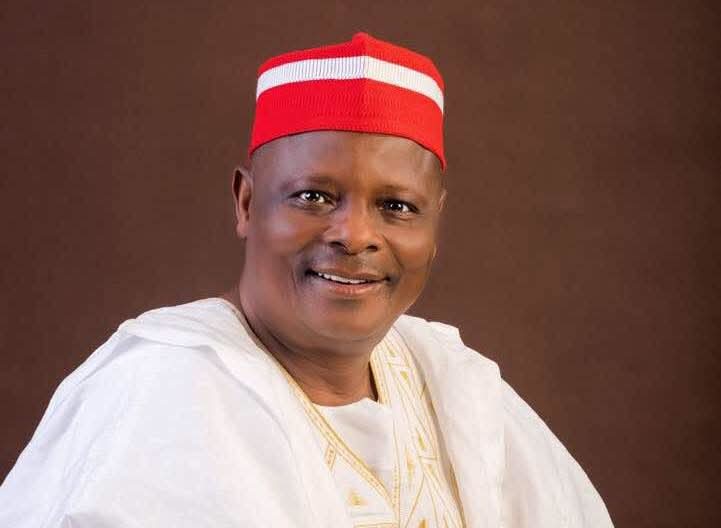
    At the heart of this critique is the recent enactment of controversial amendments to the Electoral Act. Despite significant pushback from civil society groups and technical experts urging for robust safeguards, the rapid passage and presidential assent to these laws have been cited as evidence of a disconnect between governance and public will. Dr. Habibu Sale Mohammed, speaking for the movement led by Senator Rabiu Musa Kwankwaso, highlighted that this legislative acceleration bypassed necessary consensus, effectively cementing the ruling All Progressives Congress’s grip on both the executive and legislative branches. The concern is that the ruling party now wields overwhelming influence, allowing it to steer policy without the friction necessary for a healthy democracy.

    Beyond statutory changes, the erosion of opposition ranks through cross-carpeting remains a pivotal concern. When lawmakers migrate to the ruling party after securing mandates on alternative platforms, it raises profound constitutional and ethical questions. These movements are not merely administrative adjustments but are viewed as a distortion of the social contract with voters. By diluting the opposition’s numerical strength, the capacity for the legislature to perform its oversight functions and resist executive overreach is significantly compromised. The argument posits that without a vibrant opposition to scrutinize proposals, the legislature risks becoming a rubber stamp for executive desires.

    History suggests that democratic regression is rarely sudden; rather, it manifests through the normalization of political opportunism and the stifling of dissenting voices. Preserving the integrity of the republic requires more than just periodic elections; it demands elected officials who honor their ideological commitments and a citizenry that remains vigilant against the concentration of power. The sustainability of Nigeria’s democracy now hinges on the resilience of its institutions against the allure of political convenience and the determination of the electorate to demand accountability.

  • Electoral Reforms and the Predictability of Power: Unpacking the New Amendment

    Electoral Reforms and the Predictability of Power: Unpacking the New Amendment

    The recent presidential assent to the Electoral Act (Amendment) Bill 2026 has arrived not as a surprise, but as the inevitable termination of a calculated legislative trajectory. For seasoned observers of the National Assembly, the alignment between the legislature and the executive was evident long before the ink dried on the document. Senator Victor Umeh of Anambra Central suggests that expecting a presidential veto would have required ignoring the clear political signals broadcast during the bill’s passage. The process, from committee debates to the final vote, appeared systematically designed to ensure this precise outcome.

    Central to the amendment is the contentious mechanism for election result management. The legal disputes following the 2023 general election highlighted a critical ambiguity in the previous 2022 Act: while the electoral commission had the discretion to determine result transfer methods, the law did not explicitly mandate electronic transmission. This legislative gap, confirmed by Supreme Court rulings, necessitated a statutory update to prevent similar litigations in future cycles. The new law attempts to bridge this void by giving clear legal backing to digital transmission, theoretically closing the door on the interpretive disputes that plagued the last presidential poll.

    However, the “communication failure” proviso introduced during the harmonization of the bill threatens to undermine these technological gains. Critics argue that by legally codifying an exception for connectivity issues, the legislature has inadvertently—or perhaps deliberately—created a loophole. If the law explicitly permits the jettisoning of electronic transmission whenever a glitch is claimed, it reintroduces the vulnerability of manual collation. This caveat, fought over intensely in the Senate, raises concerns that the very safeguards meant to ensure transparency can now be legally bypassed, leaving the integrity of the 2027 elections contingent on infrastructure reliability and the good faith of officials.

    Beyond the transmission controversy, the act cements the Bimodal Voter Accreditation System (BVAS) as the exclusive method for voter accreditation and introduces harsher sanctions for electoral malfeasance. While these are progressive steps, the overarching narrative remains focused on whether the “technical loophole” will serve as a pragmatic safety net or a tool for subverting the popular will.

  • Senate Works Committee Chairman Barinada Mpigi Dies at 64

    Senate Works Committee Chairman Barinada Mpigi Dies at 64

    The Nigerian Senate has been thrown into mourning following the sudden demise of Barinada Mpigi, the lawmaker representing the Rivers South-East Senatorial District. His passing marks a significant exit from the 10th National Assembly, where he served a pivotal role in legislative oversight regarding national infrastructure.

    Passing away on Thursday at the age of 64, Mpigi held the influential position of Chairman of the Senate Committee on Works. His tenure in the upper chamber was marked by active engagement in the legislative frameworks surrounding federal road projects and public works. While the specific medical cause of his death remains undisclosed at this time, the development has sent shockwaves through the political establishment of the Niger Delta.

    Mpigi was a recognized figure in the intricate political dynamics of Rivers State, maintaining a close political alliance with the Minister of the Federal Capital Territory, Nyesom Wike. The death was publicly acknowledged by Lere Olayinka, a spokesman for the FCT Minister, who expressed condolences regarding the loss. This event strikes a blow to the political structure within the senatorial district and the broader alliance network in the state.

    As the National Assembly grapples with the loss of a committee chairman, attention will eventually turn to the constitutional requirement for a bye-election to fill the vacant seat. For now, the focus remains on the tributes pouring in for a seasoned politician whose career bridged local governance in Rivers State and federal legislative duties in Abuja.

  • The Federalism Friction

    The Federalism Friction

    When the Supreme Court delivered its landmark judgment on Local Government Autonomy in July 2024, it was hailed as a second independence. A legal earthquake. A win for the grassroots. The death of the “Joint Account.” Now, in March 2026, the question is simple: If the law says the money belongs to the Local Governments, why are governors still holding the remote control?

    The Power Tug-of-War

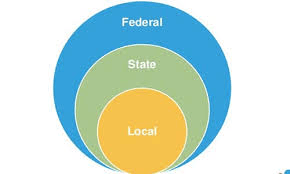
    Nigeria’s governance is a three-story building where the landlord on the top floor (Federal) and the tenants on the ground floor (Local) rarely speak because the middleman (State) has locked the staircase. We call it “Federalism,” but in practice, it is often a bottleneck. At the centre of this issue are:

    • Constitutional Contradictions: Section 7 guarantees local councils, but Section 162 gives States the power to “legislate” their finances.
    • The Caretaker Culture: Governors frequently bypass elections to appoint “Caretaker Committees”—loyalists who won’t question where the money goes.

    • Implementation Inertia: A court ruling is just paper until a bank account is actually credited.

    The Autonomy Gap

    On paper, the push for decentralized funding looks like a revolution, but the 2026 data reveals a “compliance crawl”:

    • The 19-Month Stall: As of January 2026, 19 months after the Supreme Court ruling, the majority of the 774 LGAs still do not receive 100% of their allocations directly. States like Lagos, Imo, and Kwara are still navigating “joint” structures for LCDAs and administrative costs.
    • The Revenue Miss: The Minister of Finance, Wale Edun, recently confirmed that while federal revenue targets for 2025 were met, sub-national (State) performance lagged significantly, with a projected ₦30 trillion revenue gap looming over the 2026 fiscal year.

    • Fiscal Transparency: According to the World Bank’s SFTAS 2025 report, while all 36 states now publish audited financial statements, only 17 states have achieved 80% coverage in their Treasury Single Account (TSA) systems.

    From a macro perspective, this suggests: Abuja is tightening its belt, but the States are still wearing oversized robes.

    Reality on the Ground

    Now step outside the data. Talk to:

    • A Local Government Chairman who has the title but has to beg the Governor’s Chief of Staff for funds to fix a single borehole.
    • A Primary School Teacher whose salary is “guaranteed” on paper but delayed because the State-Local Joint Account is “under reconciliation.”

    • A Market Woman paying “daily tickets” to three different levels of government, none of whom have cleared the drainage in front of her stall.

    Then state what’s happening in real life: The Supreme Court freed the money, but the political machinery hasn’t surrendered the keys. That’s not just a statistic. That is a hijacked democracy.

    The Core Tension

    Here is the real tension:

    • The Federal Level: Is pushing “Executive Order 9” (February 2026) to enforce direct remittances and fiscal fidelity.
    • The State Level: Argues that they provide the “infrastructure and security” that LGAs cannot handle alone, justifying their continued grip on the purse strings. Policies fail because Abuja legislates, but the States dictate.

    Pressure Points

    There are three key areas under scrutiny:

    1. The Electoral Loophole As long as State Independent Electoral Commissions (SIECs) are controlled by Governors, “local” elections will always produce 100% wins for the ruling party in that state.
    2. The “LCDA” Complexity In states like Lagos, federal allocations must be split between 20 constitutionally recognized LGAs and 37 Local Council Development Areas. This creates a mathematical and political nightmare.

    3. Debt Overhang Many states have “deductions at source” for old loans. When these hit the LGAs, there is often nothing left but stories.

    The Verdict

    This is not a lack of law. But it is a resistance of power. It is the Compliance Struggle.

    Policies are not judged by the judgment of the Supreme Court. They are judged by the autonomy of the local council. Until the money hits the LGA account without a “stopover” at the State House, the grassroots will remain dry.

    (the last part of this series is under way….)