Blog

  • YPP Triggers 2027 Countdown; Unveils Nationwide Congress & Convention Timetable

    YPP Triggers 2027 Countdown; Unveils Nationwide Congress & Convention Timetable

    The Young Progressives Party (YPP) has officially fired the starting gun for the 2027 election cycle. In a move designed to catch the “Old Guard” off guard, the party’s National Working Committee (NWC) has released a comprehensive timetable for its Ward, Local Government, and State Congresses, culminating in a National Convention.

    The Roadmap to 2027

    The YPP’s strategy is clear: Internal Democracy. By starting their congresses early in 2026, they are aiming to resolve internal leadership disputes and solidify their grassroots structures long before the “big sharks” even begin their primaries.

    Key Phases of the Timetable:

    1. Grassroots Mobilization (May – June 2026): Ward and Local Government Congresses to elect executive members and delegates.

    2. State Consolidation (July 2026): State Congresses to finalize regional leadership across all 36 states and the FCT.

    3. The National Climax (Late 2026): The National Convention, where the party will likely ratify its strategy for the 2027 Presidential and National Assembly elections.

    The “New Breed” Strategy

    The YPP is doubling down on its brand as the party for “Mentally Progressive and Young Innovative Leaders.” National Chairman Comrade Bishop Amakiri has hinted that this timetable is a response to the “failed promises” of the larger coalitions. While the PDP and APC are currently distracted by internal fractures, the YPP is focusing on Membership Drive and Digital Registration—leveraging the same demographic that powered the 2023 surge.

  • Senator Ibrahim Lamido Dumps APC, Joins ADC over Sokoto Security Crisis

    Senator Ibrahim Lamido Dumps APC, Joins ADC over Sokoto Security Crisis

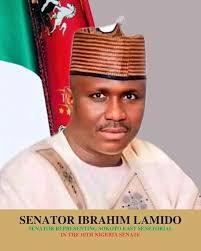
    The “Silk Curtain” isn’t the only thing shifting in Abuja this week. In a major blow to the APC’s North-West stronghold, Senator Ibrahim Lamido, representing Sokoto East, has formally resigned from the ruling All Progressives Congress.

    This isn’t your typical “political season” defection. In a stinging resignation letter dated April 22, 2026, and made public on Sunday, April 26, the Senator stripped away the usual political pleasantries to reveal a district in deep crisis.

    The “Good Conscience” Exit

    Senator Lamido’s departure is anchored in two heavy accusations:

    1. Security Failure: He cited the government’s “inadequate response” to persistent banditry in local governments like Sabon Birni, Isa, and Rabah. He stated he could no longer remain in a system that fails to safeguard the lives of his people “in good conscience.”

    2. Internal Sabotage: The Senator slammed the Sokoto APC for “ongoing internal party crisis, suspicion, and unfair leadership style,” which he claims has made progress impossible.

    Why ADC?

    Lamido is set to pick up the membership card of the African Democratic Congress (ADC). This is a massive strategic win for the ADC, which is positioning itself as the “Alternative Platform” for the 2027 cycle. Interestingly, Lamido noted that he is aware of the current legal issues within the ADC but dismissed them, famously stating: “Security cannot wait for political stability.”

    The GoPolitical “Waza”: The Northwest Fracture

    For our GoPolitical audience, this is the “Waza” (the deep secret): The defection signals a widening gap between the local realities of the North-West and the narratives being pushed from the State House in Sokoto. While Governor Ahmed Aliyu recently claimed security efforts were yielding results, Lamido’s exit is a public vote of “No Confidence” in that assessment.

  • Accord Party disowns Ibadan Coalition, Issues 48-Hour Ultimatum

    Accord Party disowns Ibadan Coalition, Issues 48-Hour Ultimatum

    The ink on the Ibadan “Joint Communiqué” is barely dry, and the first major defection has already hit the headlines—though, according to the Accord Party, they were never “in” to begin with.

    In a sharp and litigious turn of events, the Professor Chris Imumolen-led Accord Party has vehemently denied any involvement in the Saturday summit held in Ibadan, Oyo State. Despite their party flag being displayed alongside the PDP and ADC, the party leadership is calling the move “political impersonation.”

    “You Cannot Borrow Legitimacy by Force”

    The statement, signed by National Secretary Muktar Abdallah, didn’t just distance the party; it launched a frontal assault on the credibility of the opposition leaders—including Governor Seyi Makinde and David Mark—who convened the meeting.

    The Core Allegations:

    1. Unauthorized Symbols: The party claims its flag and name were used without consent to create a “false impression” of a unified front.

    2. Strategic Independence: Prof. Imumolen clarified that the Accord Party is not a “footnote” and intends to field its own presidential candidate for 2027, rather than joining a “hastily assembled coalition.”

    3. Legal Threat: The party has issued a 48-hour ultimatum for the summit organizers to explain the “misrepresentation.” Failure to do so, they warn, will trigger immediate legal action in court.

    Why This Matters for GoPolitical Readers

    This development shatters the narrative of “total opposition unity” that emerged from Ibadan over the weekend. As we analyzed in our previous deep dives, the path to challenging the incumbent in 2027 is fraught with “ego-clashes” and “shadow-boxing.”

    If the coalition is already being accused of “identity theft” by fellow opposition parties, it raises a massive red flag regarding the transparency of their negotiations. It suggests that the “Single Candidate” dream may be more of a PR stunt than a grounded political reality.

  • The Modern Paradigm & The Future

    The Modern Paradigm & The Future

    In the previous part of Behind the Silk Curtain, we explored the “Continental Mirror,” seeing how Nigeria’s model compares to the corporate efficiency of Rwanda and the financial inclusion of Kenya. Now, as we arrive in 2026, the “Silk Curtain” is undergoing its most significant transformation yet.

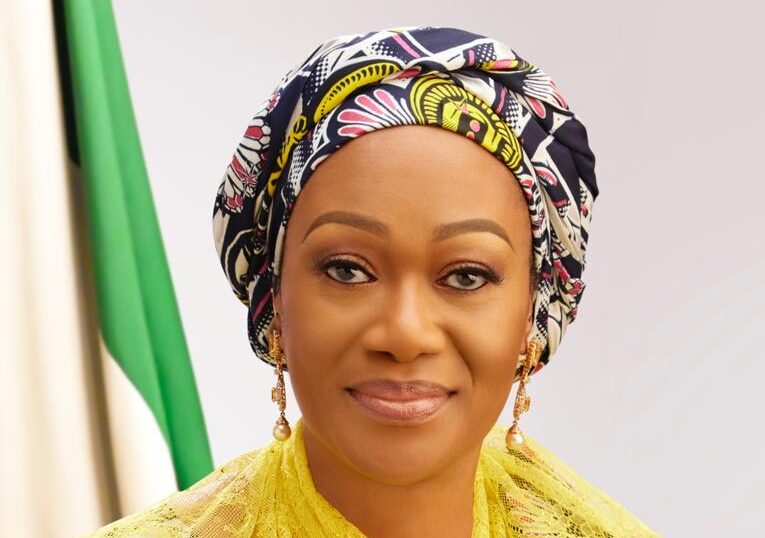
    Under Senator Oluremi Tinubu, the Office of the First Lady (OFL) has entered a “Professional Era.” For the first time in Nigeria’s history, the office is occupied by someone who was herself a three-term high-ranking legislator. This isn’t just a change in personnel; it is a change in the very DNA of the office—moving from the “Pet Project” era into the Renewed Hope Initiative (RHI) era, a platform that functions more like a multi-sectoral development agency than a spouse’s hobby.

    The Billion-Naira NGO: Funding in the 2020s

    The modern paradigm is defined by a massive scale-up in resource mobilization. As of April 2026, the Renewed Hope Initiative has reportedly mobilized over ₦100 billion in its first three years. This is a staggering figure that underscores the “Silk Curtain’s” ability to attract capital where traditional ministries often struggle.

    But the “Waza” here is in the how. Unlike the opaque funding of the military 90s, the RHI operates as a hybrid NGO. It pulls from a sophisticated mix of private philanthropy (such as the ₦20 billion in-kind pledge from the Dangote Foundation) and structured government partnerships. Yet, even with a board of reputable directors, the old question persists: Where does the NGO end and the Government begin? With ₦17 billion in commitments from the Federal Government’s Social Action Fund, the line between private advocacy and public expenditure has never been thinner.

    From Grinding Machines to Digital Literacy

    The focus has also pivoted. If Part 1 was about “Home Economics” and Part 2 was about “Rural Cooperatives,” Part 5 is about Institutional Scale. The RHI interventions are now surgically targeted:

    • Education: 43 multi-year scholarships and nationwide digital literacy training for women in partnership with NITDA.

    • Social Protection: The “Elderly Support Scheme” and “Flow with Confidence” programs, which distribute billions in welfare and sanitary products to hundreds of thousands of beneficiaries.

    • Food Security: The 2026 launch of the National Community Food Bank Programme, which leverages ₦66 billion in pledges to tackle the inflation crisis directly.

    This is the First Lady as a Policy Partner. By leveraging her legislative background, Oluremi Tinubu has successfully integrated her initiative with the National Development Plan, making the OFL a primary vehicle for the President’s “Renewed Hope” social contract.

    The 2027 Horizon: To Constitutionalize or Not?

    As we look toward the future, the “Silk Curtain” faces a crossroads. In the National Assembly, debates over the Special Seats for Women Bill and other constitutional amendments continue to simmer. There is a growing school of thought that the Office of the First Lady should finally be given a formal constitutional role to ensure transparency and continuity.

    However, the counter-argument is equally strong: a constitutionalized office might become a permanent drain on the treasury, losing the “flexible soft power” that makes it so effective today. For now, the office remains a Social Impact Powerhouse that exists outside the law but dominates the reality of Nigerian governance.

  • The Continental Mirror

    The Continental Mirror

    In the previous parts of Behind the Silk Curtain, we analyzed how the Nigerian First Lady evolved from a “Silent Hostess” into a “Shadow Cabinet.” But is this purely a Nigerian phenomenon? If we pan the camera across the African continent, we find that the “Matriarchal Architecture” is the standard for high-level governance in nearly every regional power.

    From Kigali to Nairobi to Accra, the Office of the First Lady (OFL) has become the continent’s most effective vehicle for Human Capital Development. However, while Nigeria’s model is defined by its raw political mobilization, our neighbors have perfected a different art: the Institutionalized Foundation.

    Rwanda: The “Imbuto” Efficiency

    If you want to see the “CEO Model” perfected, you look at Jeannette Kagame. Since 2001, her Imbuto Foundation (Kinyarwanda for “Seed”) has operated less like a political pressure group and more like a high-performance multinational corporation.

    Unlike the Nigerian “Pet Project” model—which often changes names and focus whenever a new First Lady takes office—Imbuto has maintained Institutional Continuity for 25 years. It is explicitly tied to Rwanda’s “Vision 2050” and the National Strategy for Transformation. In Rwanda, the First Lady isn’t a “gatekeeper” to the President; she is the “Patron of Human Capital.” Her focus is data-driven, targeting HIV prevention, girl-child education, and youth entrepreneurship with a level of transparency that often eludes the Abuja-based “Silk Curtain.”

    Kenya: The “Grassroots Financier”

    In Kenya, Rachel Ruto has redefined the role through the lens of Financial Inclusion. Her flagship initiative, MaMa Doing Good, is anchored in a system called “table banking.”

    While Nigerian First Ladies have historically focused on distributing aid (grinding machines, sewing kits), the Kenyan model focuses on Collective Agency. MaMa Doing Good has organized over 250,000 women into 17,000 groups, revolving over $30 million in micro-loans. Rachel Ruto’s office functions as a “Catalytic Platform,” bridging the gap between grassroots spirituality and high-level economic policy. In Kenya, the First Lady is the nation’s “Chief Micro-Financier,” a role that gives her a direct, non-political line into the pockets of the rural electorate.

    Ghana: The “Gap-Filler” Strategy

    Rebecca Akufo-Addo of Ghana represents the “Strategic Partner” model. Her Rebecca Foundation operates with a specific mandate: “To support the government’s efforts.”

    In Ghana, the “Silk Curtain” is used to fill infrastructure gaps that the traditional Ministry of Health cannot reach quickly. Within months of her husband taking office, her foundation built a new Mother and Baby Unit at the Komfo Anokye Teaching Hospital—a project that had been stalled for 40 years. This “Gap-Filler” strategy is highly popular because it provides tangible, physical “monuments” of success that reflect directly on the President’s performance without the “political noise” often associated with the Nigerian OFL.

    The AFLPM: Nigeria as the Matriarch of Africa

    Despite these varying models, Nigeria remains the “Big Sister” of the continent through the African First Ladies Peace Mission (AFLPM). Headquartered in Abuja, this body is the diplomatic arm of the Matriarchal Architecture.

    As we’ll see in our final part, this regional leadership is why the Nigerian First Lady’s office is so difficult to abolish. It is not just a domestic office; it is a Diplomatic Outpost. At the 2026 OAFLAD (Organization of African First Ladies for Development) Assembly in Addis Ababa, it was clear that the “Nigerian Model”—one of aggressive advocacy and high-level political lobbying—is increasingly being adopted by other nations to “build resilience” against climate and conflict shocks.

  • The Democratic Shadow Cabinet (1999–2015)

    The Democratic Shadow Cabinet (1999–2015)

    In the previous part of Behind the Silk Curtain, we saw how the military eras of the 80s and 90s built the bureaucratic “bones” of the Office of the First Lady (OFL). But when Nigeria returned to democracy in 1999, many expected the office to wither away under the scrutiny of a constitutional republic. Instead, the opposite happened. Between 1999 and 2015, the OFL evolved into something far more potent: a Democratic Shadow Cabinet.

    During these sixteen years, the First Lady was no longer just a mobilizer for rural women; she became a gatekeeper of executive access, a campaigner-in-chief, and a primary architect of social policy.

    Stella Obasanjo: The Moral Compass and the 2005 Turning Point

    When Stella Obasanjo entered the Villa in 1999, she brought a sense of “Subtle Authority.” Unlike the military wives before her, she had to navigate a critical press and a skeptical National Assembly. Her Child Care Trust (CCT) was a masterclass in modern NGO branding—focusing on children with disabilities, a demographic often ignored by the state.

    However, Stella’s true impact was in the Shadow Diplomacy she practiced. She became the “voice” of her husband during his international re-engagement tours, helping to soften the image of a former military ruler. Her sudden death in 2005 while in office remains a pivotal moment in the history of the “Silk Curtain”—it was the first time the nation collectively mourned a First Lady as a national figure, effectively “sanctifying” the office in the public consciousness despite its lack of constitutional backing.

    Turai Yar’Adua: The Gatekeeper of the Villa

    As we saw with the “Silent Foundation” of earlier decades, the First Lady often reflected her husband’s health and style. Under Hajiya Turai Yar’Adua (2007–2010), the “Silk Curtain” became a literal barrier. As President Umaru Yar’Adua’s health declined, the OFL became the most powerful office in the country.

    Turai didn’t just run the Women and Children’s Hospital in Abuja; she ran the access list to the President. Investigative reports from this era highlight a shift where the First Lady was no longer just a social advocate but a Political Arbiter. Ministers and Power-brokers realized that the shortest path to a presidential signature was through the First Lady’s wing. This era proved that in a crisis of leadership, the “Soft Power” of the spouse can instantly harden into “Hard Power.”

    Patience Jonathan: The 35% Revolution

    If Turai was the gatekeeper, Dame Patience Jonathan (2010–2015) was the Mobilizer. This was the era where the OFL merged completely with the political party machinery. Through her Women for Change and Development Initiative (W4CDI), she didn’t just advocate for women; she demanded a seat at the table.

    The “Patience Era” is responsible for the most significant shift in Nigerian gender politics: the realization of the 35% Affirmative Action in the executive arm. She didn’t just suggest it; she campaigned for it at every rally, turning the OFL into a “Pressure Group” that the Presidency could not ignore. By 2011, Nigeria had a female Coordinating Minister of the Economy and a female Petroleum Minister—appointments that were as much a product of the “Silk Curtain’s” pressure as they were of professional merit.

    The Cost of the Ballot Box

    The democratic era also brought the Fundraising Paradox. Unlike the military era, where money was simply “allocated,” democratic First Ladies had to host “Gala Nights” and “Fundraisers.” Our data desk shows that between 2000 and 2015, these pet projects raised billions of naira from private sector players who, in turn, often received government contracts. The “Shadow Cabinet” had found its own treasury, operating parallel to the federal budget, with zero oversight from the Auditor-General.

  • The Maryam Babangida Revolution (1985–1998)

    The Maryam Babangida Revolution (1985–1998)

    In the previous part of Behind the Silk Curtain, we explored how the wives of Nigeria’s early leaders operated as “Legal Ghosts”—influential in the parlor, but invisible in the budget. However, on August 27, 1985, a new kind of power entered Dodan Barracks. If Flora Azikiwe provided the image and Victoria Gowon provided the heart, Maryam Babangida provided the blueprint. She was the woman who looked at the “First Lady” label and decided it was not a title, but an industry.

    Between 1985 and 1998, the Office of the First Lady (OFL) underwent a tectonic shift. It moved from hosting tea parties to managing multi-billion naira social engineering projects. This was the era where “The Silk Curtain” was drawn back, revealing a sophisticated, albeit extralegal, organ of the state that could mobilize more people than many federal ministries combined.

    The Launch of the “CEO” Model

    The revolution began in September 1987 with the launch of the Better Life Program for Rural Women (BLP). This was not a minor charity; it was a nationwide mobilization effort. For the first time, the wife of the Head of State had a dedicated staff, a press corps, and a fleet of vehicles.

    Maryam Babangida’s genius was in her understanding of Institutional Visibility. She didn’t just ask for change; she built monuments to it. The Maryama Babangida Women Development Centre in Abuja (now the National Centre for Women Development) stands as the physical headquarters of this revolution. Under the BLP, thousands of rural cooperatives were formed. Women were taught to use grinding machines, process palm oil, and manage cottage industries.

    But as we’ll see in the coming parts regarding the democratic era, this visibility came with a heavy price tag. Critics at the time—including the fiery lawyer Gani Fawehinmi—began to ask: Where is the money coming from? There was no “Office of the First Lady” in the 1979 or 1989 Constitutions, yet the BLP was receiving subventions from state governments and “donations” from federal contractors. Maryam had successfully created a State within a State.

    The Transition to Regional Hegemony

    By the time the Babangida era gave way to the Abacha regime in 1993, the office was too large to dismantle. Maryam Abacha did not shrink the role; she expanded its reach across the borders. While she continued the internal social engineering through the Family Support Program (FSP) and the Family Economic Advancement Programme (FEAP), her most enduring legacy was the African First Ladies Peace Mission (AFLPM).

    In 1997, Abuja hosted the first-ever summit of African First Ladies. This was the moment the “Matriarchal Architecture” went continental. Maryam Abacha argued that while their husbands were off fighting wars or managing coups, the “Mothers of the Nation” were uniquely positioned to advocate for peace and humanitarian aid. This wasn’t just soft power; it was Diplomatic Parallelism. Abuja became the permanent headquarters of the AFLPM, cementing Nigeria’s First Lady as the “First among Equals” on the continent—a status that remains unchallenged today.

    The “Glamour-Policy” Trap

    This era also introduced the “Glamour-Policy” trap. The First Ladies of the 80s and 90s were fashion icons, their headties and silks becoming a form of national branding. However, our investigative “Waza” reveals that the glamour served a tactical purpose: it masked the aggressive political mobilization happening underneath.

    The First Lady was no longer just the “comforter-in-chief.” She was now the Mobilizer-in-Chief. By the end of 1998, the Office had established a template: create a massive “Pet Project,” fund it through a mix of public and private “contributions,” and use it to build a grassroots political base that the Head of State could leverage during times of crisis.

  • The Silent Foundation (1960–1985)

    The Silent Foundation (1960–1985)

    Before the sirens, the “Office of the First Lady” did not exist in the Nigerian statute books. It did not even exist as a line item in the budget. From 1960 to 1985, the wives of Nigeria’s leaders operated in a twilight zone of governance: high visibility, zero constitutional authority, yet immense social gravity. This was the era of the Silent Foundation, where the role was a delicate dance between the colonial “Governor-General’s Wife” model and the burgeoning identity of a new African republic.

    The Colonial Inheritance: Lady Robertson to Flora Azikiwe

    To understand the Nigerian First Lady, one must first look at her predecessor: the wife of the British Governor-General. Women like Lady Nancy Robertson and Lady Macpherson were the templates. Their role was strictly social-managerial—supervising the domestic staff of the State House, Marina, and hosting “tea and garden” diplomacy. They were the faces of British “civilizing” missions, often serving as patrons of the Red Cross or the Girl Guides.

    When Flora Azikiwe stepped into the State House in 1960, she didn’t just inherit a building; she inherited a social expectation. A Howard University-educated Home Economist, “Flora Zik” was the first to bridge the gap. While her husband, Nnamdi Azikiwe, wrestled with the complexities of a multi-ethnic federation, Flora focused on The Home Economics of Nationhood. She was the first to realize that the State House was a symbol. She personally oversaw the renovation of the Marina residence, using meager funds to transform it from a colonial outpost into a home that reflected the status of an independent black nation.

    The Matriarch as a National Comforter (1966–1975)

    If Flora Azikiwe was the architect of the image, Victoria Gowon became the architect of the role’s “Soft Power.” Marrying General Yakubu Gowon in 1969, at the height of the Nigerian Civil War, was a masterstroke of political theater. In a country tearing itself apart, the image of a young nurse from the North marrying the Head of State in a regal ceremony at the Cathedral Church of Christ, Lagos, provided a sense of domestic stability that the military frontlines could not.

    During the “No Victor, No Vanquished” era, Victoria Gowon’s role was one of Medical Diplomacy. As a registered nurse, she used her position not to build a “pet project” in the modern sense, but to advocate for the elevation of nursing standards and professional pay. She was the first First Lady to move from being a “Hostess” to an “Advocate.” Her presence alongside Gowon during his cross-country tours was a visual palliative—a silent signal of reconciliation.

    The Era of “Invisible” Governance (1975–1985)

    Following the 1975 coup, the role retreated into a period of deep conservatism. Ajoke Muhammed and Esther Oluremi Obasanjo were largely shielded from the public eye. This was a deliberate military choice to separate the “Commander-in-Chief” from the “Family Man.”

    However, during the Second Republic (1979–1983), the presence of Hadiza Shagari (and Shehu Shagari’s other wives) brought a different dynamic. The role became communal rather than individual. There was no single “First Lady” brand, but rather a collective representation of the Nigerian household. This lack of a “central” office is precisely what the subsequent era of Maryam Babangida would react against. By 1983, under Safinatu Buhari, the role had reached its most minimal state—Safinatu had no office, no staff, and focused almost entirely on the domestic upbringing of her children and hosting visiting dignitaries

  • Oyedele’s N40tn revenue gamble begins

    Oyedele’s N40tn revenue gamble begins

    The departure of Wale Edun marks the end of the “Architectural Phase” of Nigeria’s economic reforms—a period defined by the painful removal of subsidies and the dismantling of the CBN’s money-printing machine. As Taiwo Oyedele officially takes the oath of office as the Minister of Finance and Coordinating Minister of the Economy, Nigeria enters the “Extraction Phase.” The mandate given to Oyedele by the Presidency is as clear as it is daunting: he must find ₦40.7 trillion in revenue for the 2026 fiscal year, or watch the administration’s “Renewed Hope” agenda collapse under the weight of the ₦159 trillion debt shadow.

    Oyedele, the man who spent the last two years chairing the Presidential Committee on Fiscal Policy and Tax Reforms, is no longer just a consultant providing recommendations. He is now the “Chief Revenue Officer” of a nation in a fiscal emergency. His appointment signals a fundamental pivot in the Villa’s strategy: they have stopped trying to shrink the government to fit the revenue; they are now attempting to expand the revenue to fit the government.

    The Architecture of the 40 Trillion Target

    To understand the scale of the “Oyedele Gamble,” one must look at the numbers. In 2024 and 2025, Nigeria struggled to cross the ₦15 trillion mark in actual non-oil revenue. Oyedele’s ₦40.7 trillion target represents a nearly 170% increase in performance. For any other technocrat, this would be viewed as a mathematical impossibility. But Oyedele’s “Waza” (insider secret) is based on two pillars: Data Consolidation and Enforcement Automation.

    Our investigative team at the “Amina” desk has analyzed the new “Integrated Revenue Portal” (IRP) that Oyedele began designing before his promotion. The goal is to collapse over 60 different federal and state taxes into a single, digitally tracked “Unity Tax” system. By leveraging the Bank Verification Number (BVN) and National Identification Number (NIN) linkages, the Ministry of Finance plans to automatically flag “tax-to-lifestyle” discrepancies. If you are flying business class or purchasing luxury property in Lagos, the “Oyedele Taxman” will know if your declared income matches your spending.

    The Informal Sector: The Final Frontier

    The most controversial part of the Oyedele mandate is the “Grassroots Extraction.” For decades, the informal sector—comprising nearly 80% of Nigeria’s workforce—has operated largely outside the tax net. Edun avoided this sector to prevent social unrest, but Oyedele has signaled that the “Spectator Era” is over.

    The strategy involves a “Digital Toll” system. By integrating tax collection into mobile data purchases, electricity payments, and digital banking transactions, the government aims to collect small, frequent amounts from millions of citizens who previously paid nothing to the central treasury. The risk, however, is immense. Investigative reports from market associations in Onitsha and Kano suggest that any attempt to aggressively tax the “survival economy” of the informal sector could trigger the very social instability that the “Supplementary Budget” was intended to prevent.

    The Political Clock and the 2027 Horizon

    Why the rush? The answer lies in the 2027 political calendar. The Presidency knows that it cannot go into an election year with a stalled economy and a 74% debt-service ratio. They need “Voter Projects”—roads, rail, and social handouts—and they need them visible by Q1 2027.

    Oyedele has been given a 24-month “window of aggression.” He is expected to front-load revenue collection in 2026 to provide the “Stimulus Cash” needed for 2027. Our Villa sources indicate that Oyedele’s performance will be judged not by his macroeconomic speeches, but by the “Treasury Single Account” (TSA) balance at the end of every quarter. If the ₦40.7 trillion target isn’t hit, the administration will be forced back to the international markets to borrow at even higher interest rates, effectively nullifying everything Edun worked for.

    The Human Cost of the Ledger

    The investigative reality of the “Oyedele Era” is that it will be the most “intrusive” fiscal period in Nigerian history. The transition from Edun’s “Fiscal Guardrails” to Oyedele’s “Revenue Aggression” means that the government is moving from being a “Manager of Debt” to a “Collector of Wealth.”

    For the average Nigerian, the “Oyedele Gamble” feels like a pincer movement. On one side, the removal of subsidies has increased the cost of living; on the other, the new tax regime will decrease disposable income. The success of this era depends on a “Trust Dividend” that is currently in short supply. If Nigerians see their taxes being translated into working hospitals and motorable roads, Oyedele will be remembered as the man who saved the republic. If the ₦40.7 trillion is swallowed by the “Administrative Black Hole” of Abuja, he will be remembered as the man who taxed a struggling nation into a standstill.

    Closing the Autopsy

    The 5-part saga of the Edun-Senate-Presidency standoff reveals a nation at a crossroads. Wale Edun was the “Brake Man” who stopped the train from flying off the cliff of hyperinflation. Taiwo Oyedele is now the “Engine Man” tasked with finding the fuel to move the train forward.

    The ₦159 trillion debt is still there. The 2026 budget discrepancies are still there. But the philosophy has changed. Nigeria has moved from the era of “We don’t have money” to the era of “We will find the money in your pockets.” As the sun sets on the Edun era and rises on the Oyedele mandate, the only certainty is that the ledger must be balanced—and one way or another, the Nigerian people will be the ones to balance it.

  • Debt hits N159tn as fiscal guardrails weaken

    Debt hits N159tn as fiscal guardrails weaken

    While the political elite in Abuja were busy choreographing Wale Edun’s “graceful exit” on his 70th birthday, a far more ominous number was being etched into the ledgers of the Debt Management Office (DMO). By the close of the 2025 fiscal year, Nigeria’s total public debt stock had surged to an unprecedented ₦159.28 trillion. To the average Nigerian, this figure is so large it becomes an abstraction—a collection of zeros on a spreadsheet. But in reality, it is a heavy, invisible ceiling that is currently crushing the life out of the country’s economic recovery.

    The transition from Wale Edun to Taiwo Oyedele isn’t just a change of personnel; it is a desperate attempt to manage a “Debt-Revenue Mismatch” that has reached its breaking point. For years, Nigeria has been borrowing to pay interest on previous borrowings. We have entered the “Debt Trap,” and the walls are closing in.

    The Anatomy of the N159 Trillion Shadow

    The composition of this ₦159 trillion debt is a cocktail of past mistakes and current crises. Roughly ₦98 trillion of this is domestic debt—money owed to local banks, institutional investors, and the securitized “Ways and Means” advances that Edun fought so hard to stop. The remaining ₦61 trillion is external debt, largely denominated in US Dollars.

    Herein lies the “Currency Trap.” Because Edun insisted on a market-reflective exchange rate, every time the Naira dipped against the Dollar in 2025, the “Naira value” of our external debt ballooned without the government borrowing an extra cent. This created a situation where the Ministry of Finance was effectively running up a treadmill that was moving faster than its ability to pay. Investigative data from the “Amina” desk shows that by February 2026, Nigeria was spending nearly 74% of its total revenue just to service interest on these debts. This leaves only 26% of every Naira earned to build roads, pay soldiers, fund schools, and run the entire machinery of government.

    The “Invisibility of Progress” on the Streets

    The most tragic part of the ₦159 trillion figure is how it translates to the streets of Lagos, Kano, and Port Harcourt. To the Nigerian citizen, the “fiscal discipline” Edun preached felt like a cruel joke. While he was being praised in London for stopping the “Ways and Means” money printing, the lack of liquidity on the ground led to a stagnant economy.

    When the government stops “printing” and the “revenue” hasn’t arrived, the first thing to suffer is the social safety net. In early 2026, the “Bread-and-Butter Index” reached a crisis point. Inflation, fueled by the 2025 energy shocks and the lingering impact of the subsidy removal, meant that the average family was spending 85% of their income on food alone. The “Investigative Context” we have gathered from grassroots market associations suggests that the “Edun Reform” became synonymous with “The Great Squeeze.” People were told they were being “saved” from hyperinflation, but they were being “suffocated” by the cost of living.

    The Sinking Fund and the Moral Hazard

    As revealed in Part 3, the final standoff between Edun and the Villa was over the ₦4.2 trillion Debt Sinking Fund. This fund was supposed to be the “insurance policy”—a pot of money set aside specifically to pay back the principal on maturing bonds. By attempting to raid this fund for “intervention projects,” the political class was essentially suggesting that the government eat its “seed corn” to survive the winter.

    The investigative reality is that the Presidency felt it had no choice. With the 2027 elections appearing on the horizon, the prospect of another year of “fiscal austerity” was politically unpalatable. They needed to show “physical progress”—new bridges, commissioned hospitals, and social handouts. But doing so by weakening the Sinking Fund sends a terrifying signal to international creditors. It says that Nigeria is no longer prioritizing its long-term creditworthiness over its short-term political survival.

    From Edun’s “Guardrails” to Oyedele’s “Taxman”

    This debt mountain is exactly why the “Oyedele Era” has begun with such a sharp focus on taxation. Edun tried to solve the debt problem by cutting spending and stopping the printing presses. It was a “Supply-Side” approach that ultimately failed because the political pressure for spending was too high.

    Taiwo Oyedele’s mandate is the opposite: he is not there to cut spending; he is there to find the money to fund it. The pivot is from “Fiscal Restraint” to “Revenue Aggression.” The target is a massive ₦40.7 trillion in revenue for 2026. For the average Nigerian, this means that the “Squeeze” is moving from the macro level to the micro level. If you own a shop, if you drive a car, if you use digital services—the “Oyedele Taxman” is coming to collect.

    The High-Stakes Gamble

    The ₦159 trillion debt is the “Ghost of Christmas Past” that continues to haunt the present. The transition to Oyedele is a gamble that Nigeria can “tax its way out” of a debt trap that “spending cuts” couldn’t solve. But there is a ceiling to how much a struggling population can be taxed before the social contract snaps.

    As we move into Part 5, we will look at the “Future of the Ledger”—the ₦40.7 trillion revenue target and whether Taiwo Oyedele can succeed where Wale Edun was forced to retire. The debt hasn’t gone away; it has simply changed owners. And for the 200 million Nigerians watching their wallets shrink, the only question that matters is: “Who is going to pay for all of this?”