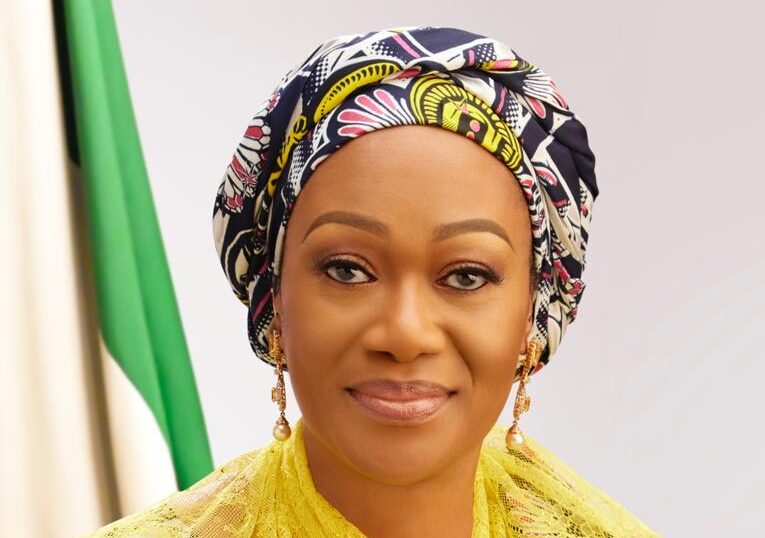
In the previous part of Behind the Silk Curtain, we explored the “Continental Mirror,” seeing how Nigeria’s model compares to the corporate efficiency of Rwanda and the financial inclusion of Kenya. Now, as we arrive in 2026, the “Silk Curtain” is undergoing its most significant transformation yet.
Under Senator Oluremi Tinubu, the Office of the First Lady (OFL) has entered a “Professional Era.” For the first time in Nigeria’s history, the office is occupied by someone who was herself a three-term high-ranking legislator. This isn’t just a change in personnel; it is a change in the very DNA of the office—moving from the “Pet Project” era into the Renewed Hope Initiative (RHI) era, a platform that functions more like a multi-sectoral development agency than a spouse’s hobby.
The Billion-Naira NGO: Funding in the 2020s
The modern paradigm is defined by a massive scale-up in resource mobilization. As of April 2026, the Renewed Hope Initiative has reportedly mobilized over ₦100 billion in its first three years. This is a staggering figure that underscores the “Silk Curtain’s” ability to attract capital where traditional ministries often struggle.
But the “Waza” here is in the how. Unlike the opaque funding of the military 90s, the RHI operates as a hybrid NGO. It pulls from a sophisticated mix of private philanthropy (such as the ₦20 billion in-kind pledge from the Dangote Foundation) and structured government partnerships. Yet, even with a board of reputable directors, the old question persists: Where does the NGO end and the Government begin? With ₦17 billion in commitments from the Federal Government’s Social Action Fund, the line between private advocacy and public expenditure has never been thinner.
From Grinding Machines to Digital Literacy
The focus has also pivoted. If Part 1 was about “Home Economics” and Part 2 was about “Rural Cooperatives,” Part 5 is about Institutional Scale. The RHI interventions are now surgically targeted:
-
Education: 43 multi-year scholarships and nationwide digital literacy training for women in partnership with NITDA.
-
Social Protection: The “Elderly Support Scheme” and “Flow with Confidence” programs, which distribute billions in welfare and sanitary products to hundreds of thousands of beneficiaries.
-
Food Security: The 2026 launch of the National Community Food Bank Programme, which leverages ₦66 billion in pledges to tackle the inflation crisis directly.
This is the First Lady as a Policy Partner. By leveraging her legislative background, Oluremi Tinubu has successfully integrated her initiative with the National Development Plan, making the OFL a primary vehicle for the President’s “Renewed Hope” social contract.
The 2027 Horizon: To Constitutionalize or Not?
As we look toward the future, the “Silk Curtain” faces a crossroads. In the National Assembly, debates over the Special Seats for Women Bill and other constitutional amendments continue to simmer. There is a growing school of thought that the Office of the First Lady should finally be given a formal constitutional role to ensure transparency and continuity.
However, the counter-argument is equally strong: a constitutionalized office might become a permanent drain on the treasury, losing the “flexible soft power” that makes it so effective today. For now, the office remains a Social Impact Powerhouse that exists outside the law but dominates the reality of Nigerian governance.
Leave a Reply