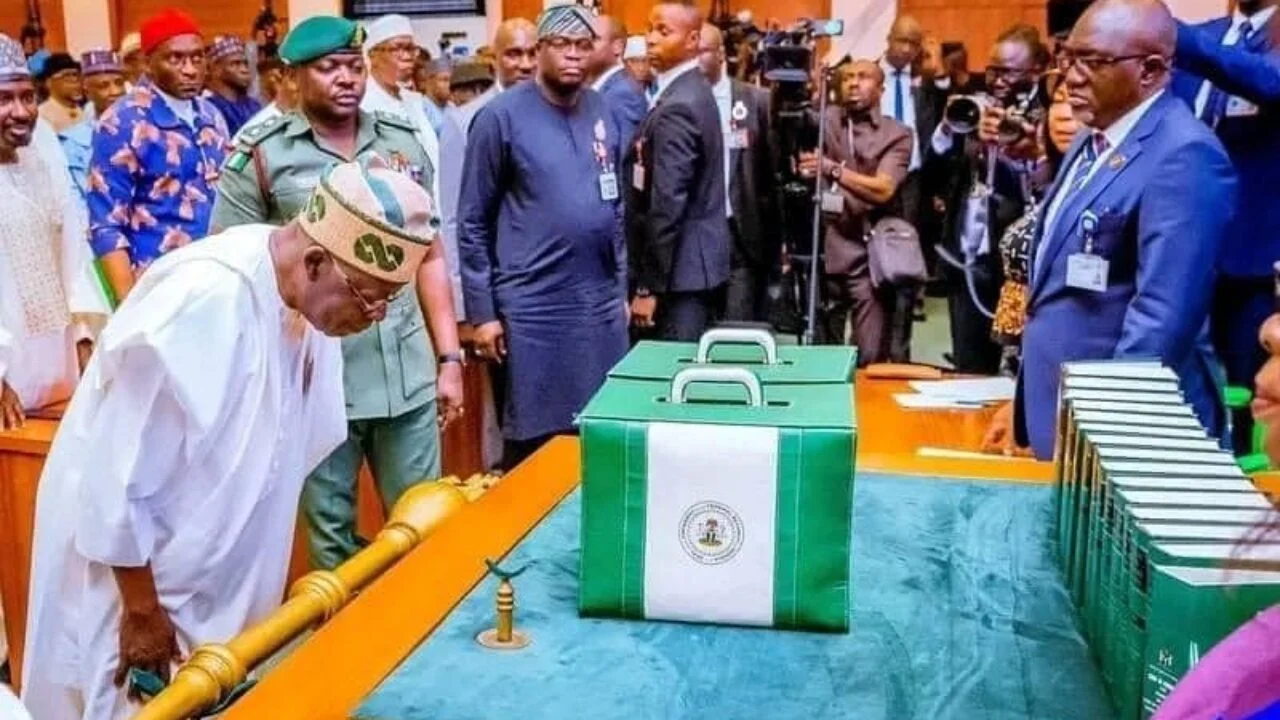
National Assembly Approves ₦68.3trn 2026 Budget, Up From ₦58.4trn |
The passage of the 2026 Appropriation Bill by the National Assembly is more than a legislative milestone; it is a high-stakes fiscal experiment. At ₦68.3 trillion, this budget represents a nominal increase of approximately 16.8% over the 2025 revised estimates. On paper, it is the largest spending plan in the history of the Federation. However, as we’ve established in our previous audits of Nigerian structural policy, a budget is not a statement of wealth—it is a statement of intent.
As a data analyst, my role is to strip away the political rhetoric of “Renewed Hope” and look at the Kinetic Reality of the numbers. When we adjust for a projected 2026 inflation rate of 15-18% and a volatile exchange rate, we must ask the critical question:
Is this ₦68.3 trillion a roadmap to growth, or is it a spreadsheet designed to manage a mounting debt crisis?
I. The Macro-Fiscal Framework: The Pillars of ₦68.3 Trillion
To understand the 2026 budget, we must first look at the “Assumption Base.” A budget is only as strong as the reality of its benchmarks.
| Benchmark Parameter | 2025 Actual (Est.) | 2026 Budget Target | The “Quant” Risk Rating |
| Oil Price Floor | $77.96 / barrel | $75.00 / barrel | Low (Conservative) |
| Oil Production | 1.58m bpd | 1.78m bpd | High (Security Dependent) |
| Exchange Rate | ₦1,450 / $1 | ₦1,400 / $1 | Moderate (Volatility) |
| GDP Growth Rate | 3.2% | 4.4% | Moderate (Ambitious) |
The decision to peg the exchange rate at ₦1,400 is a strategic signal to the markets. It suggests a “Stabilization Phase” in the foreign exchange market. However, with the Debt-to-Revenue ratio still hovering near the 70% danger zone, any slip in oil production—currently hampered by artisanal refining and pipeline vandalism in the Niger Delta—could trigger a ₦10 trillion revenue shortfall before the second quarter.
II. Expenditure Split: The Recurrent vs. Capital Tug-of-War
In any developing economy, the “Health” of a budget is measured by the Capital-to-Recurrent ratio. You cannot build a 21st-century economy if you spend 80% of your money on salaries and tea for Abuja officials.
1. The Recurrent Heavyweight (₦32.1 Trillion)
Nearly 47% of the 2026 budget is dedicated to non-debt recurrent expenditure. This includes the full implementation of the ₦70,000 Minimum Wage across all Federal MDAs.
-
The Personnel Glut: While the “Architect” has previously proposed a move from “Audit to Architecture” to fix the ghost worker problem, the 2026 budget shows that personnel costs continue to rise faster than productivity.
-
The Overhead Leak: ₦4.5 trillion is earmarked for general overheads. In an era of “Pain Phase” adjustments, the public’s view—as we’ve noted in our Human Cost analysis—is that the “top floor” isn’t cutting costs while the “ground floor” starves.
2. The Capital Hope (₦22.3 Trillion)
The ₦22.3 trillion earmarked for capital projects is the “Engine Room” of the budget.
-
Infrastructure Priority: Key allocations focus on the Lagos-Calabar Coastal Highway, the Ajaokuta-Kaduna-Kano (AKK) Gas Pipeline, and rail modernization.
-
The $540 Million Multiplier: As we analyzed in the Women’s Scale-Up report, significant portions of capital spending are co-financed by multilateral lenders.
The Structural Reality: Historically, Nigeria’s “Capital Release” performance sits at approximately 65-70%. If only ₦15 trillion of the ₦22.3 trillion is actually released, the “4.4% GDP Growth” target becomes a statistical impossibility.
III. The Debt Trap: Servicing the Future
This is the most sobering section of the 2026 ledger. Debt Servicing is projected at ₦15.52 trillion.
-
The Ratio: We are spending ₦1.00 on debt for every ₦1.40 we spend on actual development.
-
The Interest Spiral: With the Central Bank of Nigeria (CBN) maintaining high interest rates (26.5%+) to curb inflation, the cost of domestic borrowing has skyrocketed. We are no longer just borrowing to build; we are borrowing to pay the interest on what we borrowed to build five years ago.
From a data perspective, this is a Liquidity Squeeze. When ₦15.5 trillion is taken off the top for debt, the “Moms in Abuja”—as the Activist view puts it—have very little “mercy” left to distribute to the street.
IV. Revenue Innovation: Beyond the Oil Barrel
The 2026 budget relies heavily on Non-Oil Revenue (₦19.6 trillion). This is a significant shift from the 2015 era where oil was 70% of the pot.
-
VAT & CIT: Corporate Income Tax and Value Added Tax are expected to drive 60% of non-oil gains.
-
The Efficiency Drive: The Federal Inland Revenue Service (FIRS) is deploying new AI-driven tax compliance tools.
-
The Risk: As the “Street” perspective would argue, you cannot tax an informal economy that is already struggling with 300% increases in electricity tariffs. Over-taxation in a low-growth environment leads to Tax Evasion, not Revenue Growth.
V. Strategic Solutions: A Roadmap for the 2026 Cycle
To ensure this ₦68.3 trillion doesn’t become another “Paper-Tiger” (as explored in our Series on Policy Failure), we must implement three data-backed interventions:
1. The “Open Ledger” Mandate
The National Assembly has passed the budget, but the Budget Office of the Federation must publish monthly “Performance Audits.” We need to see the “Velocity of Funds”—how long it takes for a Naira approved in Abuja to reach a road project in Onitsha.
2. Forensic Revenue Tracking
We must move from “Targeting” to “Tracing.” Every MDA that generates revenue (NPA, NIMASA, NCC) must be linked to a Real-Time Treasury Dashboard. The ₦20.12 trillion deficit can be narrowed if the “remittance leakages” are plugged via the identity-linked architecture we proposed for the payroll.
3. Strategic Debt Refinancing
The government must utilize the stabilized ₦1,400 exchange rate to swap high-interest domestic debt for cheaper, long-term international “Green Bonds” or “Infrastructure Bonds.” Reducing the ₦15.5 trillion debt service bill by just 10% would free up ₦1.5 trillion—enough to fund the entire National Healthcare budget twice over.
Gopolitical’s Final Words
The 2026 budget is a High-Leverage Gamble.
It is the Expansion Phase.
Policies are not judged by the trillions approved by the National Assembly.
They are judged by the Purchasing Power of the citizen at the end of the fiscal year.
Until the “Macro” 4.4% growth appears on the “Micro” grocery bill,
this ₦68.3 trillion is just a very expensive piece of paper.
The National Assembly has done its job.
the CBN has set the rates.
But for the 250 million stakeholders in this “Company called Nigeria,”
the only data point that matters is the ROI—Return on Inclusion.
Leave a Reply