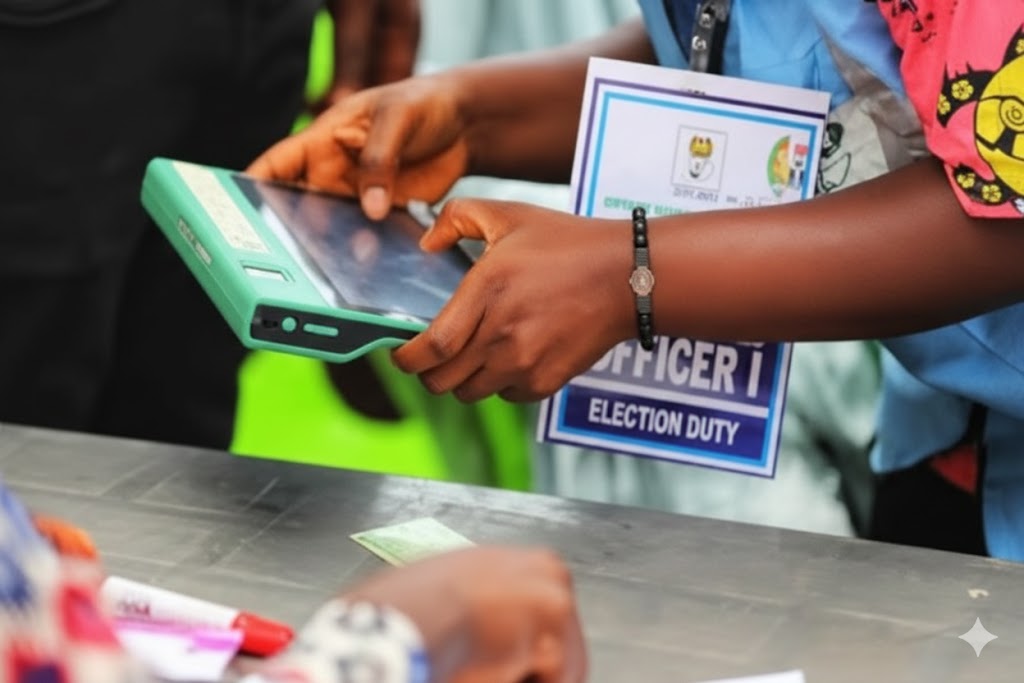
As the Federal Capital Territory approaches the February 21 Area Council elections, the Independent National Electoral Commission has moved to validate its technological infrastructure through a comprehensive mock accreditation exercise. The focus of this operational stress test was the Bimodal Voter Accreditation System (BVAS), a device increasingly positioned as the pivot for electoral integrity in the region.
Under the supervision of Commission Chairman Prof. Joash Amupitan, SAN, the exercise spanned multiple polling units, from the urban centers of Garki and Wuse to the outskirts in Ushafa and Dutse. The assessment aimed to identify technical vulnerabilities before the main event, ensuring the election day is not treated as an experimental run.
Technical performance indicators from the field proved promising. The upgraded devices demonstrated rapid processing speeds, accrediting voters in five seconds or less, while robustly rejecting simulated double-voting attempts. To address perennial concerns regarding connectivity in remote areas, the commission has updated its protocols. Presiding officers are now equipped to utilize personal hotspots, and the system is programmed to automatically sync data to the IReV portal immediately upon detecting a network signal. Logistics are moving in tandem with technology, as non-sensitive materials have reached Area Councils and Supervising Presiding Officers are undergoing intensive training.
However, the exercise exposed a persistent disconnect in the political ecosystem: voter lethargy. The low turnout during the simulation drew sharp criticism regarding the role of political parties. The commission emphasized that while it handles civic education and ballot security, the responsibility of mobilizing the electorate lies squarely with the parties seeking power.
Furthermore, amidst ongoing legislative debates regarding electronic transmission of results, the commission has urged for calm, noting that the harmonization of the Electoral Act Amendment bill is a procedural necessity. As the technical hurdles are cleared, the challenge now shifts to the voters to define their future at the polls.
Leave a Reply