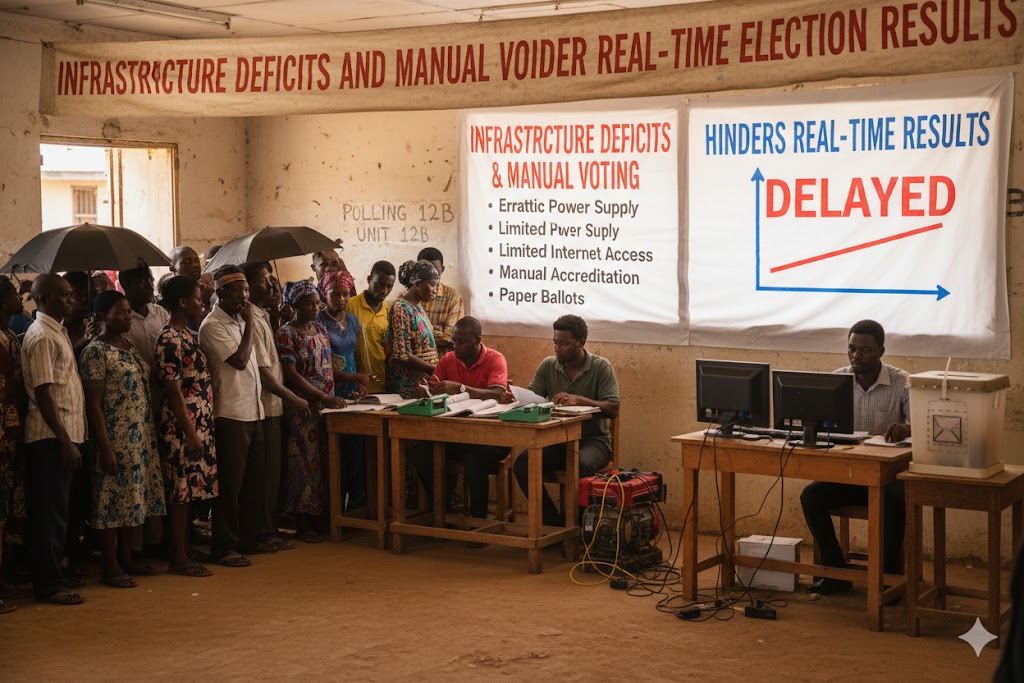
The persistent demand for instantaneous, real-time electronic transmission of election results in Nigeria faces a significant hurdle: the country’s technological infrastructure and existing legal frameworks are simply not prepared to support it. Mustapha Lecky, a former National Commissioner of the Independent National Electoral Commission (INEC), has cautioned against the rush toward full digitization of result transmission, citing the foundational reliance on manual balloting.
In a recent assessment of the electoral landscape, Lecky highlighted a critical disconnect in the current public discourse. While stakeholders push for live updates directly from polling units, the voting process itself remains entirely manual. Because citizens cast votes on paper ballots, the physical counting, verification, and signing of the EC8A result forms by party agents must take precedence. This human-led process renders the concept of “live” transmission—as seen in fully electronic voting systems—logistically impractical.
Beyond the procedural constraints, the technical backbone required for such a mandate is lacking. Significant portions of the country, particularly in rural hinterlands, suffer from poor or non-existent mobile network coverage. Mandating real-time uploads in these “blind spots” could introduce chaos rather than transparency. Furthermore, a hasty transition increases the system’s exposure to cyber vulnerabilities and digital fragility, risks that could undermine credibility rather than enhance it.
The focus, therefore, should remain on optimizing existing mechanisms like the Bimodal Voter Accreditation System (BVAS) and the INEC Result Viewing Portal (IReV). These tools, when functioning correctly, offer substantial transparency without overextending the commission’s technical capacity. As legislative debates on electoral reforms continue, the emphasis must be on solidifying the manual-to-digital bridge rather than implementing mandates that the nation’s infrastructure cannot yet sustain.
Leave a Reply