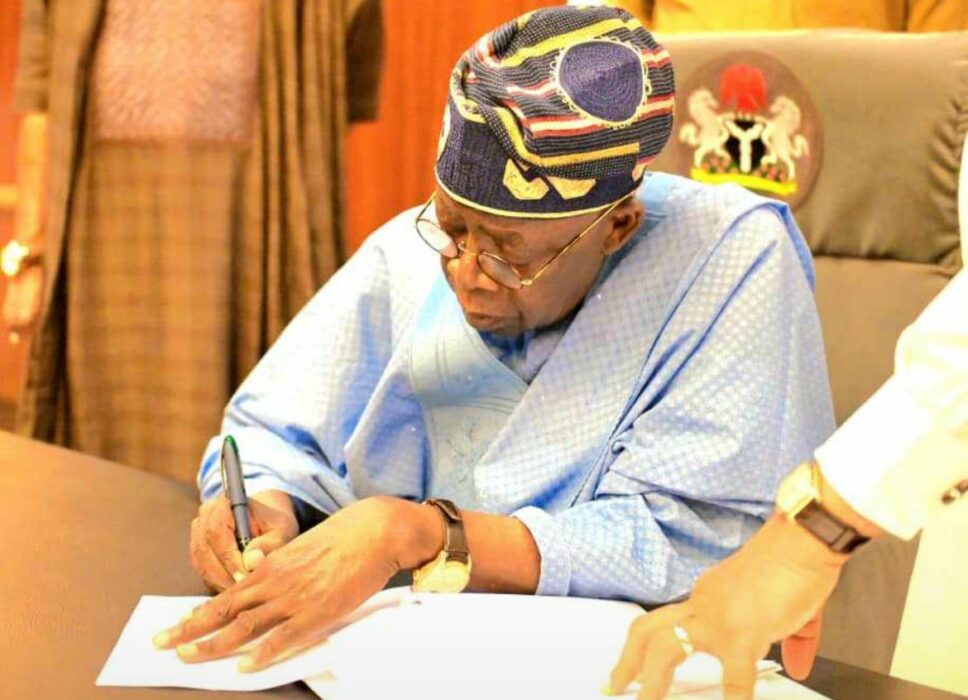
When President Bola Ahmed Tinubu declared “subsidy is gone” in May 2023, it was more than a policy shift.
It was a gamble.
A gamble that short-term pain would unlock long-term stability.
A gamble that Nigerians would endure enough to see the benefits.
Two years later, the question is simple:
**Is it working?**
—
The Reform Agenda: What Changed
At the centre of Tinubu’s economic strategy are three major decisions:
* Removal of fuel subsidy
* Unification of exchange rates
* Fiscal tightening and revenue reforms
These moves were widely praised by international investors and economists who had long argued that Nigeria’s system was unsustainable.
Subsidies were draining public finances.
Multiple exchange rates distorted the market.
Fixing these meant shock therapy.
—
The Numbers Say: There Is Progress
On paper, the story looks promising.
* Inflation, which peaked above 34% in 2024, has dropped significantly to around 15% by early 2026 ([Businessday NG][1])
* GDP growth improved to about 3.8–4% in 2025, showing gradual economic recovery ([African Business][2])
* External reserves climbed to over $50 billion, their highest in over a decade ([Businessday NG][1])
* The gap between official and parallel exchange rates has nearly disappeared ([Punch Newspapers][3])
From a macroeconomic perspective, the reforms are doing what they were designed to do:
**Stabilise the system. Restore investor confidence. Fix structural distortions.**
Even critics agree on one point:
The old system was broken.
—
But On the Street: A Different Reality
Now step outside the data.
Talk to a transport worker in Lagos.
A trader in Ibadan.
A civil servant in Abuja.
The story changes.
Fuel prices surged sharply after subsidy removal — in some cases increasing by over 300% ([Manufacturing Africa][4])
Transportation costs followed.
Food prices rose.
Household budgets collapsed under pressure.
A recent study found that poverty levels jumped from about 50% to 63% after the reforms were introduced ([Punch Newspapers][5])
That’s not a statistic.
That’s millions of people slipping deeper into hardship.
Even today, Nigerians are still grappling with high living costs, despite signs of easing inflation ([Premium Times Nigeria][6])
And in March 2026, fuel prices hit record highs again — rising by about 65% due to global shocks and market realities ([Reuters][7])
—
The Core Problem: Timing vs Reality
Here is the real tension:
* **The reforms are working… structurally**
* **But the relief is not reaching people fast enough**
Economic reforms don’t fail overnight.
But they also don’t feed families overnight.
Tinubu’s approach follows a familiar economic philosophy:
> Fix the system first. Let benefits come later.
The risk?
People may not wait.
—
Where the Government Faces Pressure
There are three key areas where Nigerians are watching closely:
1. Transparency
There are still questions about how savings from subsidy removal are being used ([Human Rights Watch][8])
2. Social Protection
Cash transfers and interventions exist, but many argue they are not enough or not reaching the right people
3. Cost of Living
Even with falling inflation rates, prices remain high relative to incomes
—
So, Are Nigerians Feeling the Impact?
Yes — but not in the way the government hoped.
They are feeling:
* Higher transport costs
* More expensive food
* Reduced purchasing power
What they are not yet feeling — at scale — is:
* Relief
* Stability in daily expenses
* Improved standard of living
—
The Honest Verdict
Tinubu’s reforms are not a failure.
But they are not yet a success where it matters most.
They are in transition.
Right now, Nigeria is in the **pain phase** of reform —
and the promised **gain phase** is still ahead.
—
The Bigger Question
Economic reforms are not judged by graphs.
They are judged by everyday life.
Until a Nigerian can say:
> “Things are easier now”
The debate will continue.
—
Thought …
The foundation may be getting stronger.
But foundations don’t comfort people.
Results do.
And for millions of Nigerians,
those results are still a work in progress.
Leave a Reply