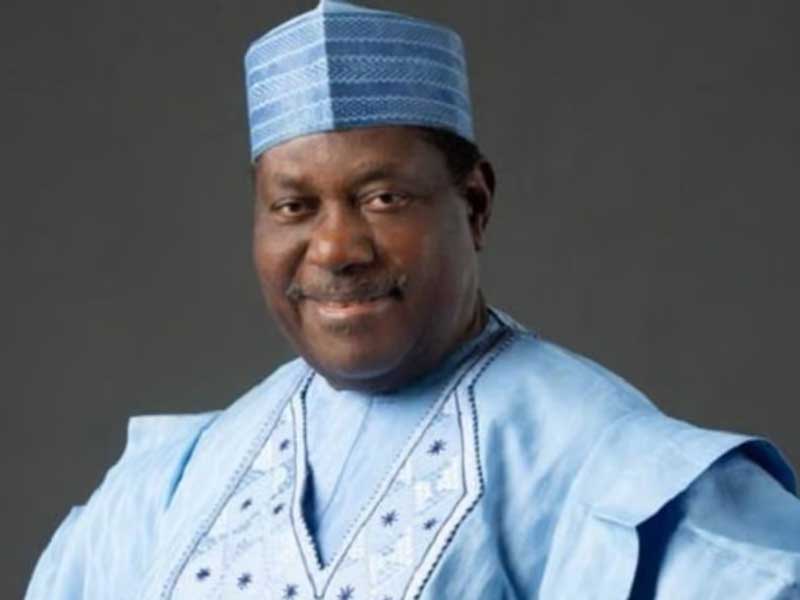
In the high-stakes theater of Nigerian governance, political discourse is frequently obscured by speculation rather than grounded in verifiable reality. Nowhere is this more evident than in Benue State, where a persistent but largely unsubstantiated narrative suggests a fierce rivalry between the Secretary to the Government of the Federation, Senator George Akume, and the incumbent State Governor, Hyacinth Alia. While tales of infighting between political godfathers and their successors are a staple of Nigeria’s Fourth Republic, a disciplined analysis of Benue’s power dynamics reveals that this specific alleged conflict is more a product of external projection than internal friction.
To understand the current relationship, one must first appreciate the architectural continuity of politics in the region. Senator Akume has served as a two-term Governor, a three-term Senator rising to Minority Leader, a Minister, and now occupies a central role in the presidency as the SGF. This trajectory represents nearly three decades of entrenched influence. The emergence of successive governors in the state—from Gabriel Suswam to Samuel Ortom and now Hyacinth Alia—has invariably relied on the political structures Akume helped cultivate. The 2023 gubernatorial election serves as a prime case study; despite a field crowded with heavyweights, victory was secured through the alignment of strategic mobilization and established party machinery, rather than individual popularity alone.
Recent events within the All Progressives Congress (APC) further illustrate this interdependence. During membership registration exercises, initial grassroots engagement appeared tepid until the broader party network, historically anchored by Akume, was fully activated. The subsequent surge in numbers underscored a fundamental truth of Nigerian politics: capacity and organization often trump sentiment. Consequently, framing the dynamic between Akume and Alia as a battle of equals misinterprets the hierarchical nature of party politics. The SGF operates at a federal level, tasked with national coordination and the stability of the Tinubu administration, while the Governor focuses on subnational administration.
Ultimately, the friction often reported by observers is likely a misreading of the natural adjustments that occur when a new administration settles into a landscape shaped by long-standing veterans. Viewing every administrative nuance or silence as a declaration of war is analytically flawed. For the ruling party to maintain cohesion in the North Central region, the symbiosis between federal influence and state power is essential. The reality in Benue is likely not one of adversarial combat, but of a complex political continuum where a new leader consolidates authority within a system built by his predecessors.
Leave a Reply