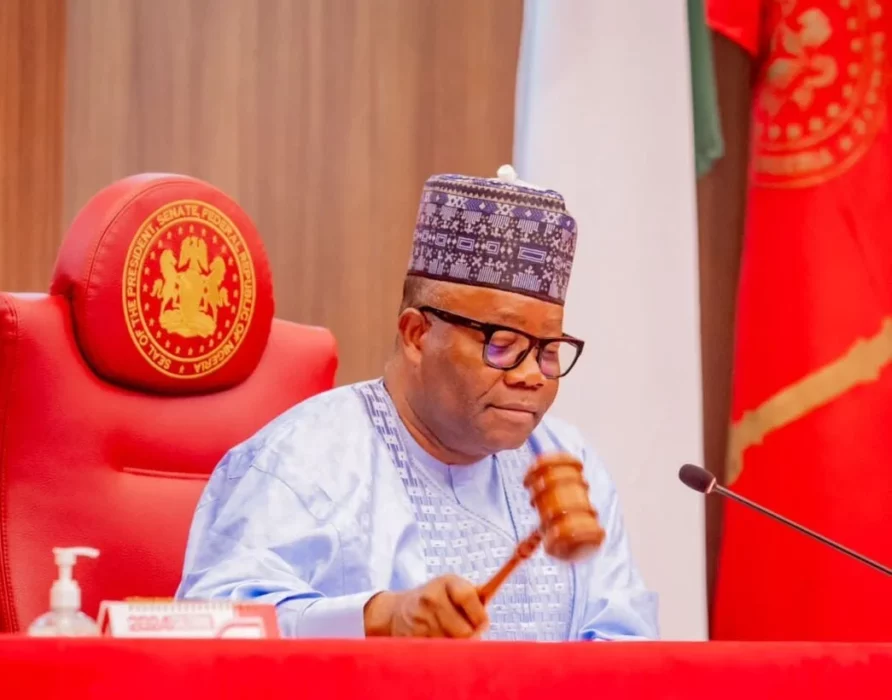
The recent presidential assent to the amended electoral framework marks a significant pivot in Nigeria’s legislative landscape. Following the signing ceremony at the Presidential Villa, the leadership of the National Assembly has moved to define the narrative surrounding the new law, positioning it as a direct response to public demand rather than a concession to external pressure. Senate President Godswill Akpabio characterized the legislation as a product of meticulous deliberation and patriotism, asserting that the legislative branch prioritized the authentic yearnings of the citizenry over what he described as distractions from politically motivated actors.
In his assessment, the Senate President drew a sharp distinction between the genuine aspirations of the majority and the loud objections of a vocal minority. He insisted that the lawmakers successfully filtered out this “noise” to craft a statute that addresses the specific peculiarities of the Nigerian political environment. Akpabio maintained that the National Assembly remained focused on thoroughness, resisting undue interference to deliver a historic piece of legislation aimed at ushering in an era of greater prosperity and fairness in democratic engagements.
A central pillar of this legal overhaul is the statutory validation of technological integration in the voting process. The new act provides solid legal backing for the result viewing portal, commonly known as IReV, establishing it as a legitimate and verifiable record of polling unit outcomes. Crucially, the legislation addresses infrastructure deficits by ensuring that electronic results from areas with poor network coverage will automatically synchronize with the central portal once connectivity is restored. This mechanism is designed to close the data gap between polling units and collation centers, effectively curbing the potential for result manipulation during transit. As the nation looks toward future election cycles, this framework aims to cement transparency as a standard, independent of logistical challenges.
Leave a Reply